Haymakers at Montfermeil by Seurat, Georges
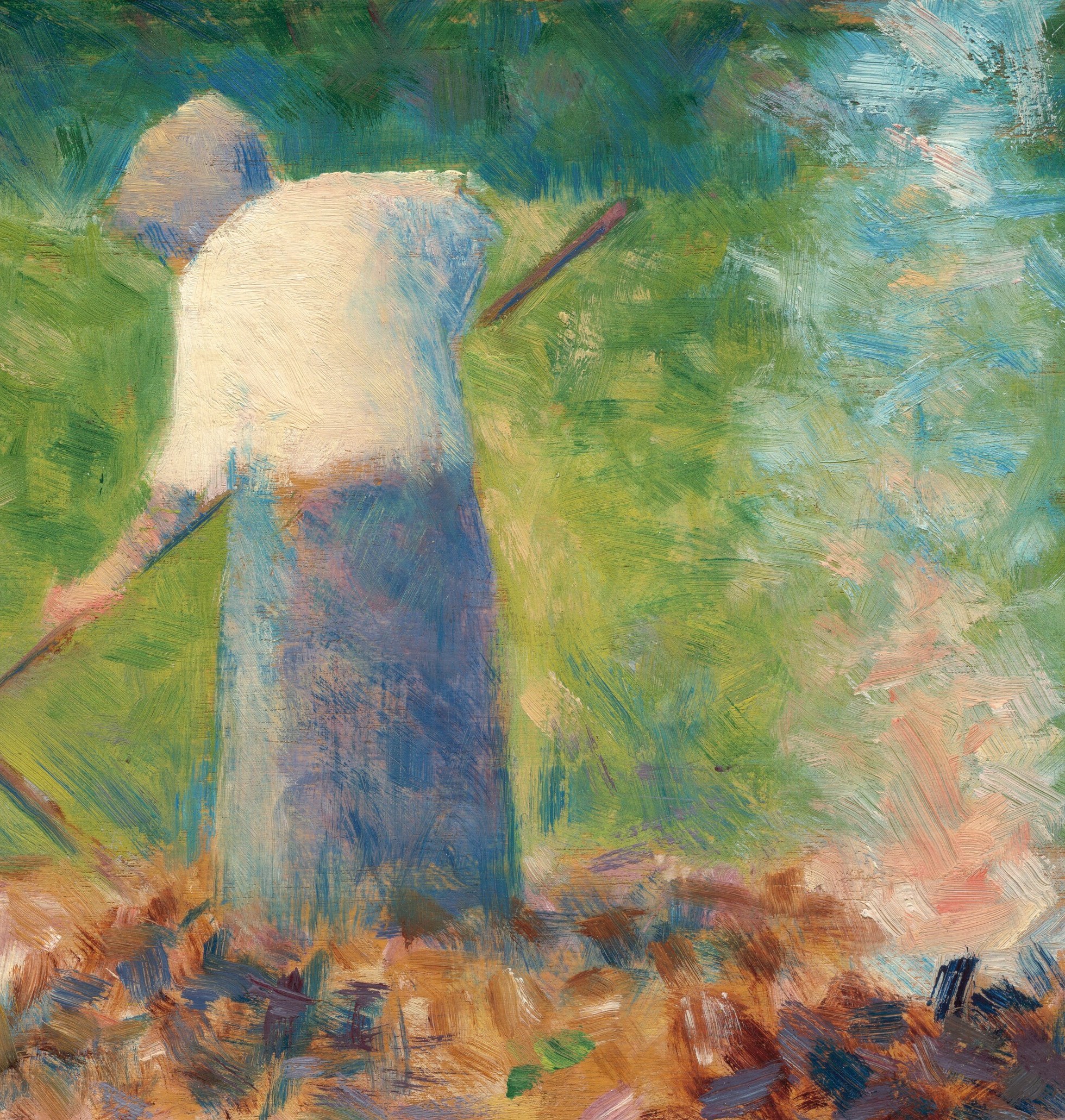
In a field near Montfermeil, around 1882, two figures cut hay under a high sun. This is Georges Seurat’s Haymakers at Montfermeil, now in a private collection. It is a rural scene painted on the edge of Paris, only a few years before the young artist would turn city leisure into a science of light.
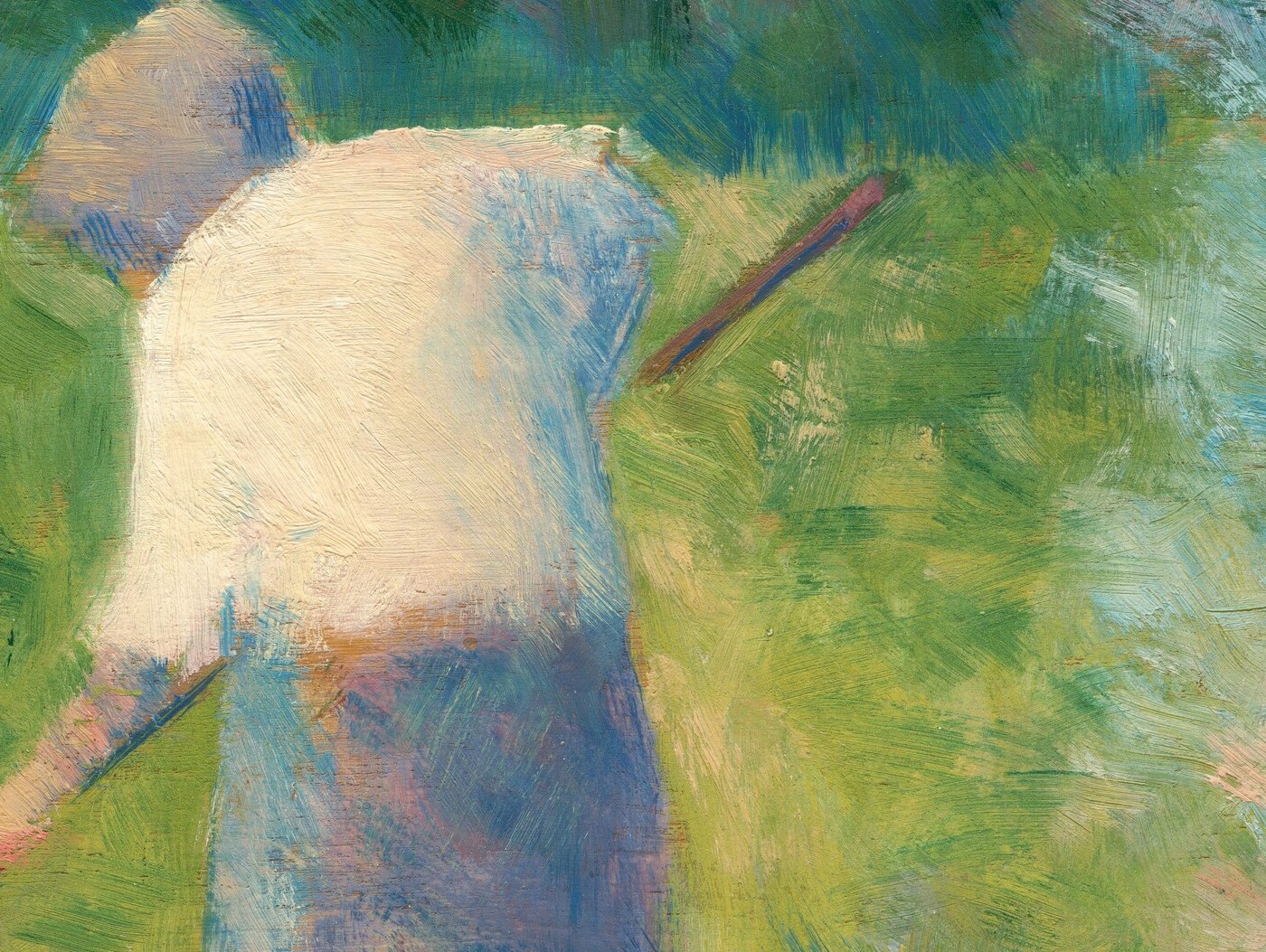
The painting sets up a visual rhythm of labour. The man on the right is luminous. His white shirt catches the most light in the picture, pulling the eye first to his upright posture and the forward drive of his rake. The woman on the left is darker, more stooped. The two rakes cross at different angles, repeating the same action with different weight. Between them, a thin sliver of sky keeps their bodies from merging into one mass. It is quiet, deliberate composition.
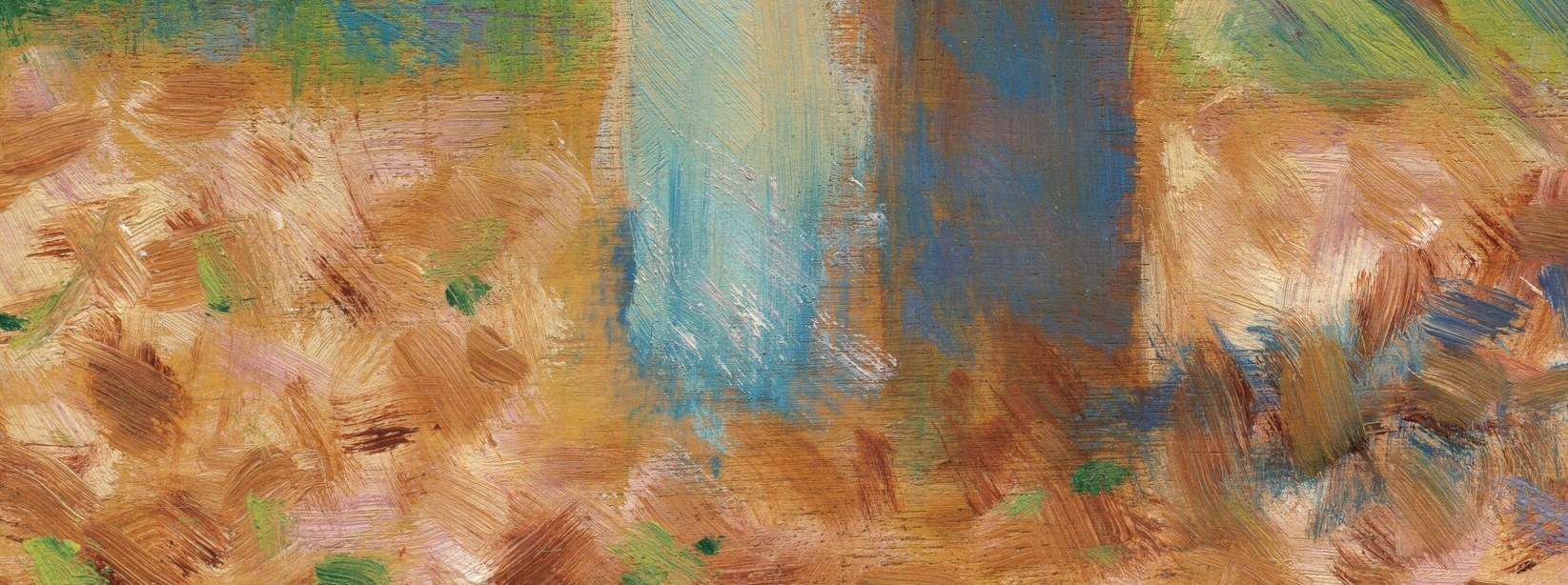
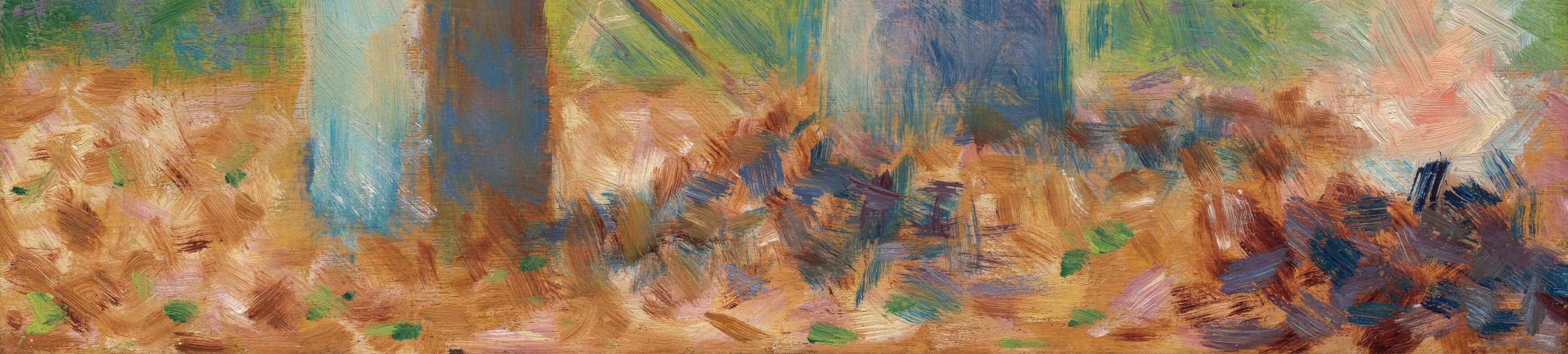
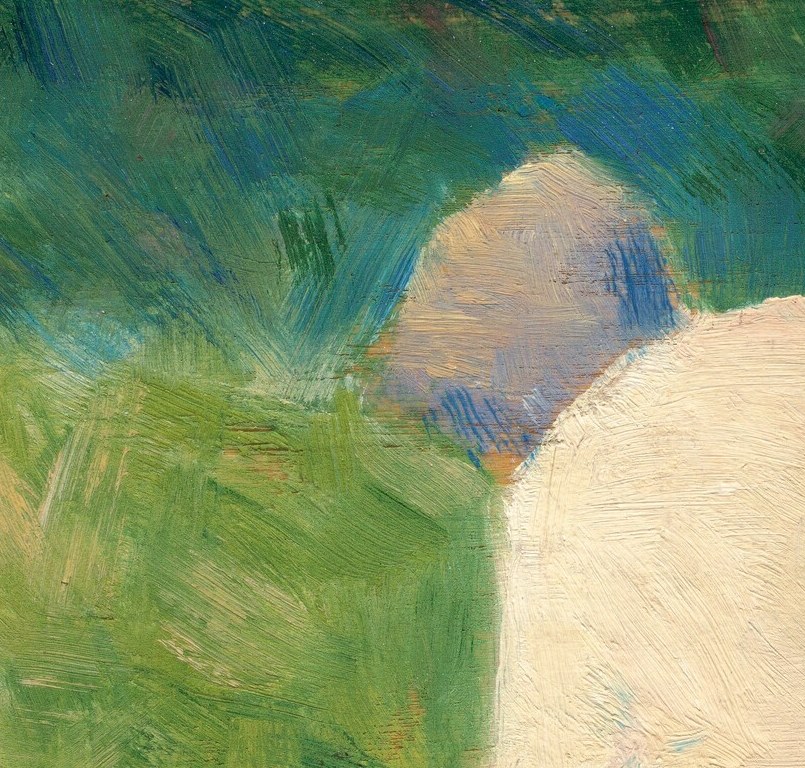
Seurat was about twenty-two when he painted this. He was already thinking about how colour behaves. The hay in the foreground is not one flat brown but separate touches of ochre and orange. The shadow under the left figure is a cool violet-grey, not mud. He understood that shade carries the colour of the sky. Within a few years these small experiments would become pointillism, the full optical method that made him famous.
Tucked behind the trees in the upper left is a glimpse of the village. The field feels enclosed, almost private. It is easy to scroll past a painting like this, but if you stop and scan from edge to edge, the day opens up.
Details
Transcript
Around 1882, outside Paris, the hay still had to be cut by hand. Two men. The whole summer day in front of them. He catches the light like the blade of a scythe. Her body is bent to the work, her shadow painted in cool violet, not brown. The heat of the hay is already breaking into separate flecks of orange and ochre. The painter was twenty-two. He would call this way of seeing pointillism.