Sarah Ann Beck by Anna Claypoole Peale
Anna Claypoole Peale's "Sarah Ann Beck," painted around 1818, is a watercolor on ivory, a popular medium for personal portraits in the early 19th century. This particular work is held at the Metropolitan Museum of Art.
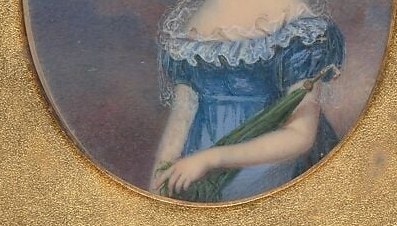
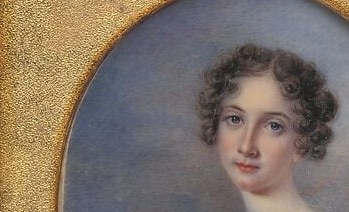
These small-scale portraits were often worn as lockets or brooches, allowing people to carry a likeness of a loved one. The delicate detail of Sarah Ann Beck's lace collar, her dark curls, and the luminous quality of her skin demonstrate the artist's meticulous skill.
Peale was a remarkable figure in American art history. As a specialist in miniature portraiture and still life, she was one of the first women to establish a successful professional career as a painter in America. Her talent was recognized when she became one of the first women elected as an academician to the prestigious Pennsylvania Academy of the Fine Arts.
This painting not only captures a moment in time but also highlights the significant achievements of women artists in an era when such recognition was rare. What details do you notice first?
Details


Transcript
In the early 1800s, this was a way to carry a loved one. This miniature portrait is painted on a thin piece of ivory. The ivory allowed light to shine through the paint, making her luminous. Notice her delicate lace collar, painted with tiny, precise strokes. Her eyes are rendered with subtle highlights, giving them a lifelike sparkle. The artist, Anna Claypoole Peale, was a pioneer for women in art. She became one of the first women elected to a prestigious art academy.