Castle of San Servando, Toledo by Joaquín Sorolla
Joaquín Sorolla's *Castle of San Servando, Toledo*, painted in 1906, is a vibrant example of his signature style, now held at The Metropolitan Museum of Art. Sorolla, a master of light, was renowned for his ability to capture the unique, bright sunlight of Spain in his landscapes.
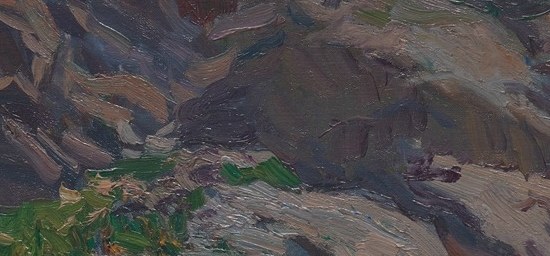
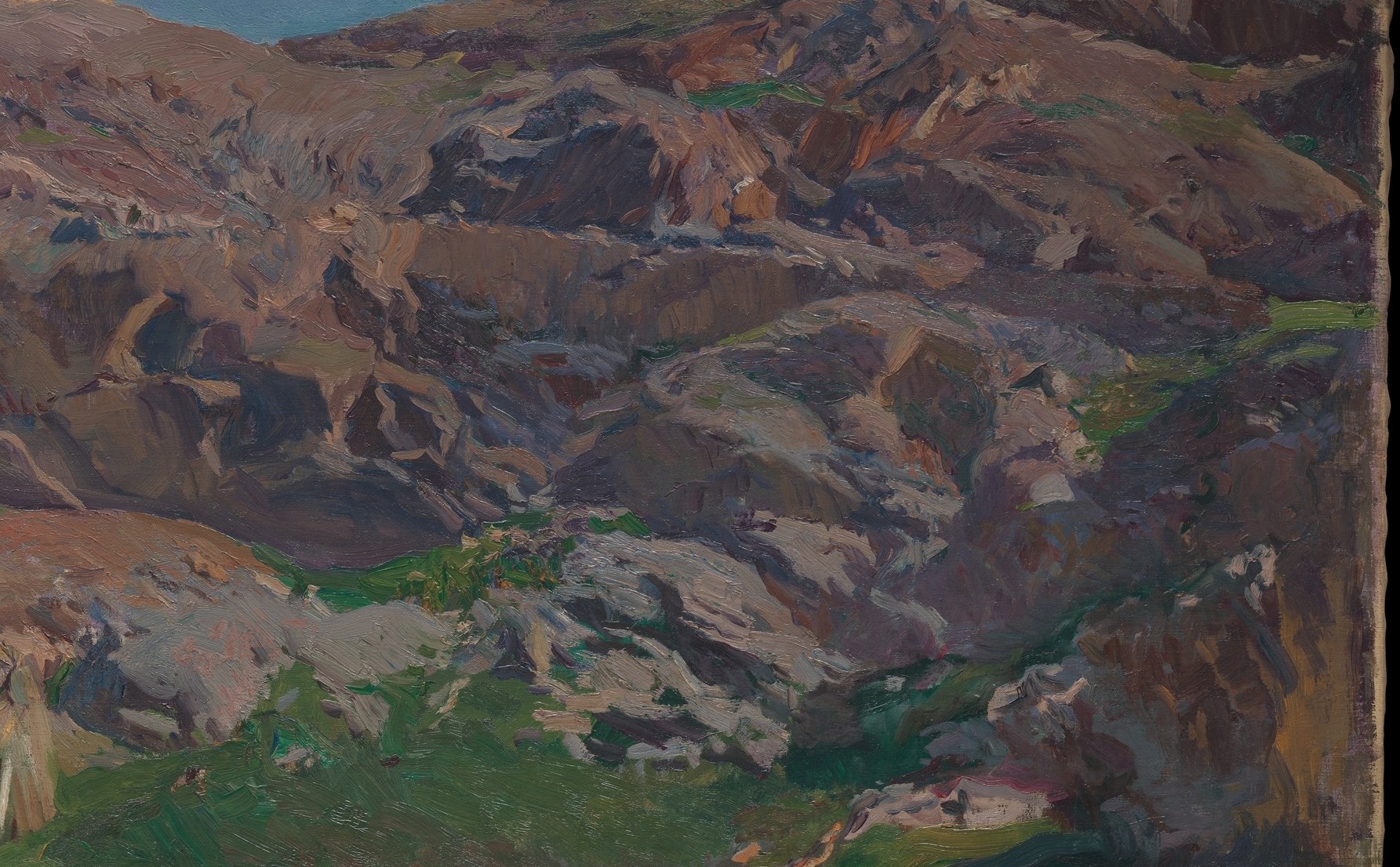
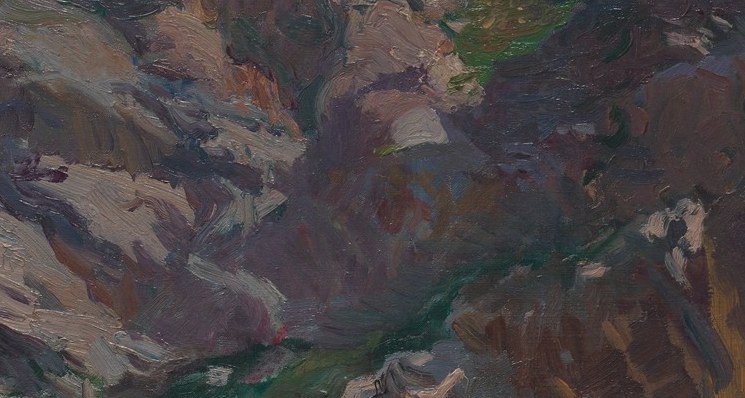
Look closely at the painting's rocky terrain. Sorolla employed thick, visible brushstrokes, known as impasto, to give a tangible texture to the rugged hillsides and castle walls. This technique brings a lively energy to the scene, emphasizing the immediate visual impression over precise detail.
The work reflects Sorolla's ongoing exploration of Spanish geography and historical sites. While seemingly a straightforward landscape, it embodies the artist's dedication to portraying his homeland's scenery with a distinctive, impressionistic flair. It's a reminder of how an artist's personal style can transform a familiar subject.
What details do you notice first in Sorolla's depiction of the Spanish landscape?
Details

Transcript
This painting captures a historic castle in Toledo, Spain. The artist, Joaquín Sorolla, was famous for his Spanish light. He used thick, visible brushstrokes to show the rugged landscape. See how the impasto gives texture to the rocky slopes. His energetic style captured the immediate visual impression. It now resides in New York's Metropolitan Museum of Art.