Breton Fishermen and Their Families by Augustin Théodule Ribot
This is Théodule Ribot's 'Breton Fishermen and Their Families,' painted around 1875. It gathers eight figures, three generations of a coastal family, into one unbroken vertical block, lit from a single source against an almost total darkness.
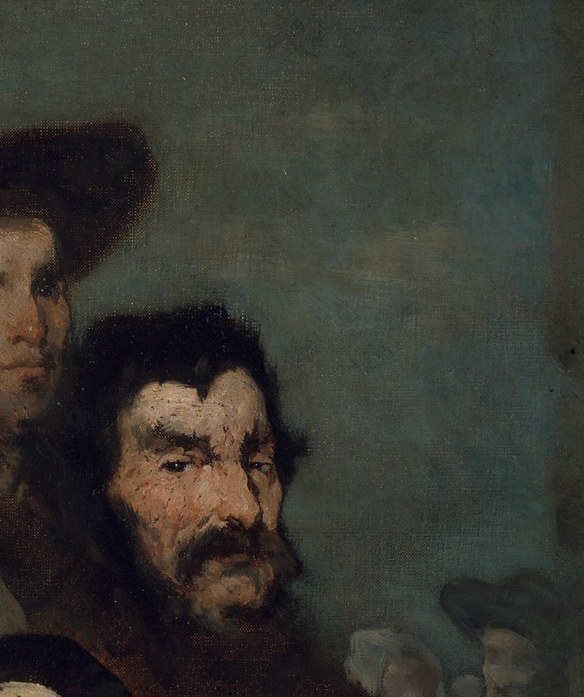
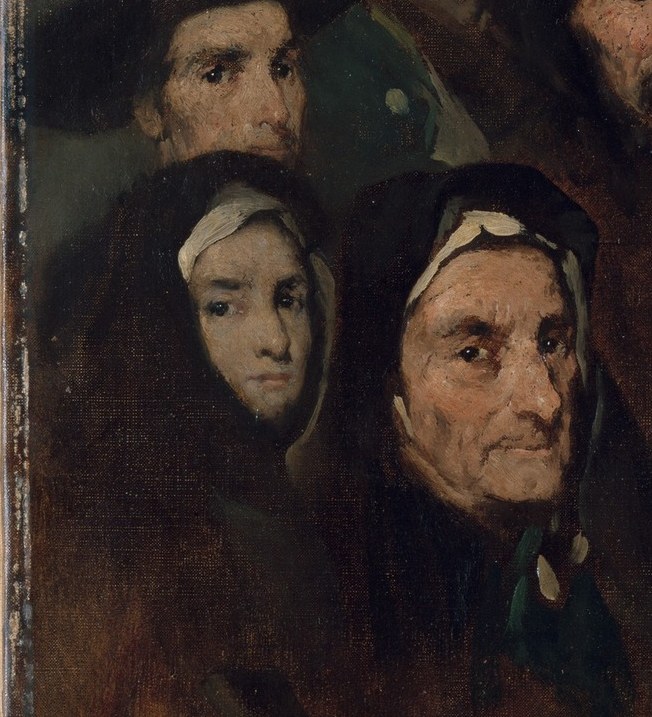
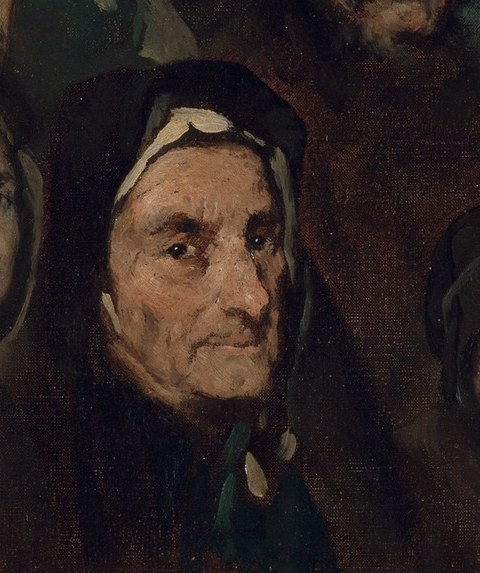
The painting gives you no landscape, no water, no church. Just faces and hands. Start with the central bearded man: a face that has absorbed decades of Atlantic wind. Then move left to the older woman in the white coif, her hollowed features function as the group's moral center. At the center, a dark-haired girl stares out, wide-eyed, the only face that does not yet look worn.
Ribot was born in 1823 in Normandy. He moved to Paris, worked in a factory decorating mirror frames, and taught himself to paint by lamplight after his shifts. He was nearly forty before he exhibited anything. Critics of the Third Republic admired his refusal to romanticize working people, he gave fishermen and cooks the same chiaroscuro grandeur earlier centuries reserved for apostles and kings.
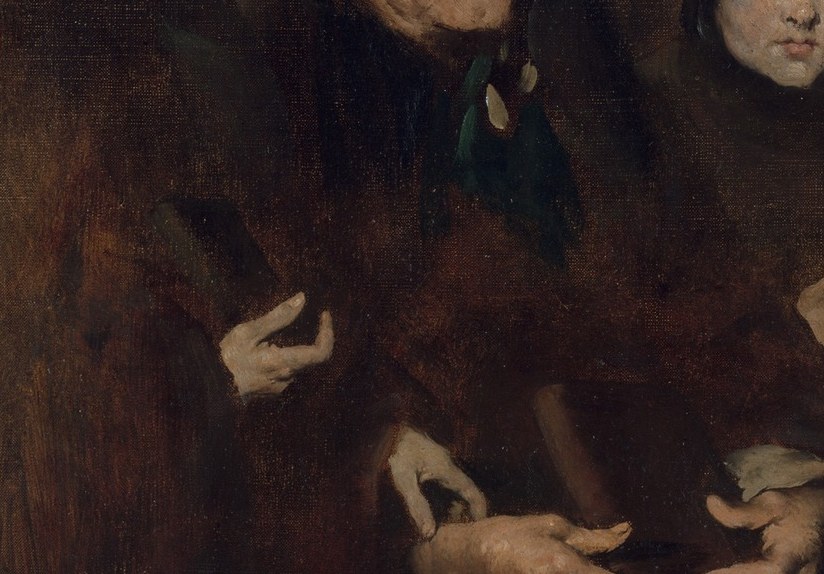
The hands at the bottom seal the painting's argument: these are hands that pull nets and mend sails, rendered with thick, almost sculptural brushwork. Ribot did not need to imagine hardship. He lived a version of it himself.
Details
Transcript
One group. One tight frame. No horizon, no boats, just darkness and faces. Ribot painted ordinary people like saints. This man's face has carried half a century of salt wind. She reads as the conscience of the whole group. Tucked in the middle: a girl who will inherit all of this. Ribot was self-taught. He painted by lamplight after factory shifts. He knew what it meant to work until your hands told the story.