Sandal Maker, Tomb of Rekhmire by Nina M. Davies
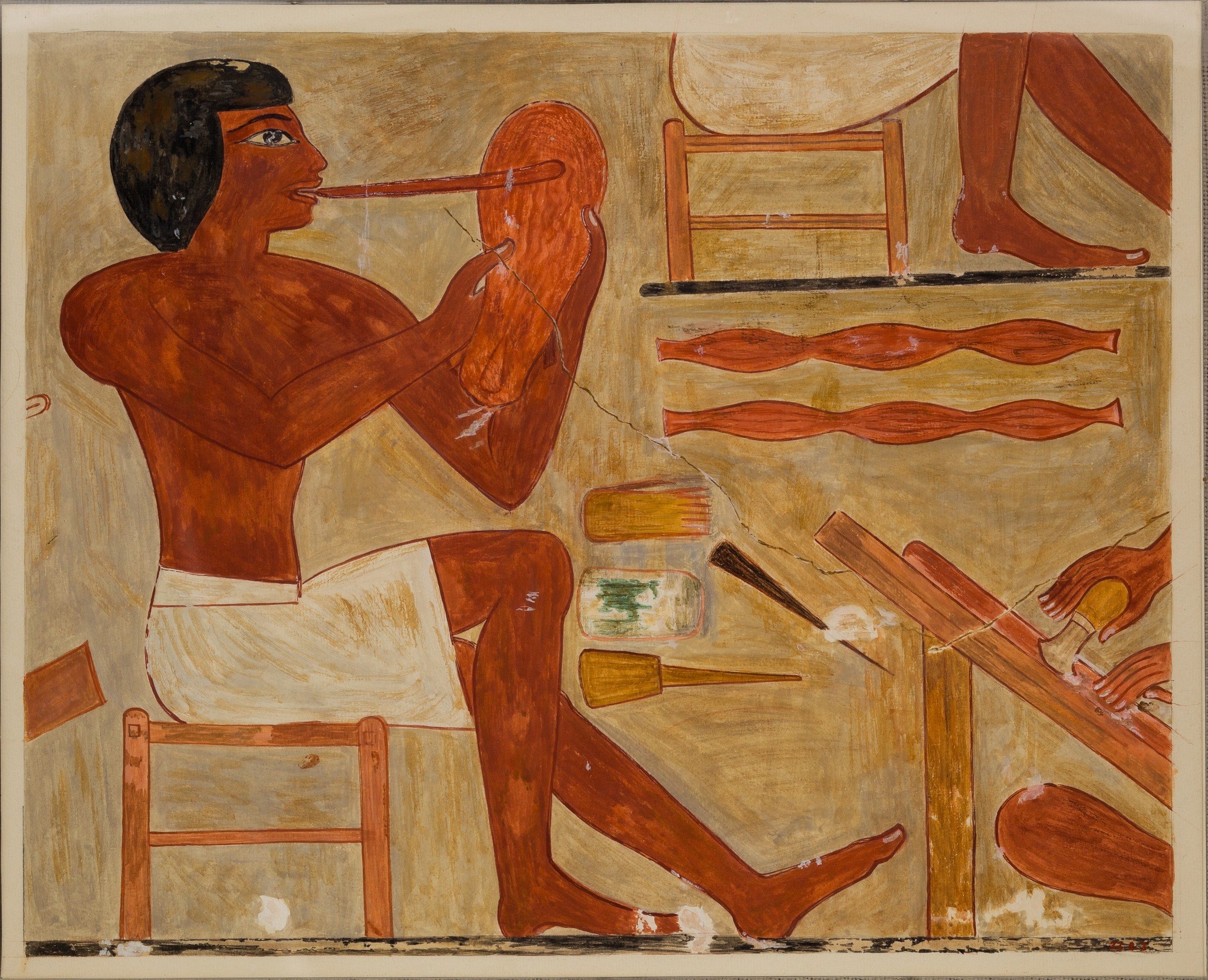
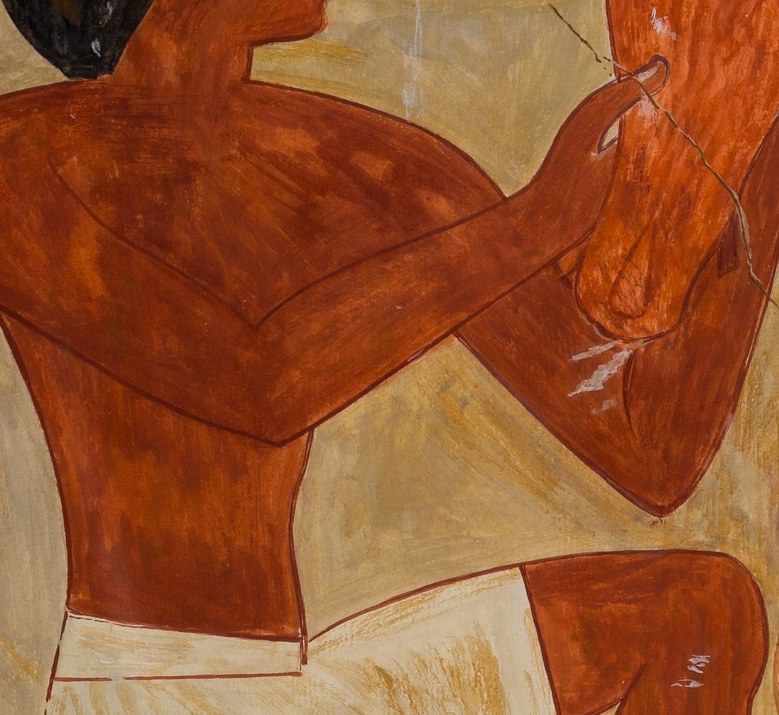
This is a facsimile painting of a 3,500-year-old wall in the Tomb of Rekhmire, an ancient Egyptian vizier. It was recorded in 1941 by the brilliant Egyptologist and illustrator Nina M. Davies, who spent her career meticulously copying tomb art before it could be lost to time. It is now held by The Metropolitan Museum of Art.
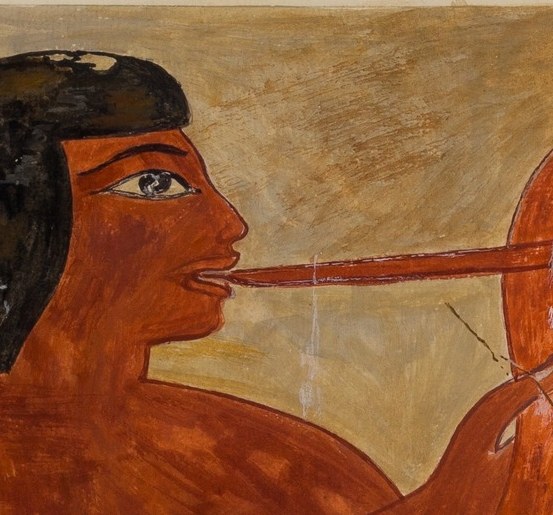
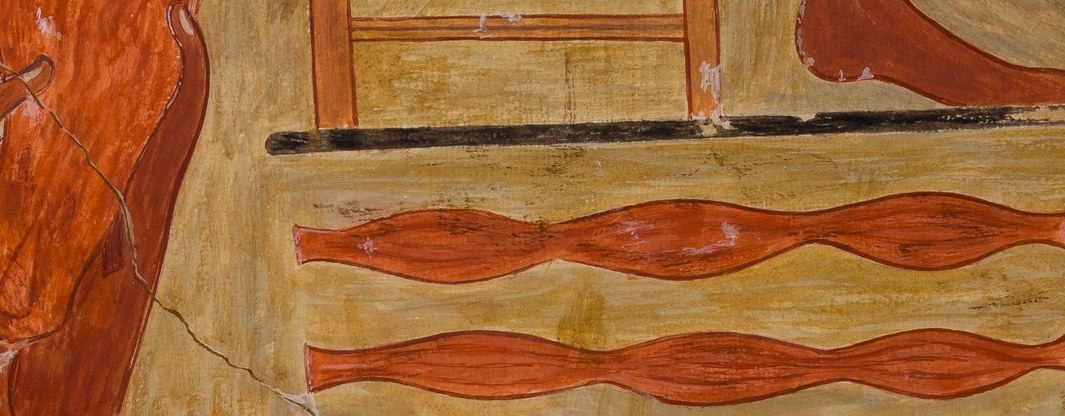
At first glance it reads as a straightforward profile of a craftsman at work. But the painting captures a distinctly Egyptian way of seeing. The reddish bands floating above the bench are not strange shelves or abstract decoration. They are sandal soles drawn in overhead plan view, stacked to represent quantity within a single register of the wall.
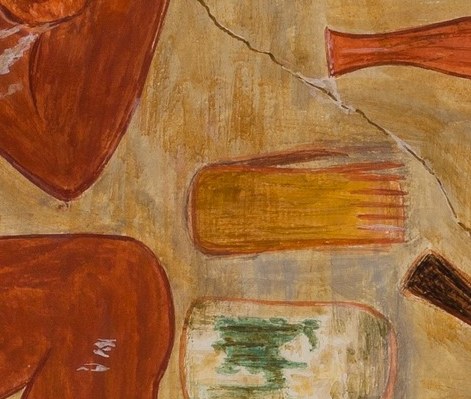
Davies and her husband Norman de Garis Davies worked for decades documenting tombs across Thebes. Their copies were so precise that scholars still rely on them today to study details that have since degraded. This piece commits a workshop scene to paper, right down to the small vessel on the bench that likely held the adhesive for binding leather.
Alongside the visual coding, that tiny pot is a portrait of a complete material process. Without it the craft is a gesture. With it, we can smell the glue.
Details
Transcript
A sandal maker at work. We see his skill. But the Egyptians painted ideas, not just pictures. Look above the workbench at the reddish bands. Art historians read these as stacked sandal soles. A flat diagram showing his inventory, not a side view. And on the bench, a tiny pot holds his glue or dye.