Cafe House, Cairo (Casting Bullets) by Jean Léon Gérôme
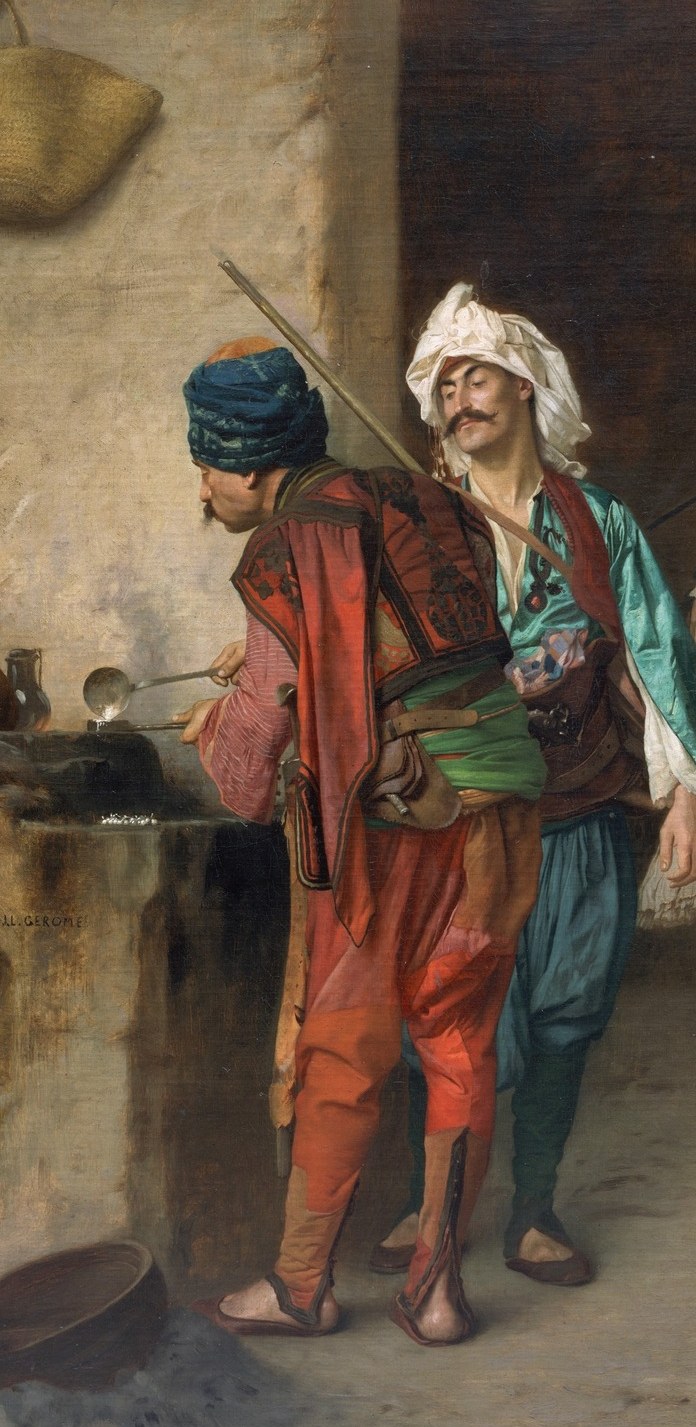
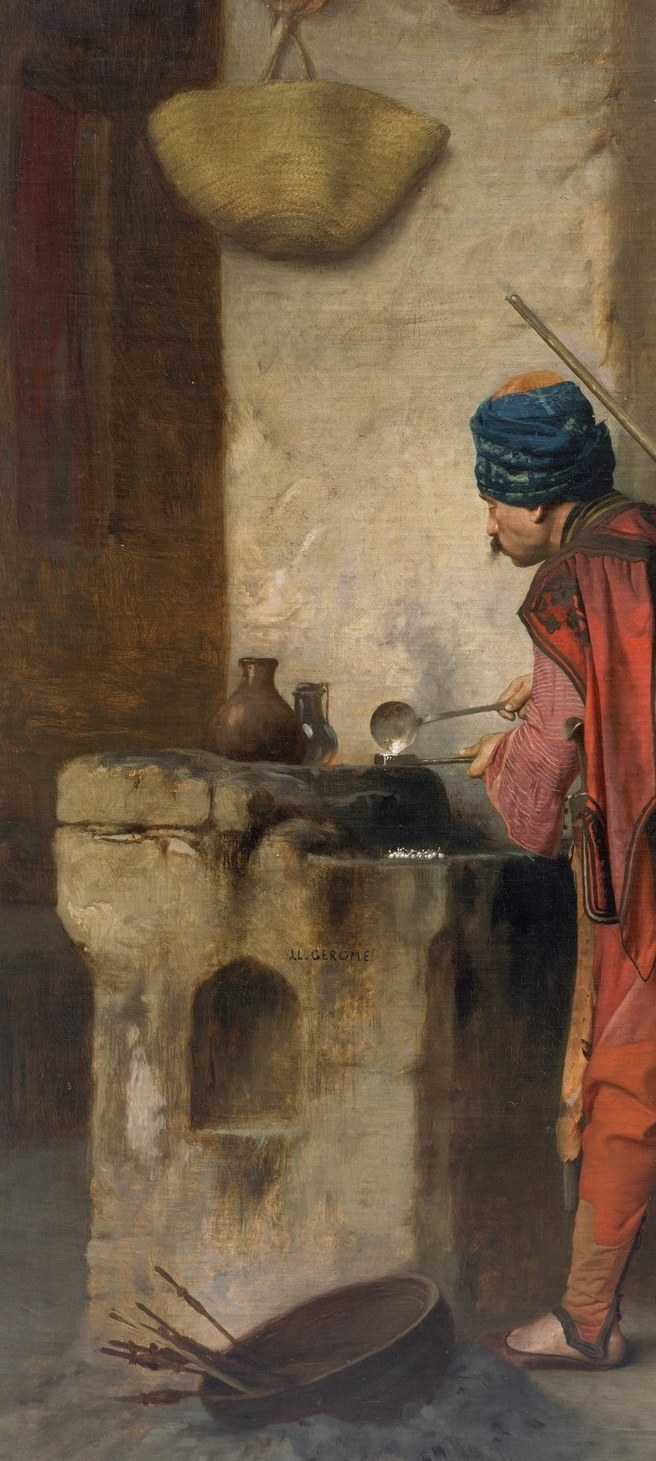
Jean Léon Gérôme's "Cafe House, Cairo (Casting Bullets)" (1890) is a painting you can hear, the chatter, the dice, the distant fire, but its real power is in a single, silent exchange at its center. Housed at The Metropolitan Museum of Art, this oil painting captures a moment in a vaulted Cairo cafe where a man in a blue turban leans toward a tall figure in a teal robe, his back turned so we never see his face.
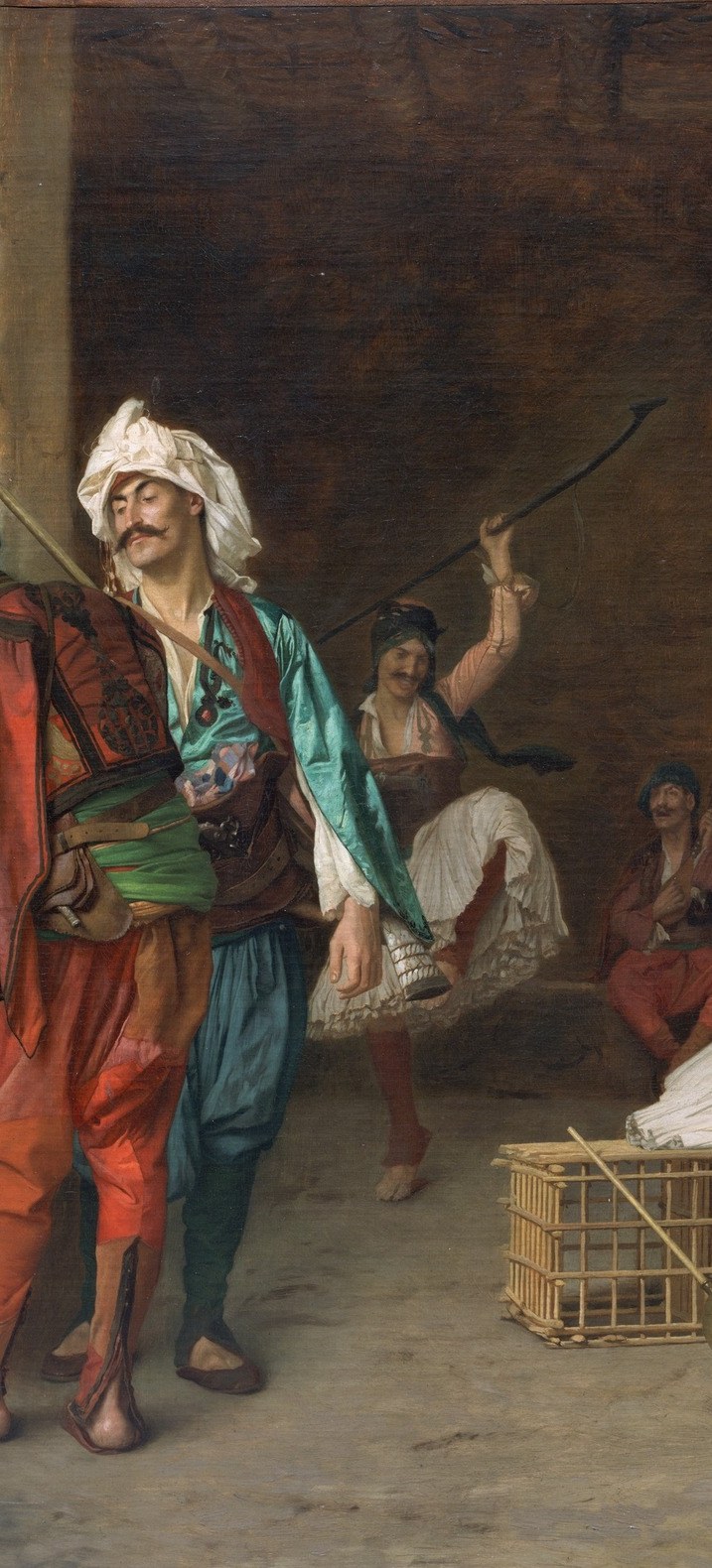
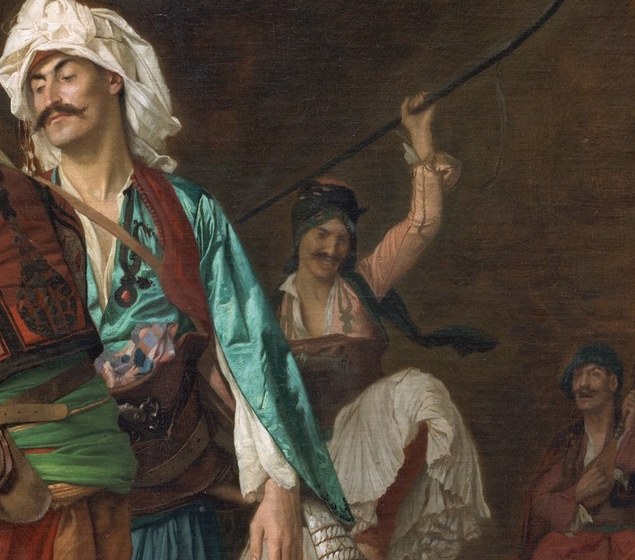
Look at the space between them. The way the dancer in the background, the caged crate on the floor, and the bullet-casting fire all orbit this quiet core. Gérôme fills the room with vivid color, the explosive red trousers, the sculptural white headdress, but the composition pulls you again and again to the intimacy these two men share, an intimacy whose nature is left entirely to us.
Gérôme was, by 1880, arguably the most famous living artist in the world. A French academic painter who traveled to Egypt many times, he built his career on precisely observed, deeply romanticized visions of the "Orient" for a Western audience hungry for them. He documented headwear and textiles with ethnographic precision, yet his scenes are always theater, a world constructed in his Paris studio from sketches and props.
When you look long enough, you notice the shadowed figure barely visible in the alcove on the far left, a marginal witness to the central exchange. The painting is a crowd scene, but it isolates these three: two men in conversation, and one man in shadow, watching.
Details
Transcript
A Cairo cafe, 1890. The room is loud with music and trade. But your eye goes straight to the red trousers. Then to the man in the blue turban, who turns his back to us. He leans toward the tall figure in white. An exchange we cannot hear. Gérôme painted this from sketches made on his many journeys to Egypt. He was an exacting observer. Every fold of the turban is a document. But cast your eye deep into the shadows. On the far left, there is another man. A hidden witness, almost invisible. Watching the same quiet encounter.