Dance under the Trees at the Edge of the Lake by Corot, Jean-Baptiste-Camille
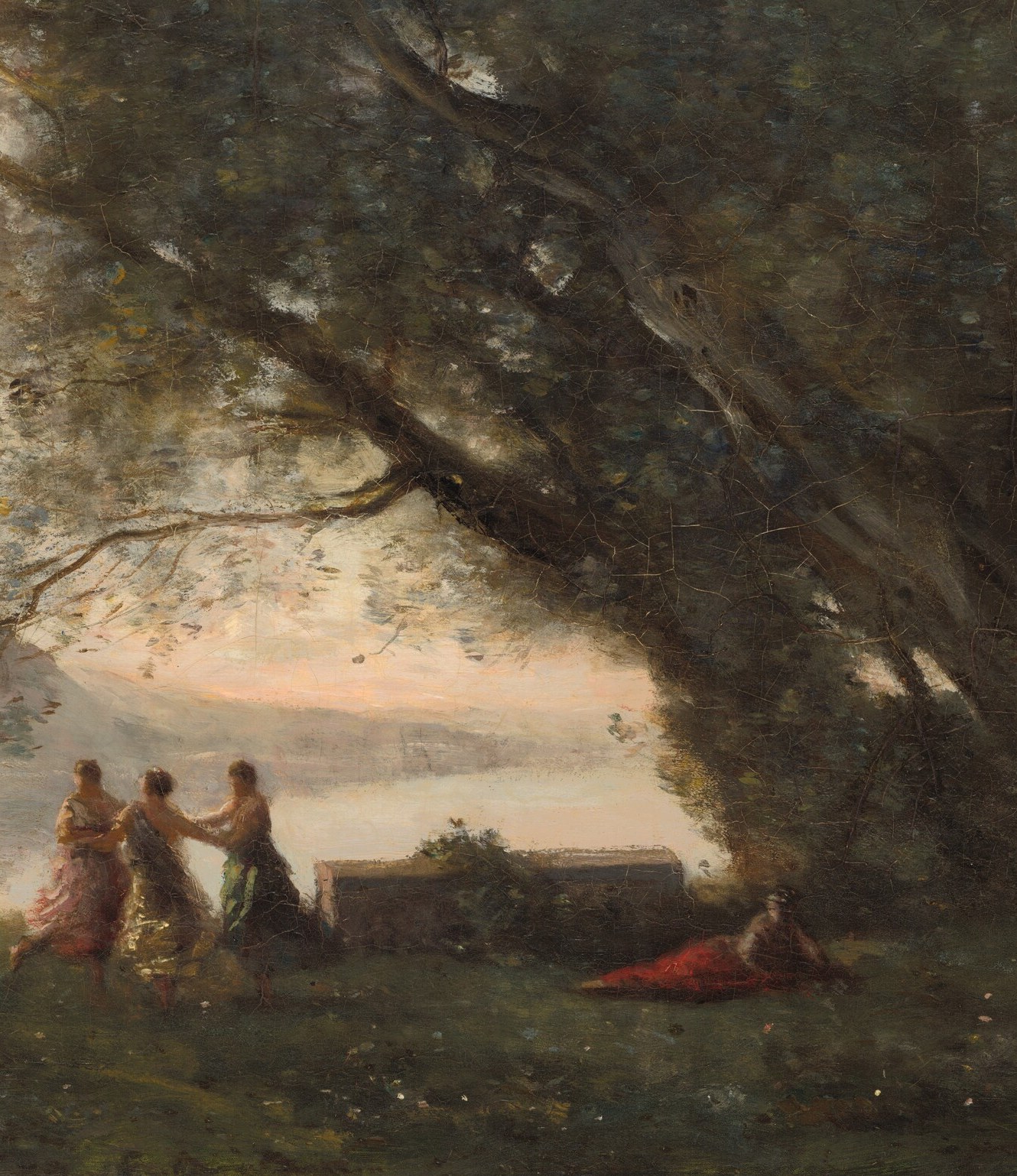
This is "Dance under the Trees at the Edge of the Lake," painted by Jean-Baptiste-Camille Corot around 1867. It lives in a private collection, far from the public eye, which is ironic given the very public uproar its style once caused.
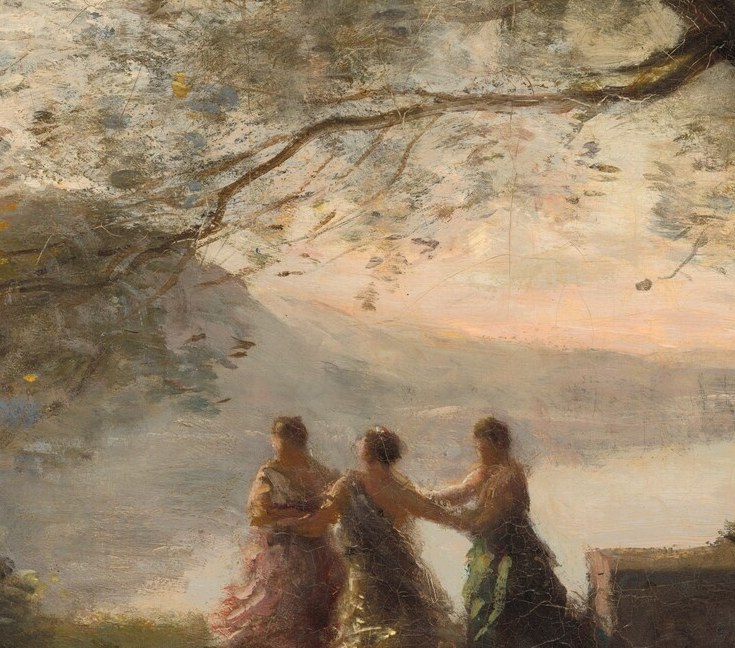
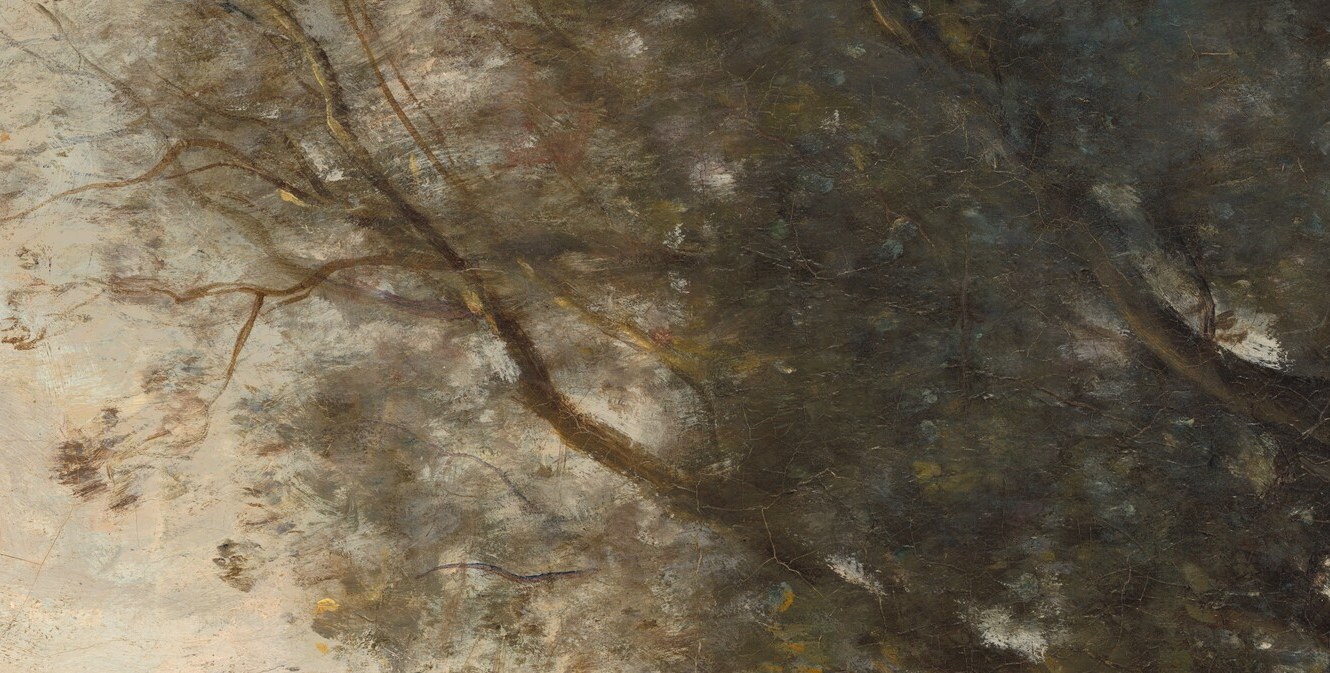
Corot was in his seventies, a grand old man of French landscape painting, when he submitted works like this to the Paris Salon. The critics were vicious. They saw the soft, feathery brushwork and the dissolving forms not as a new way of seeing, but as a sign of senility. They called his late paintings "laughable" and "degenerate," a humiliating end to a revered career. The thing they hated was exactly what you notice today: the way the leaves become a blur of light, the way the dancers' robes melt into the air, the way the whole scene feels like a remembered dream.
Corot didn't retreat. He kept painting this way, and the younger artists were watching. Pissarro, Morisot, and others studied his refusal to sharpen the world into hard edges. He gave them permission to paint atmosphere itself. The scandal his late work provoked helped crack open the door for what would soon be called Impressionism.
A celebrated master chose to make work that looked unfinished to his own generation, took the blow to his reputation, and quietly lit the path for the next one. What do you see in the blur: a failure of skill, or a harder kind of truth?
Details
Transcript
In 1868, a well-known French painter submitted three works to the Salon. The critics destroyed him. They called his work laughable, degenerate. He was 72. A giant of French art, suddenly treated like a fraud. Look at how he painted the leaves. That feathery blur, the light dissolving form, was the scandal. He was painting what the eye feels, not what it sees. The young rebels watching him had a name for this. They called it Impressionism.