Point Judith, Rhode Island by Martin Johnson Heade
View the artwork: Point Judith, Rhode Island →
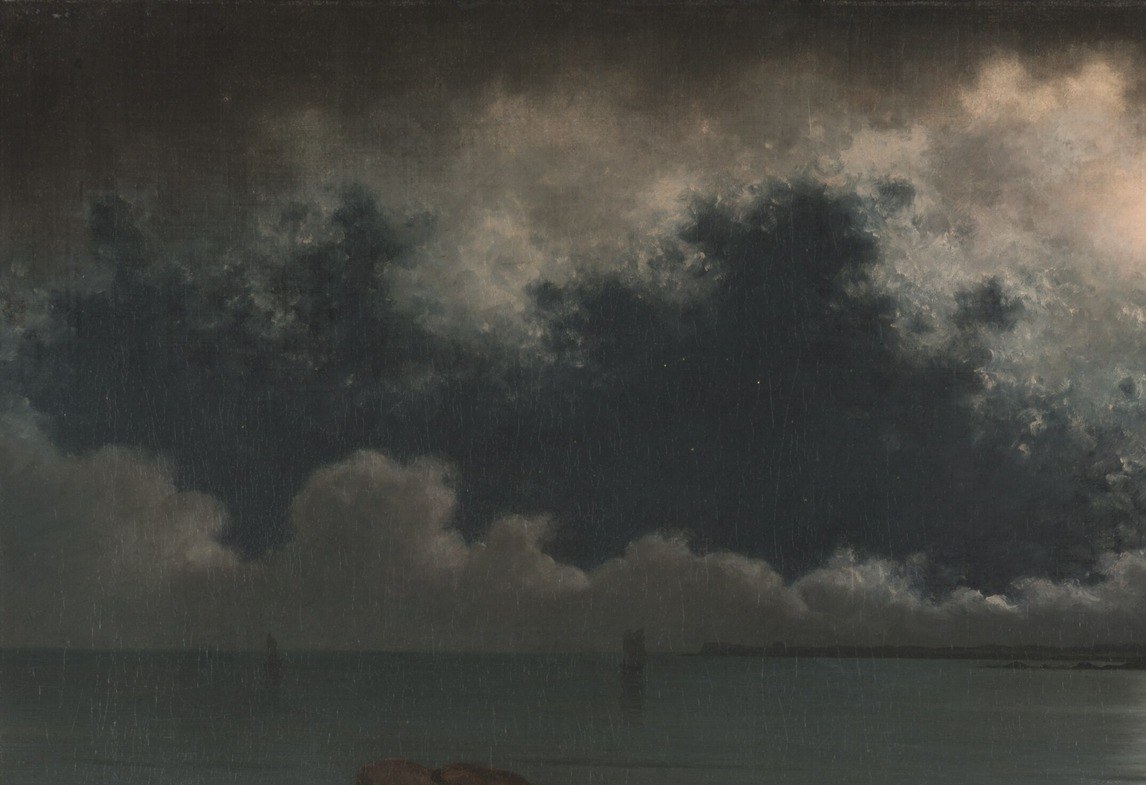
Martin Johnson Heade painted "Point Judith, Rhode Island" around 1867, and it remains one of the few true nocturnes in his entire body of work. The painting hangs today at the Cleveland Museum of Art, a quiet record of the American coast before electric light erased a darkness this absolute.
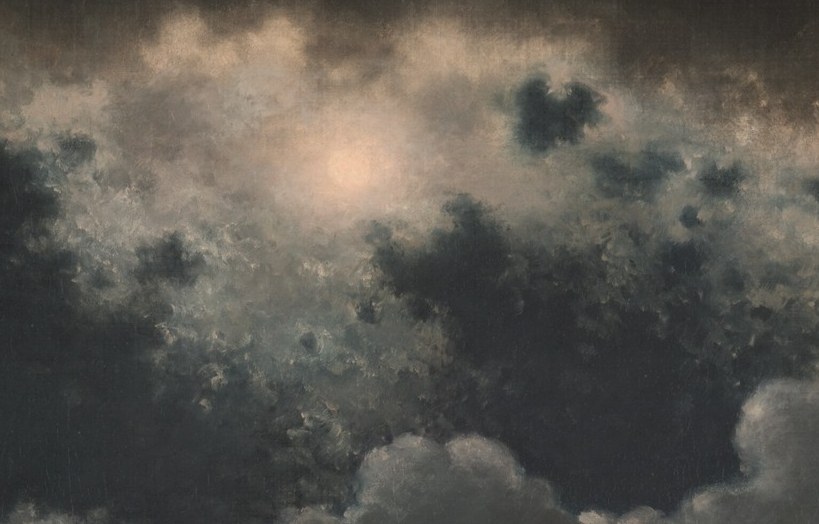
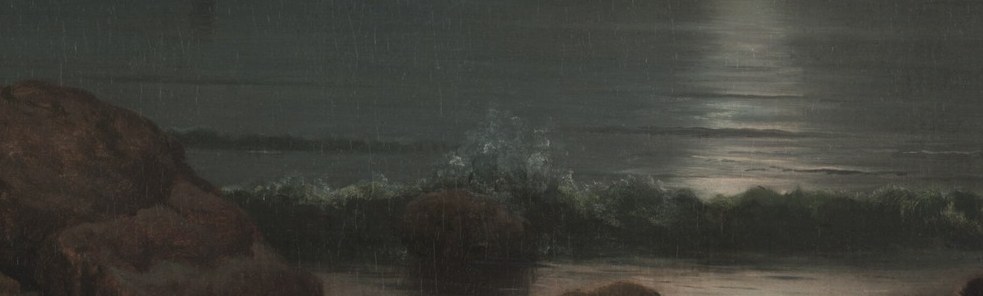
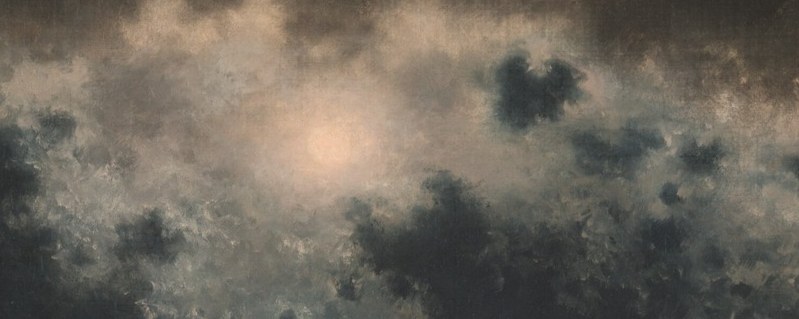
The moon itself is never shown. Heade hides it behind a mass of cloud and lets only its diffuse glow bleed through, a defining move of the Luminist style he helped pioneer. The composition works like a triptych: dark water on the left, a shimmering silver path down the center, and dark water again on the right. Two faint sailing ships on the left horizon are the only sign of human presence, and they are nearly swallowed by the night.
Heade exhibited this canvas at the Academy of Design in New York in 1867, an event preserved in a contemporary wood engraving. He was born in Pennsylvania in 1819, traveled widely in Europe, and fell in with Hudson River School painters upon returning to New York. Yet despite his quiet mastery, he died in 1904 in St. Augustine, Florida, largely unrecognized.
It was not until the 1940s that scholars rediscovered his work and secured his place in American art. This painting testifies to an experience that was once commonplace: a shoreline at night, navigable only by the pale glow of a hidden moon, with silence filling a world emptied of artificial light.
#arthistory #americanart #luminism
Details

Transcript
Rhode Island, 1867. No electric light reaches this coast. Darkness presses so close you hardly notice the land. The painter hides the moon itself. Only its breath shows. A cold silver path on the water leads the eye into the glow. Two ships, barely visible. The only proof anyone else is out here. That year, the Academy of Design in New York exhibited this canvas. Heade would die largely forgotten. The 1940s pulled him back. A shore this empty, before electric light, held a darkness we have almost lost.