Artwork
Point Judith, Rhode Island
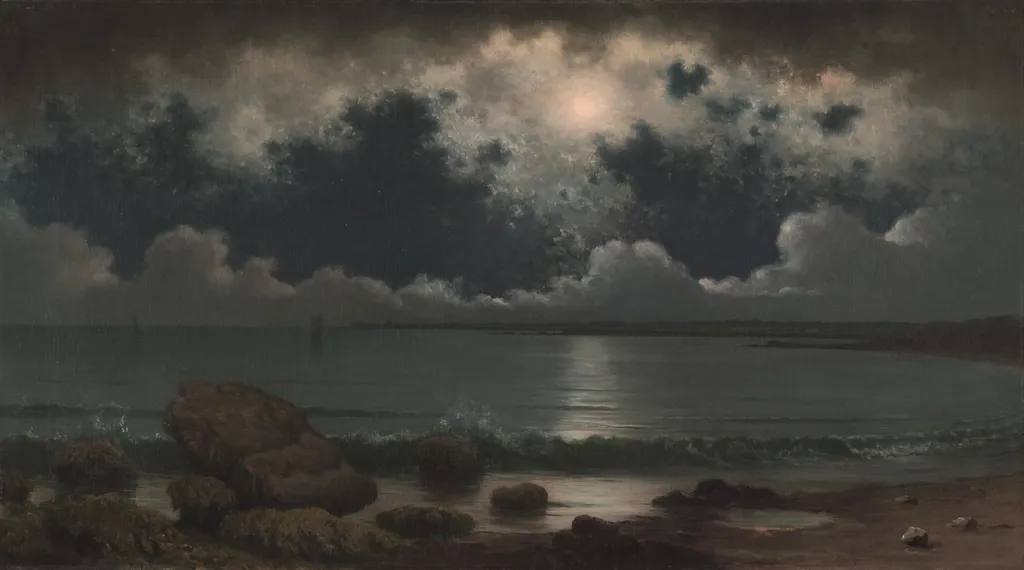
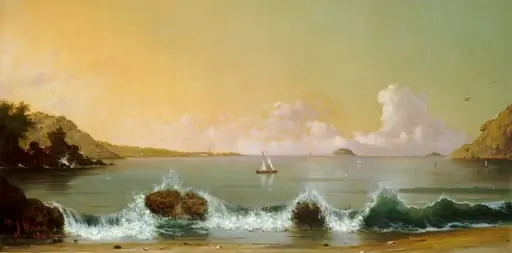
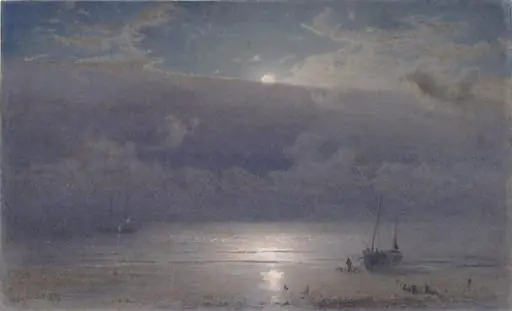
Point Judith, Rhode Island is an oil painting by the Luminist artist Martin Johnson Heade. It dates from 1867 and is held in the collection of the Cleveland Museum of Art.
About this work
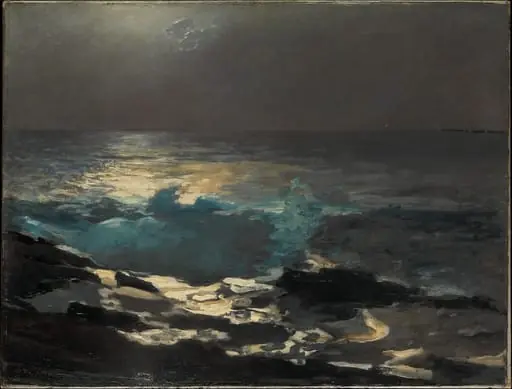
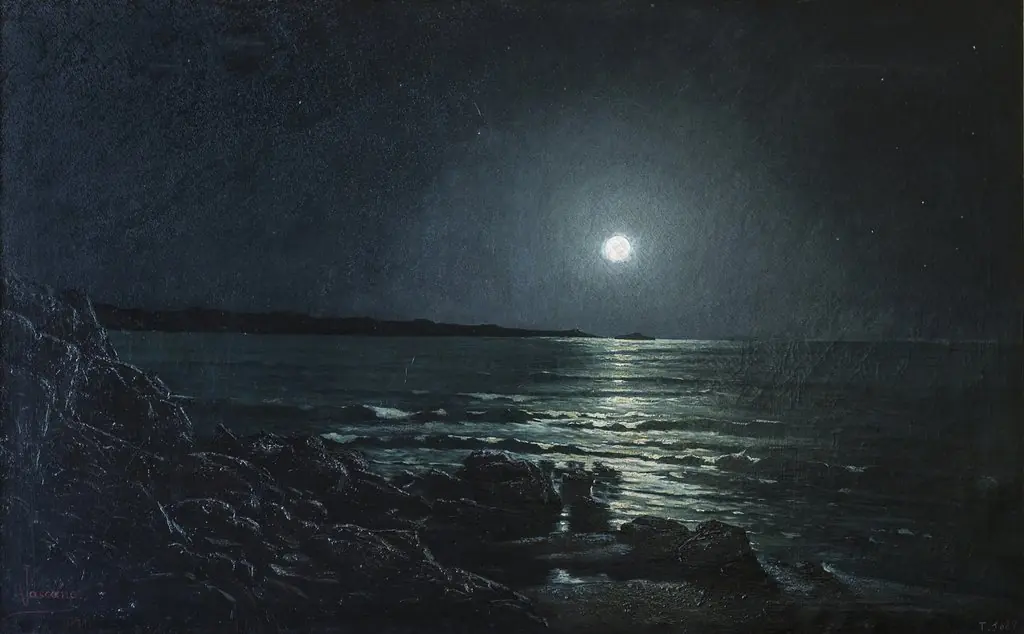
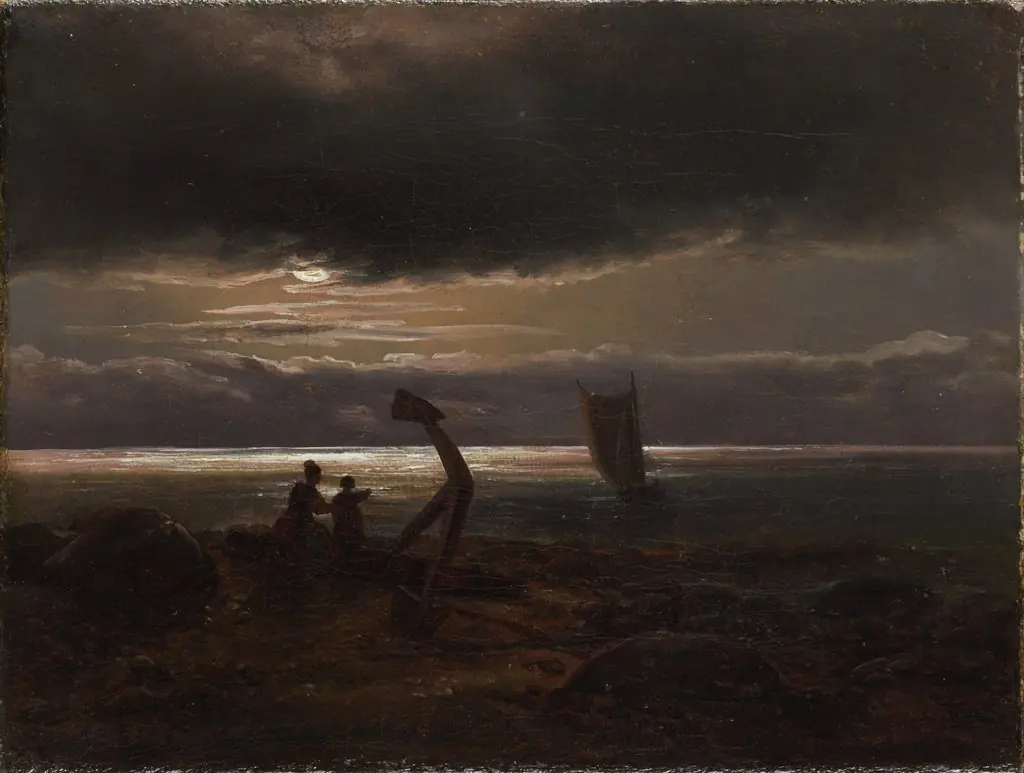
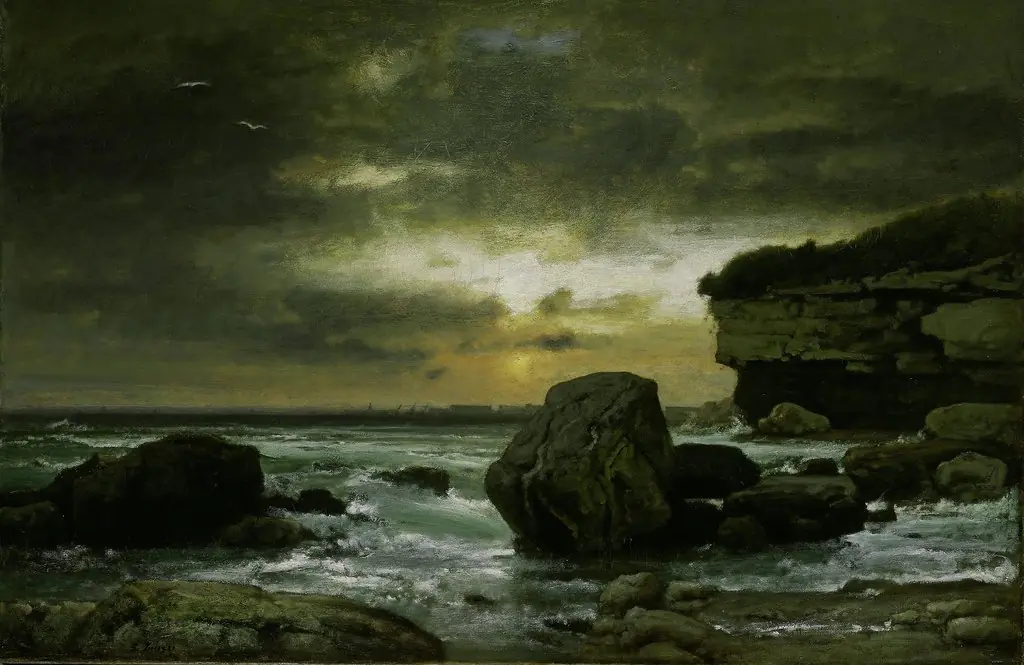
Moonlight spills across a Rhode Island shoreline where two sailing ships rest on dark water. Martin Johnson Heade painted this night view of Point Judith around 1867, catching how lunar light dissolves the line between sea and sky. The barren coast holds no figures, leaving shadow and silence as the real subjects. It now hangs at the Cleveland Museum of Art.
Overview
It is notable as one of the few nocturnal compositions within Heade's body of work, offering a serene and contemplative view of the Rhode Island shoreline.
Martin Johnson Heade's "Point Judith, Rhode Island," painted around 1867–68, is an oil on canvas depicting a moonlit coastal scene. This work exemplifies the artist's distinctive Luminist style, characterized by its emphasis on light and atmosphere. It is notable as one of the few nocturnal compositions within Heade's body of work, offering a serene and contemplative view of the Rhode Island shoreline. The painting is currently housed at the Cleveland Museum of Art.
Subject & Meaning
The canvas captures the tip of Point Judith under a luminous moon, which casts a soft glow across the land, sea, and sky. Two distant sailing vessels on the left provide the only indication of human activity; otherwise, the coastline remains deserted. Details of the shore are obscured by shadow, allowing the pervasive atmosphere and the interplay of light and dark to become the primary focus, rather than specific topographical features.
Technique & Style
Heade developed a distinctive "Luminist" approach by the 1860s, emphasizing quiet, light-drenched scenes that prioritized mood and atmospheric effects over explicit narrative. "Point Judith, Rhode Island" showcases this style through its meticulous rendering of moonlight, which appears to dissolve the boundary between the water and the night sky. This technique reflects a broader trend among American artists of the era, moving away from sharp topographical detail towards more ethereal and transient atmospheric depictions.
History & Provenance
Measuring approximately 28 by 50 inches, this oil painting was exhibited at the Academy of Design in New York in 1867, an event documented by a contemporary wood engraving. Its public display marked an early viewing opportunity for the work. The painting later entered the collection of the Cleveland Museum of Art, where it remains today, contributing to the museum's holdings of nineteenth-century American art.
Context
Born in Pennsylvania in 1819, Martin Johnson Heade initially studied with Edward Hicks before extensive European travel. Settling in New York, his interactions with Hudson River School painters influenced his turn towards landscape art. While known for salt marshes and tropical studies, this nocturnal seascape aligns with his broader interest in capturing specific atmospheric conditions.
Heade's work emerged during a period of artistic transition in America, favoring nuanced light effects over strict realism.
Legacy
Despite his significant contributions to American art, Martin Johnson Heade remained largely overlooked during his lifetime, dying in 1904 in Florida without widespread acclaim. It was not until the 1940s that art historians and scholars began to re-evaluate his oeuvre. This rediscovery process ultimately secured his position as a crucial figure in nineteenth-century American painting, highlighting his unique vision and technical mastery.
Artist & collection

Artist
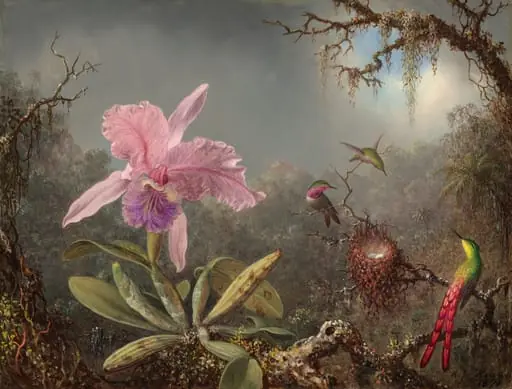
Martin Johnson Heade (August 11, 1819 – September 4, 1904) was an American painter known for his salt marsh landscapes, seascapes, and depictions of hummingbirds, often depicted with orchids, as well as lotus blossoms and other still lifes.