Hendrickje Stoffels by a Door by Rembrandt
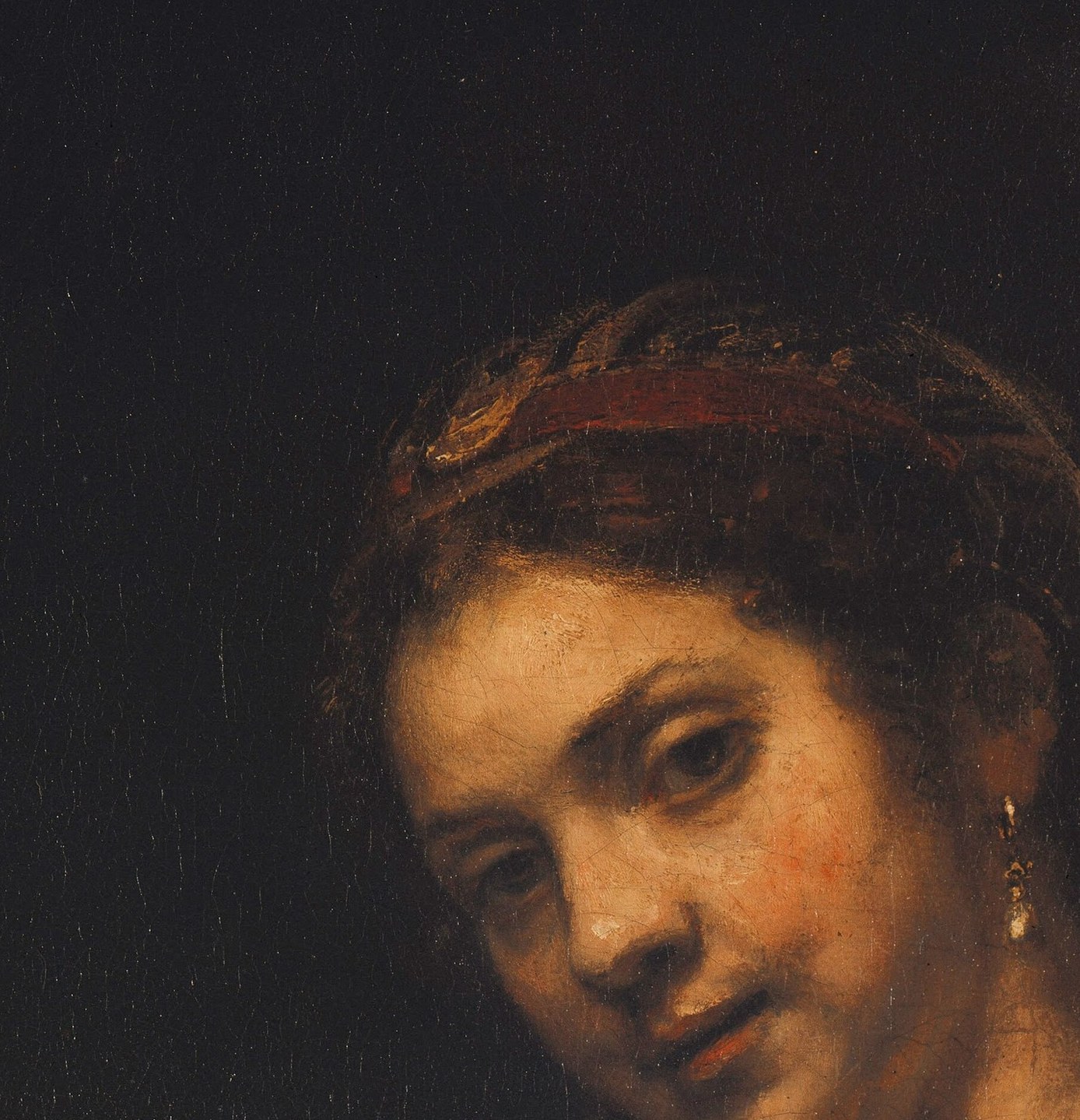
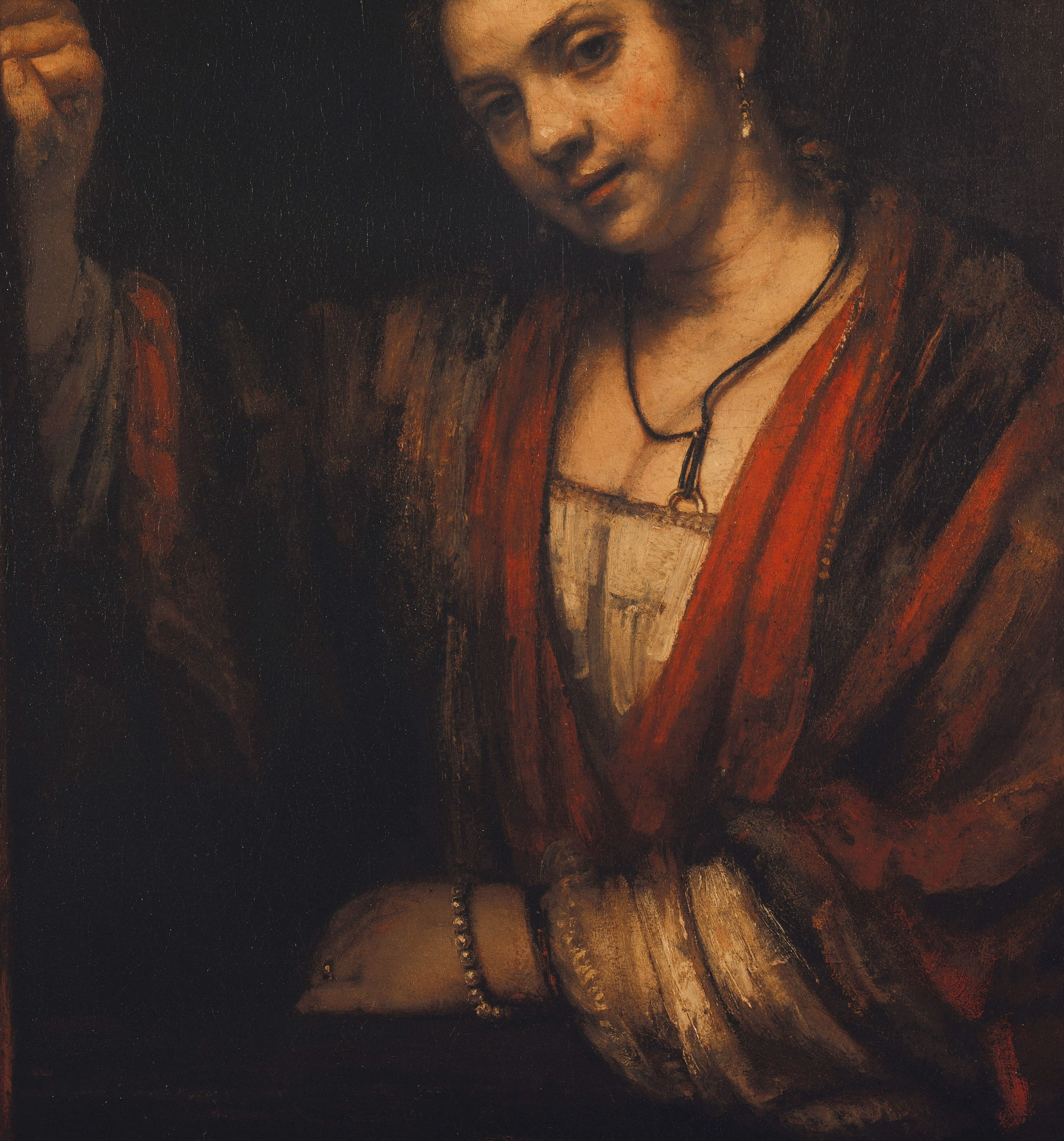
This is Hendrickje Stoffels by a Door, painted by Rembrandt around 1655 and now in the Gemäldegalerie Berlin. She was his companion, his housekeeper, the mother of his daughter, and in 1654, the Reformed Church of Amsterdam summoned her for 'living in sin' with the painter and barred her from communion.
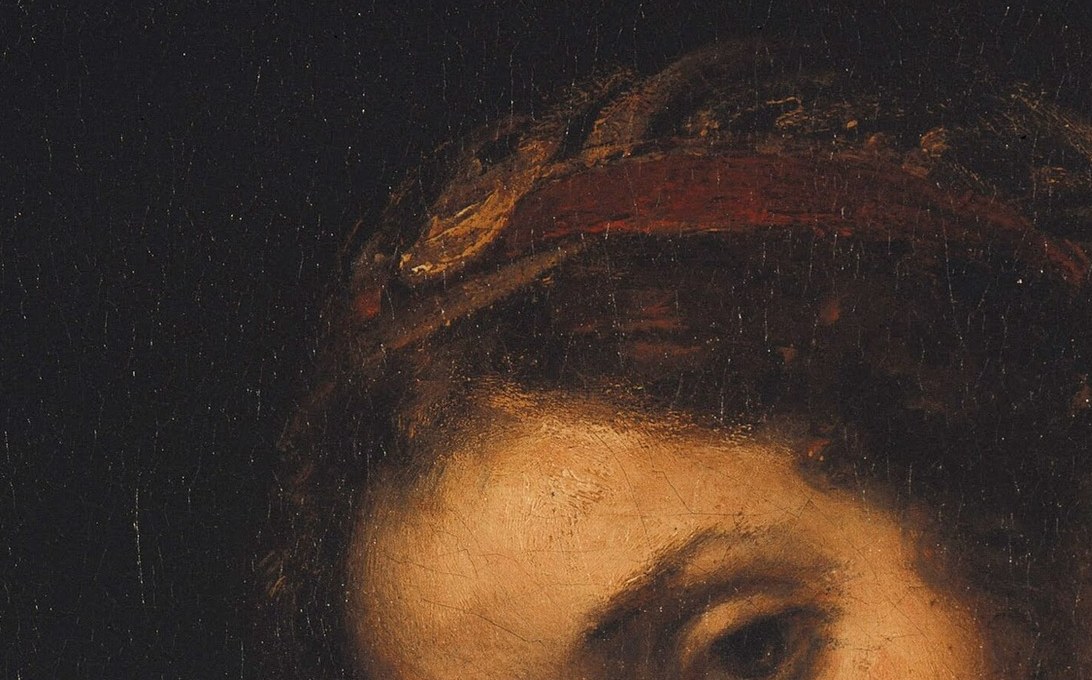
Look at her face. Rembrandt gives her eyes that downward, inward cast, she refuses the viewer entirely. In an age when portraits announced status to the world, a gaze this withheld was almost unheard of for a woman of her modest rank. Then notice the gold bracelet on her raised wrist: a small, costly ornament on someone who was not his wife and never could be.
Hendrickje came into Rembrandt's household as a servant after his first wife Saskia died. The law prevented him from remarrying without losing Saskia's inheritance, so Hendrickje remained legally unrecognized while raising their daughter Cornelia and managing his chaotic finances. The church's public censure was real, but so was his answer, a portrait that treats her with more gravity and interior life than most queens ever got.
He painted her at a doorway, neither fully inside nor outside, a woman caught between worlds. She never left him. When he died in 1669, she had already been gone six years, and he was buried in a rented grave. This painting outlasted all of it.
Details
Transcript
Amsterdam, 1654. The church summoned a young woman. Hendrickje Stoffels. Her crime was living with Rembrandt. They had a daughter. The church called it 'living in sin.' She was banned from communion. Publicly shamed. The year after, he painted her like this, not as a sinner. Her gaze will not perform for the town's judgment. That bracelet. It was worth more than a servant could afford. He painted her adorned. A woman owed nothing to the crowd outside.