Alphonse Promayet (1822–1872) by Gustave Courbet
This is Gustave Courbet's portrait of the violinist Alphonse Promayet, painted in 1851. It is a radical anti-portrait.
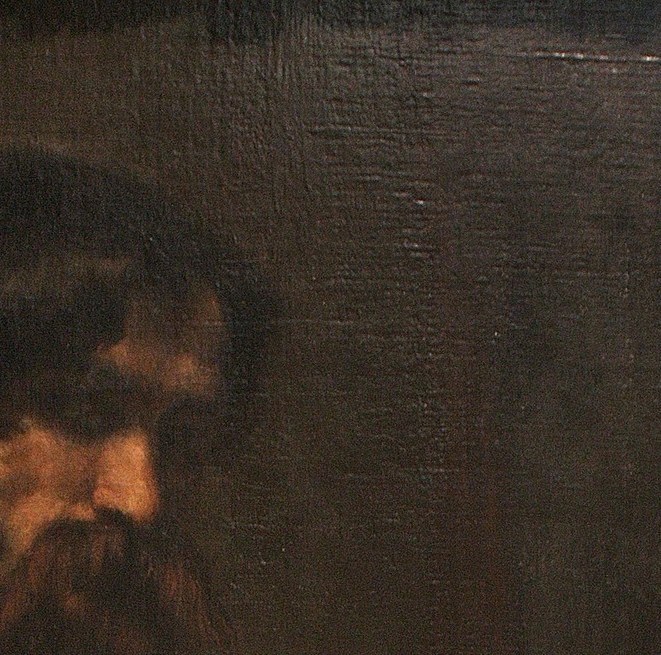
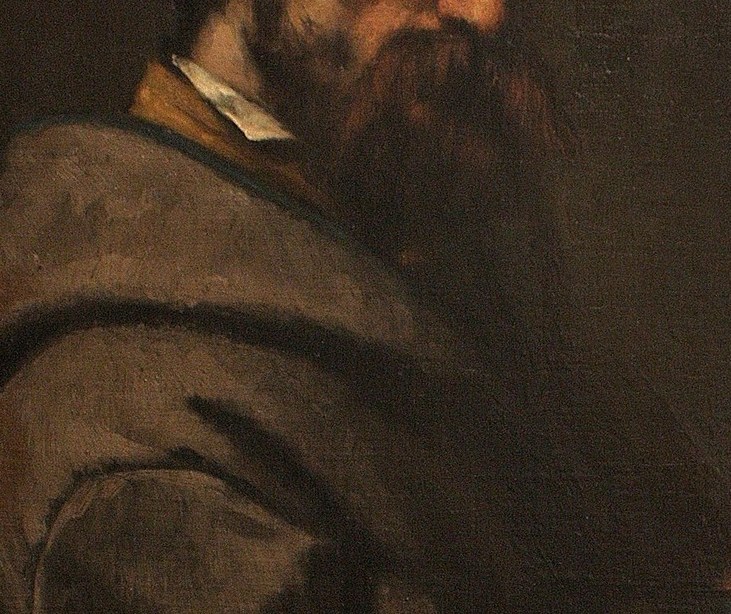
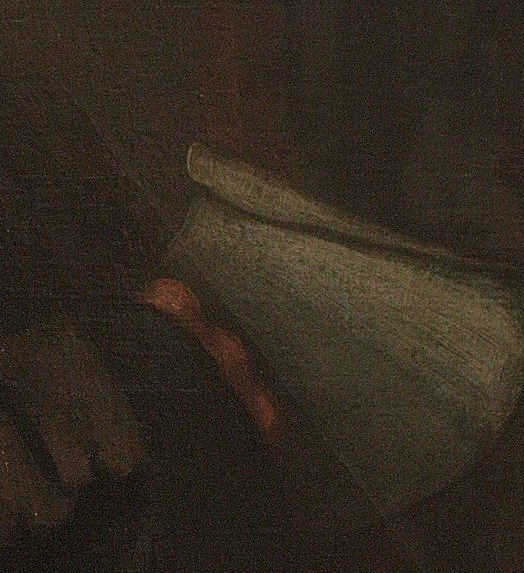
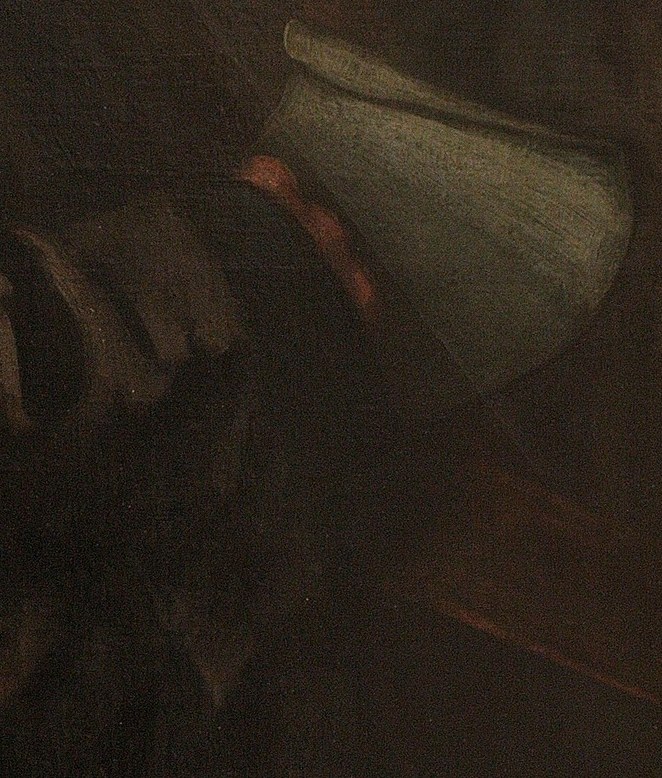
Courbet, the leader of the Realist movement, refused to idealize. Here he deliberately buries his sitter's face in shadow, breaking the oldest rule of portraiture. The identity does not live in the eyes. It lives in the thick, physical hands pressing the fingerboard, in the tangible weight of the dark shoulder, and in the warm, glowing wood of the violin.
The painting is built from heavily loaded brushwork and palette-knife impasto. The green-brown sleeve is a model passage of texture, and the beard is painted with short, directional strokes that mimic hair without trying to photograph it. Everything about the technique insists that this is a real body in a real room.
Alphonse Promayet (1822-1872) was a French violinist and composer. This was a pivotal moment for Courbet, who was solidifying his commitment to depicting ordinary people and contemporary life without romantic embellishment. The painting now hangs at the Metropolitan Museum of Art.
What do you see when you look past the face?
Details
Transcript
If a face tells you who someone is, this painter disagreed. He pushes the eyes into near-total darkness. Gustave Courbet believed personality lives in the body, not the gaze. So the hands become the whole statement. Look at the pressure on those strings. Courbet loaded the brush thick, so you feel the labor in the fingers. The violin glows. It is the only warm thing in the room. This is Alphonse Promayet, a violinist. Courbet painted him as a body at work.