Alsa Slade by Phillips, Ammi
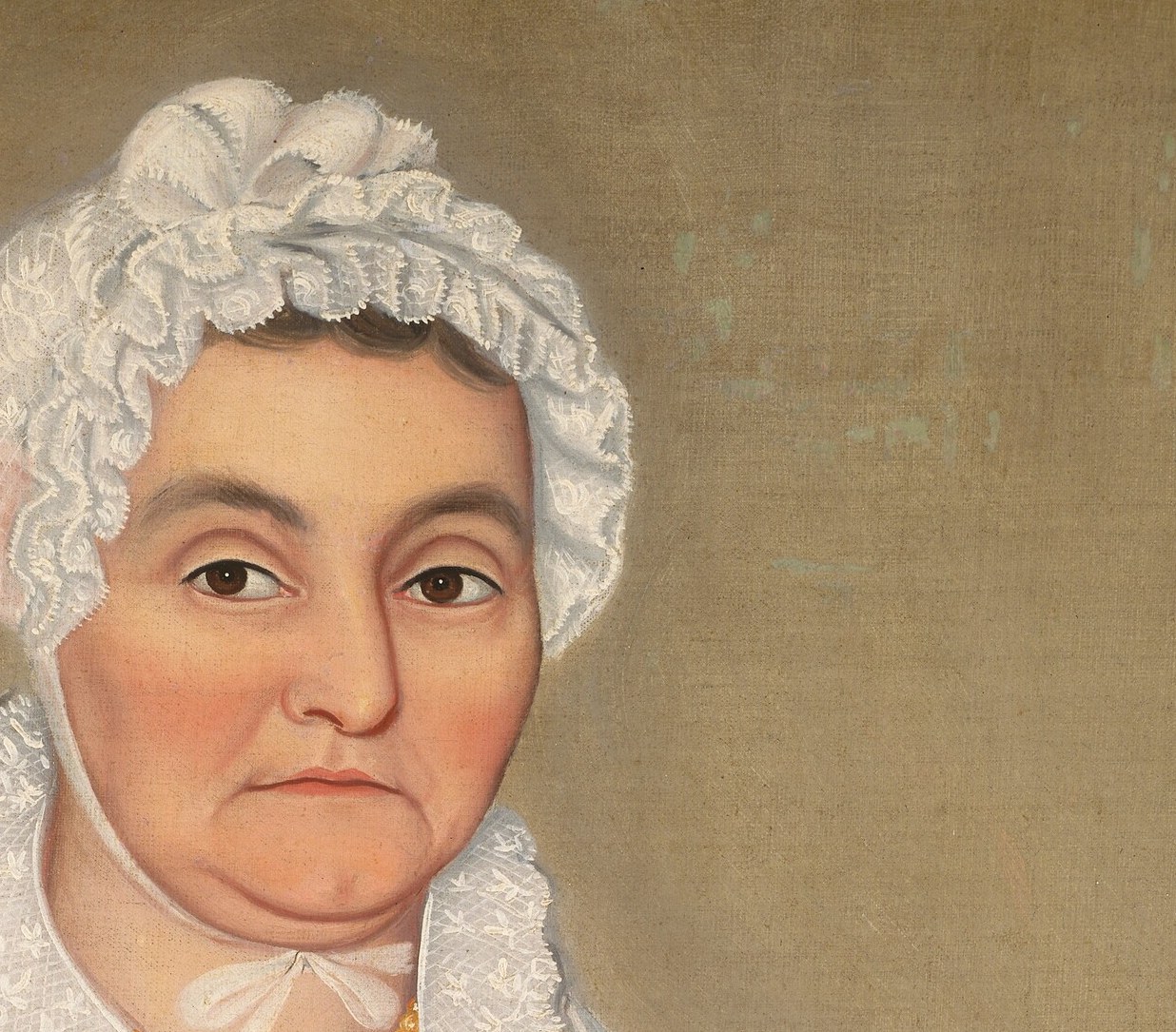
This is Ammi Phillips's 1816 oil portrait *Alsa Slade*, currently held in the collection of the American Folk Art Museum. It is a portrait of domestic economy: a woman paid to be remembered through the very skill she is shown performing.
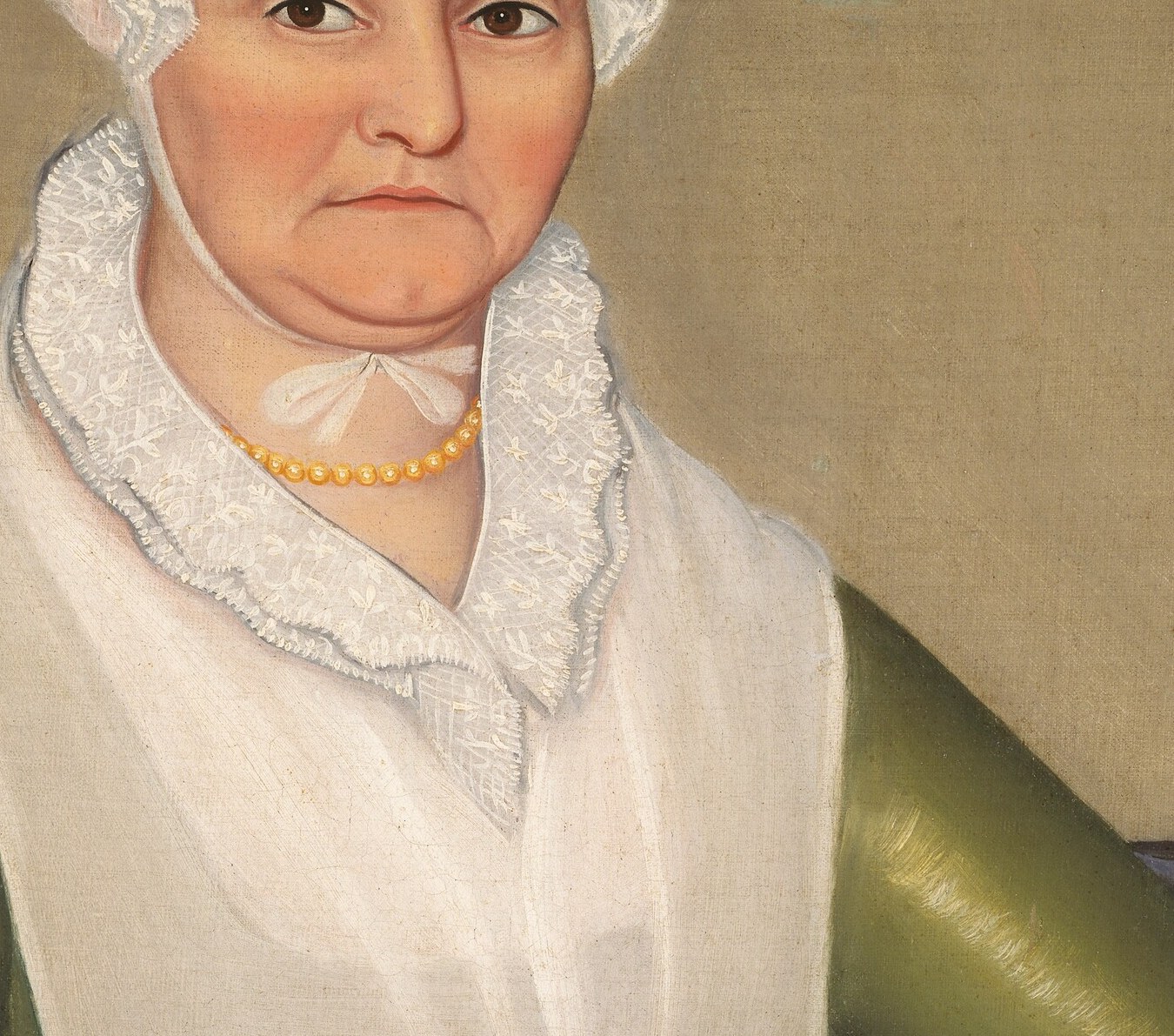
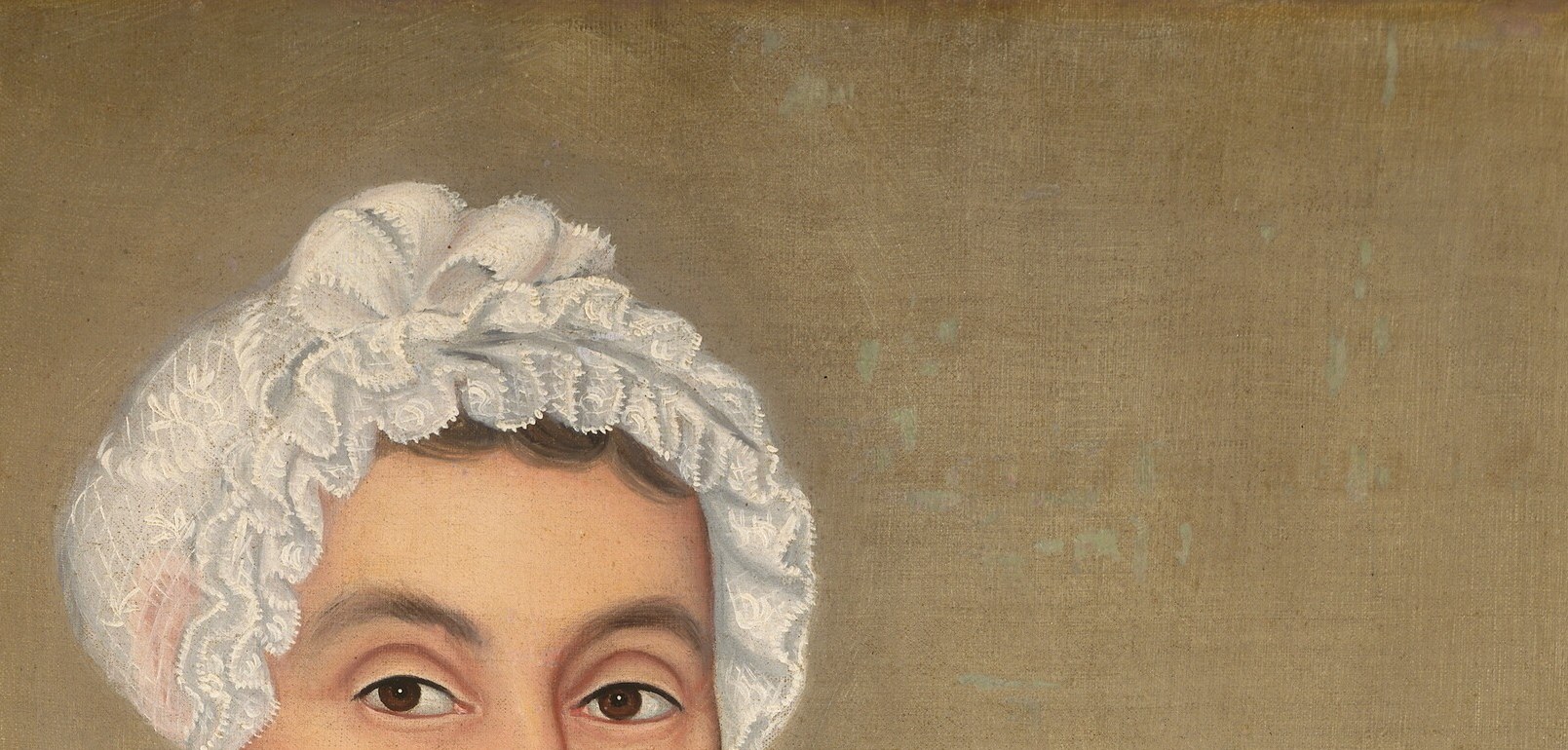
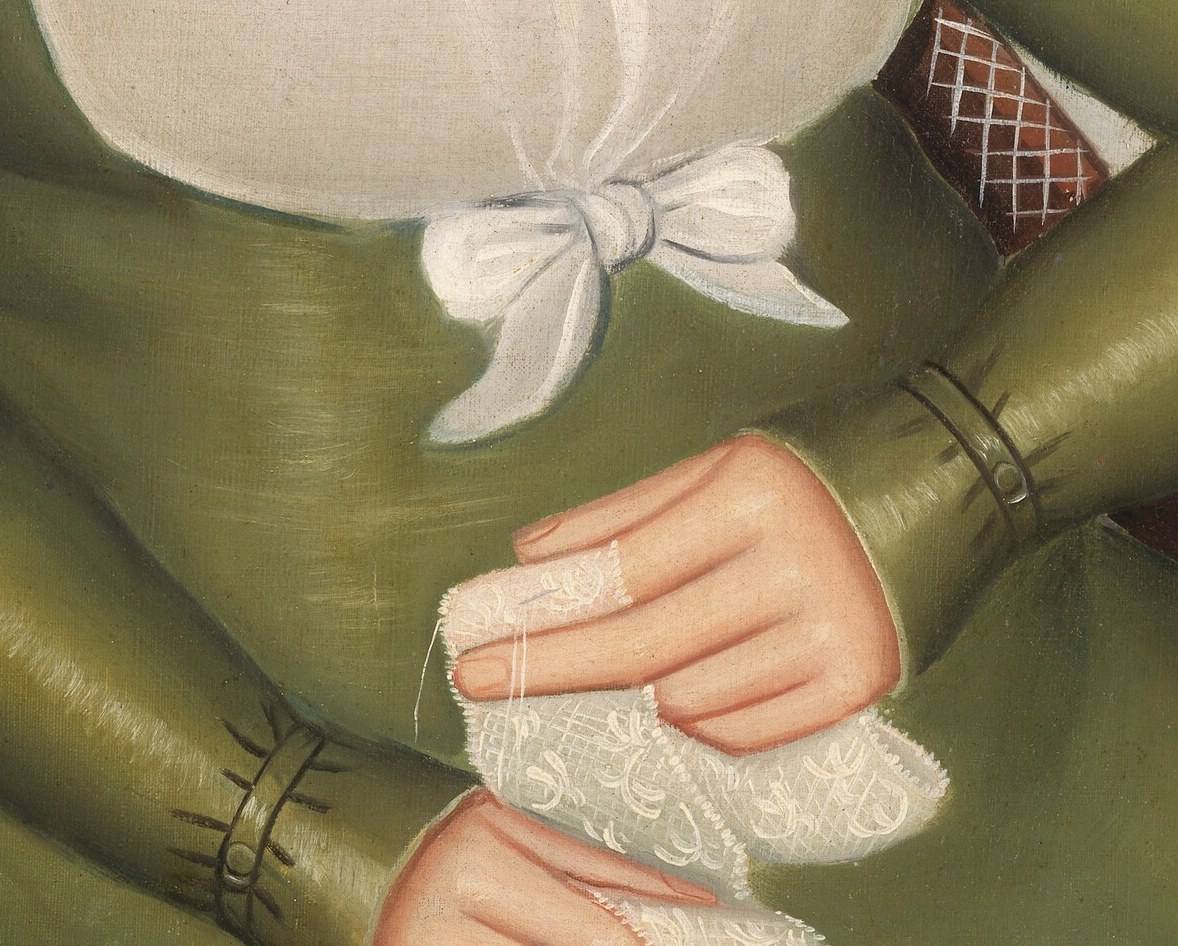
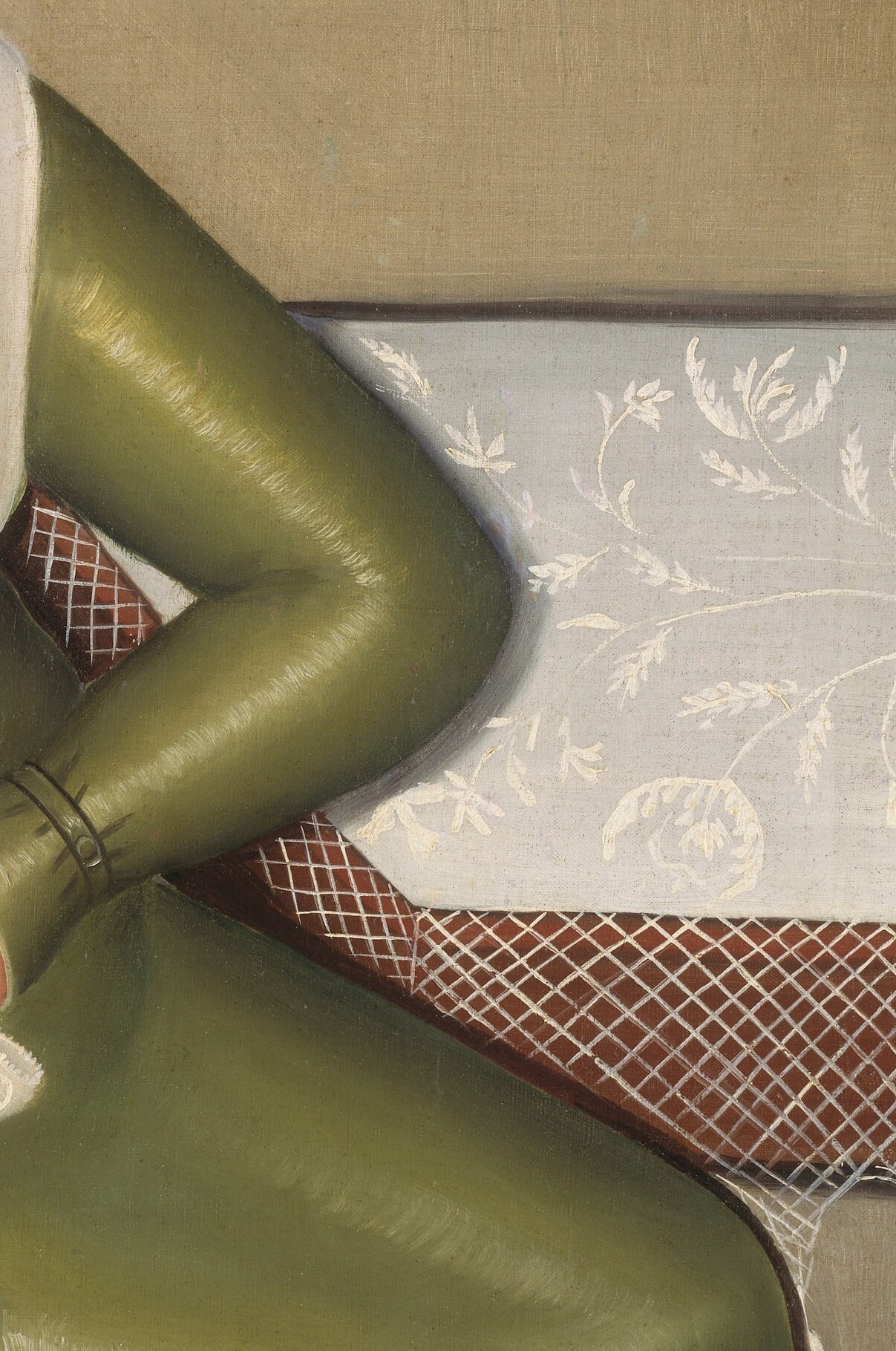
The painting tells you its terms immediately. Her face is composed but gives little away. The white cap and fichu are the most texturally elaborate passages in the work, framing her with the halo of married respectability. But the real conversation is lower: her hands hold the white needlework that Phillips made the painting's explicit subject. The embroidery on the table at right is not decoration but proof of labor.
Ammi Phillips was a self-taught itinerant portraitist working the Connecticut-Massachusetts-New York borderlands. His early style, visible here in the flat planes of the green dress and the simplified chair, reads now as strikingly modern, but it was practical: fast, affordable likenesses for farming families. A portrait like this cost between five and ten dollars at a time when a day laborer earned a dollar a day.
Alsa Slade's hands bought her place on this canvas. The painting makes the transaction visible.
Details
Transcript
1816. A portrait was a major expense. So a married woman commissioned one that proved her worth. The white cap and fichu signal respectability and status. But the true cost runs through her fingers. Her needlework is the painting's entire stated subject. Ammi Phillips charged five to ten dollars for a portrait like this. A farmhand then earned a dollar a day. Alsa Slade paid for it with the skill she holds.