Hummingbird and Apple Blossoms by Martin Johnson Heade
View the artwork: Hummingbird and Apple Blossoms →
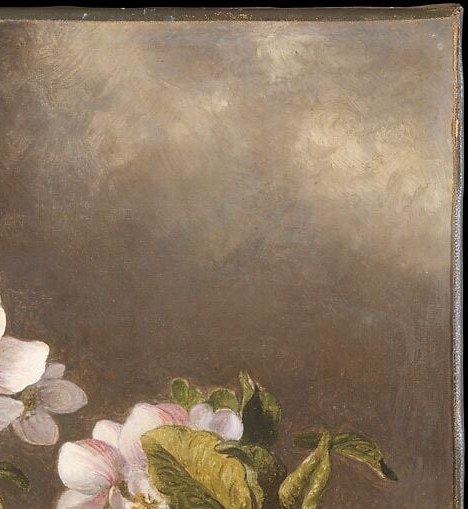
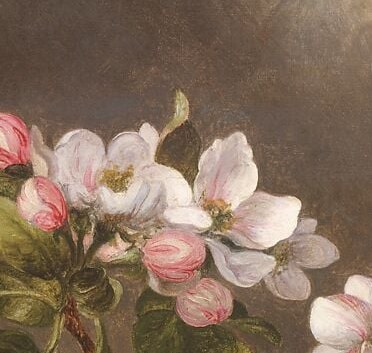
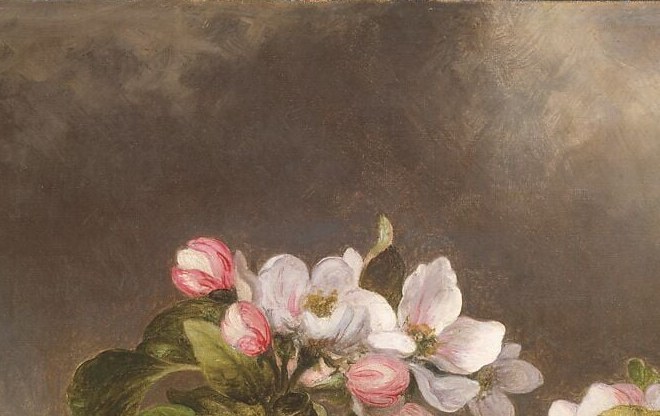
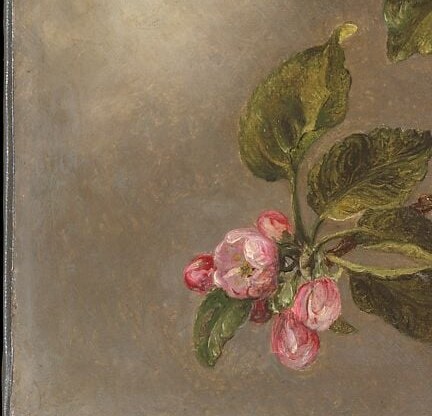
Martin Johnson Heade's "Hummingbird and Apple Blossoms" (1875) is a small oil painting that captures a split second of motion photography hadn't mastered yet. The wings are a controlled blur while the bird's body and the apple blossoms around it remain razor-sharp, an illusion of shutter speed achieved entirely by eye.
Look at the tiny yellow stamens inside the central white blossom. That's where the hummingbird's beak is aimed, connecting the bird's hover to a real biological purpose. Then look closely among the serrated green leaves and you'll find a single unripe green apple, barely visible against the foliage. Heade tucked the entire life cycle onto one branch.
Heade was born in Pennsylvania in 1819 and spent years as an itinerant portraitist before friendships with Hudson River School painters turned him toward landscape and natural history. He traveled to Brazil planning a book on tropical hummingbirds, and even after that project collapsed, he kept live birds in his studio. Direct observation of their movement let him solve a problem photography couldn't yet touch: how to paint a wingbeat.
The painting lives in the American Wing of the Metropolitan Museum of Art. It's remarkably small and intimate, the kind of canvas you have to step close to, which is exactly where you need to be to see the apple hiding in plain sight.
#arthistory #martinjohnsonheade #americanart
Details
Transcript
A hummingbird, frozen mid-air. Wings still a blur. Painted in 1875. The camera shutter won't capture this for years. Heade kept live hummingbirds in his studio. Only by watching for hours could he map a wingbeat onto oil. And hidden among the leaves: a single green apple. The bloom and the fruit. A life cycle in one branch.