Landscape with Merchants by Lorrain, Claude
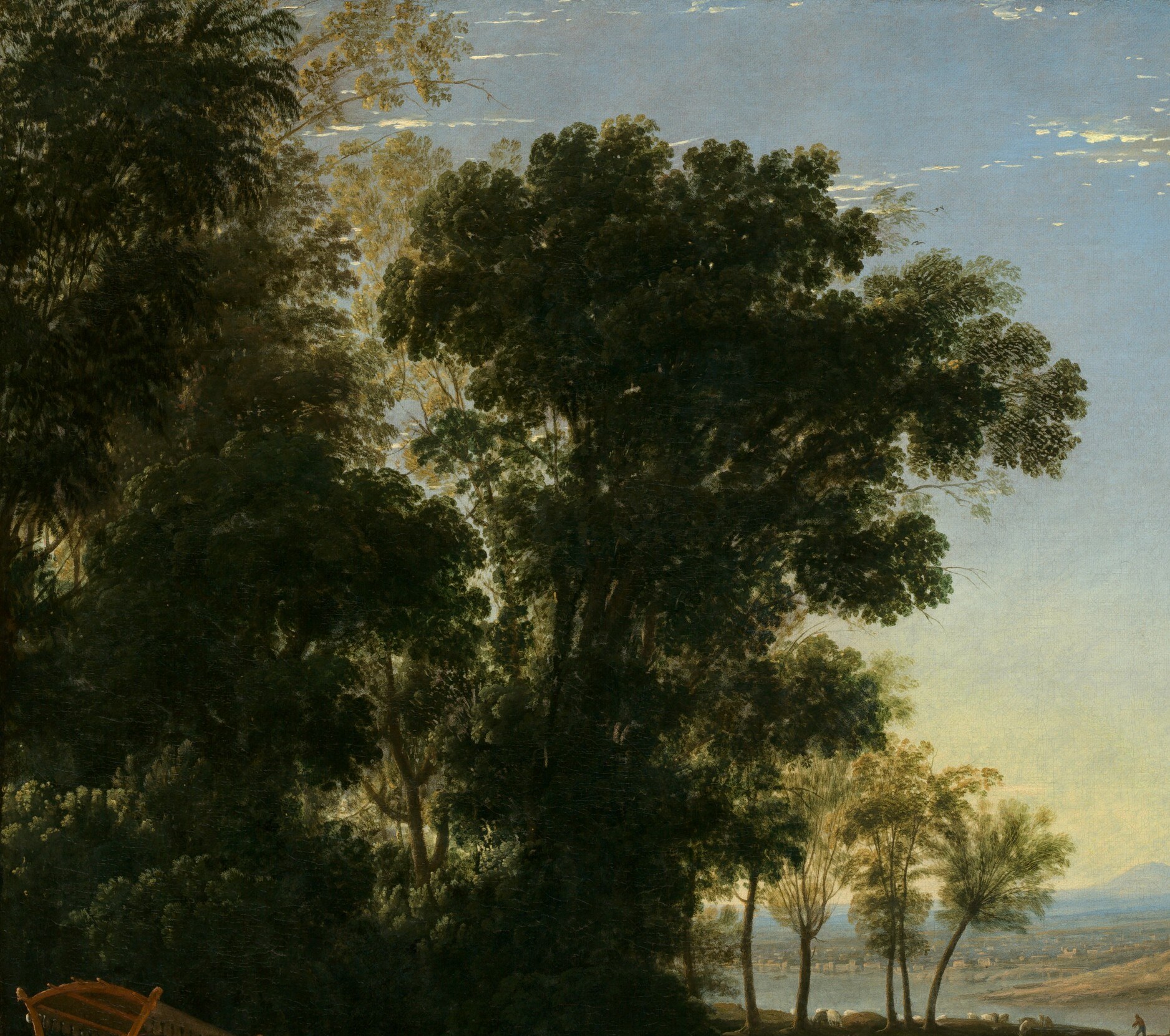
Claude Lorrain's "Landscape with Merchants," painted around 1629, is a pioneering work that helped establish landscape as a primary genre in art. Housed in various collections globally, this oil on canvas by the French Baroque master showcases his innovative approach to integrating human activity within grand natural settings.
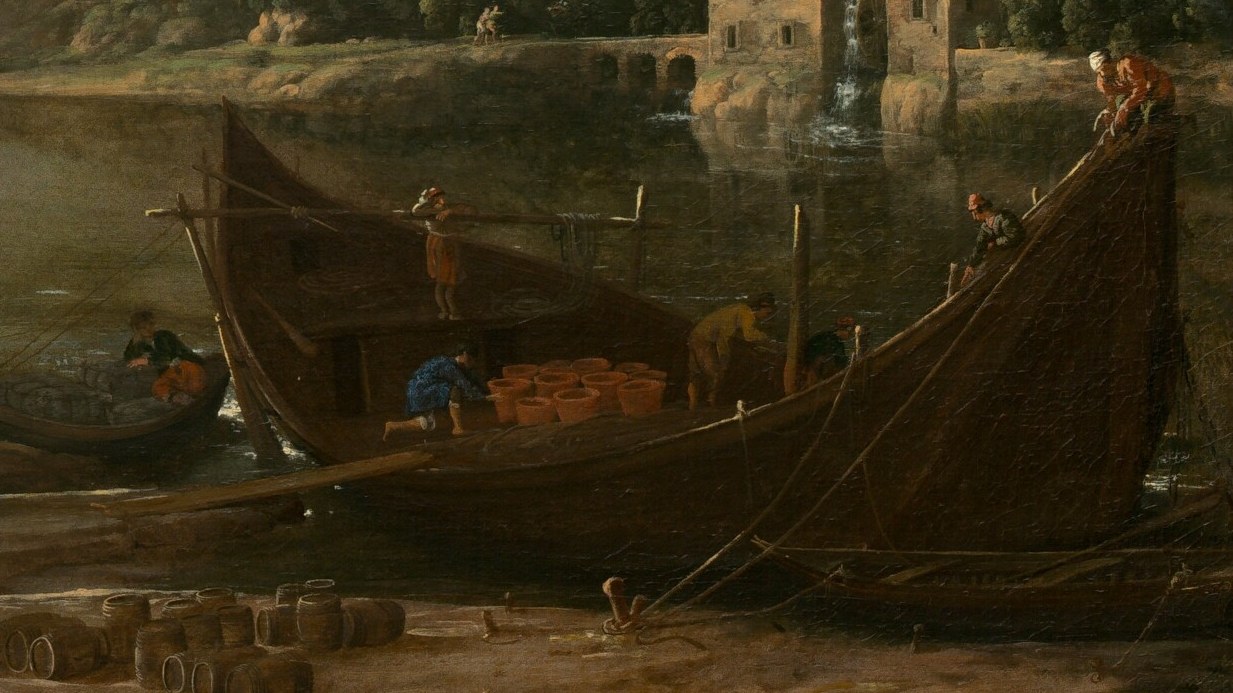
Observe the small figures of merchants by the water's edge, particularly the man in the yellow tunic, and the bustling boats. These carefully rendered details, though minor in scale, imbue the expansive scene with narrative and a sense of daily life, elevating the landscape beyond mere scenery.
Lorrain, who spent most of his life in Italy, was among the first artists to dedicate his practice almost exclusively to landscape painting. His compositions significantly influenced later generations, including the 19th-century Barbizon School, which shared his emphasis on direct observation and naturalistic outdoor scenes.
His work transformed how artists perceived and painted landscapes, making them central rather than just a backdrop. What details do you notice that bring this landscape to life?
Details
Transcript
This painter was one of the first to focus on landscapes. But his scenes are never just nature, they include human stories. Look closely at the merchant in the yellow tunic. His attention to small figures brought life to grand vistas. This was a new approach to painting at the time. Centuries later, the Barbizon School followed his lead.