Bridge over a Pond of Water Lilies by Claude Monet
This is Claude Monet's 'Bridge over a Pond of Water Lilies,' painted in 1899 and held at The Metropolitan Museum of Art. It is not just a view of a garden. It is a receipt for a property.
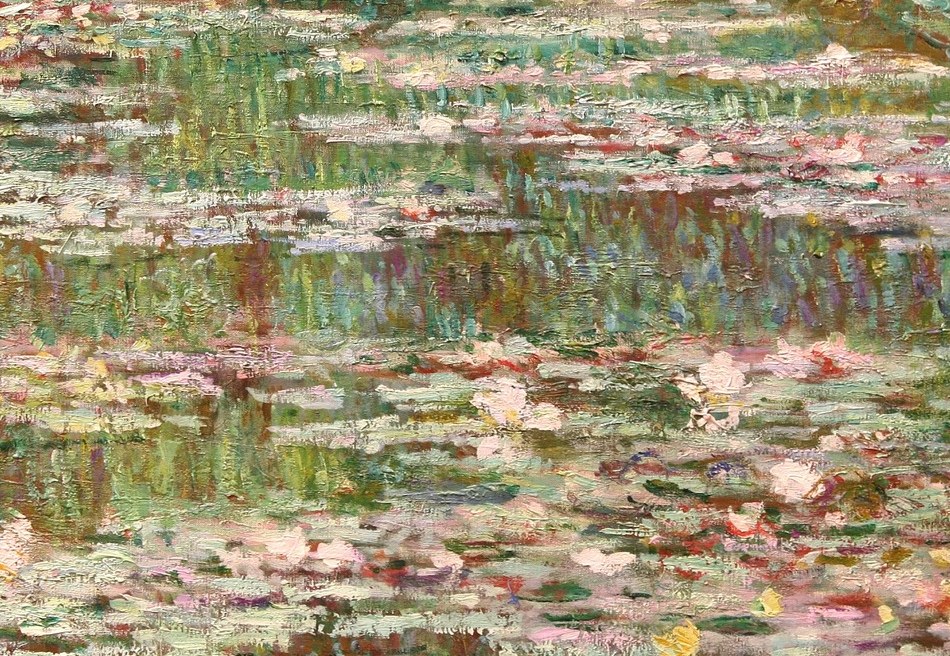
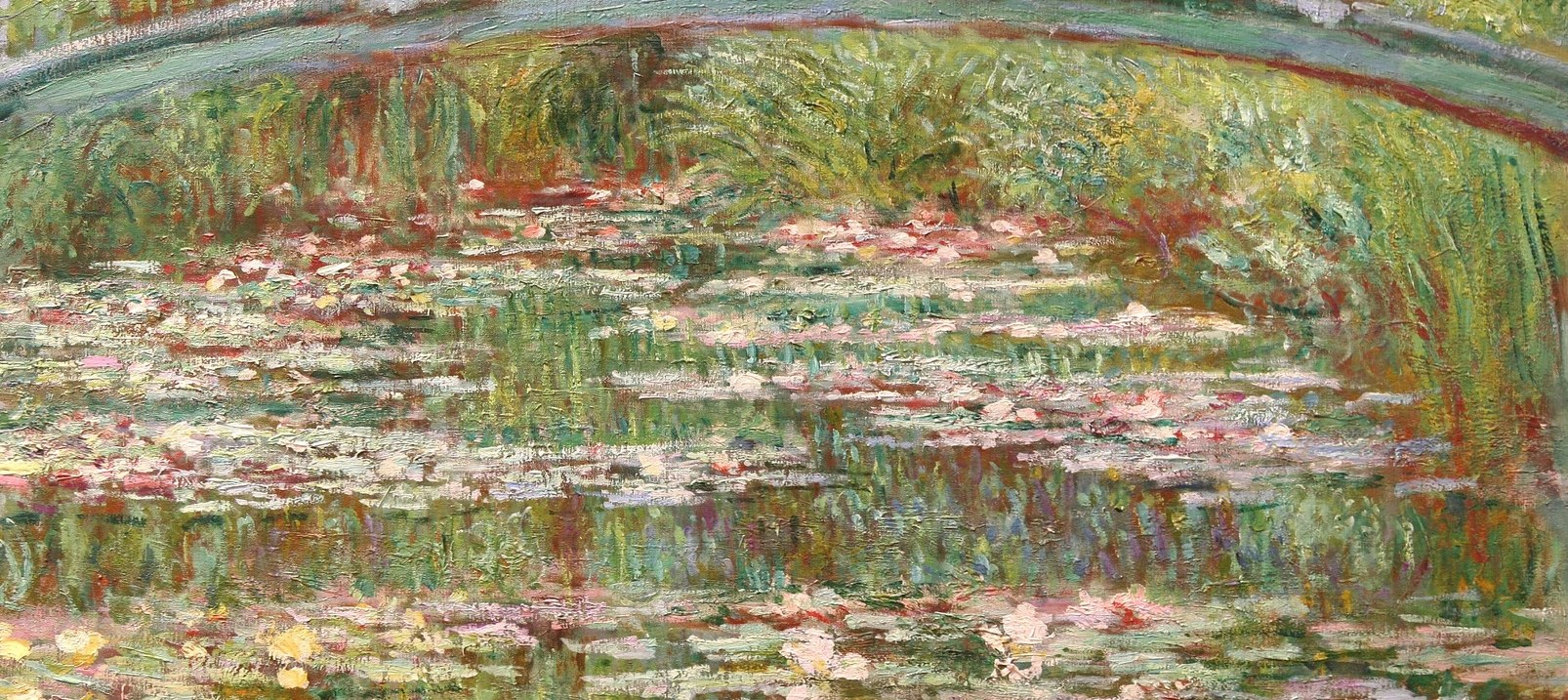
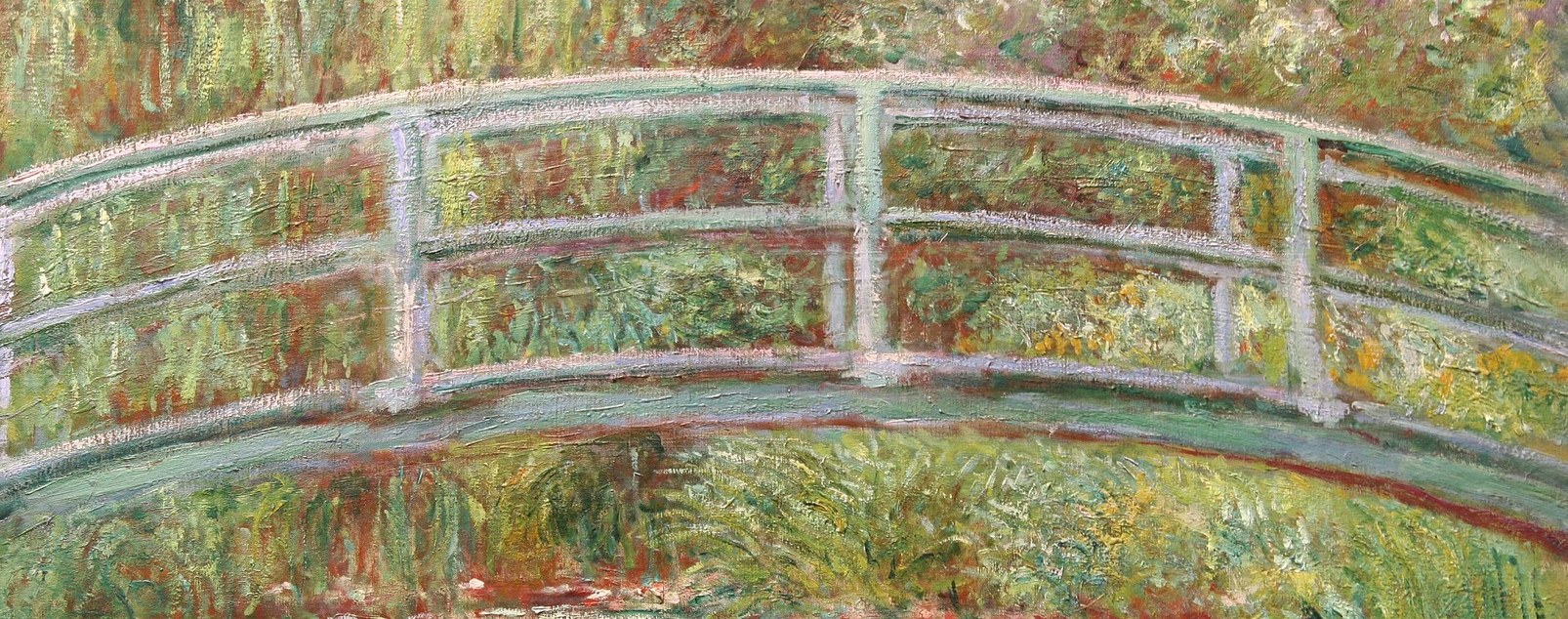
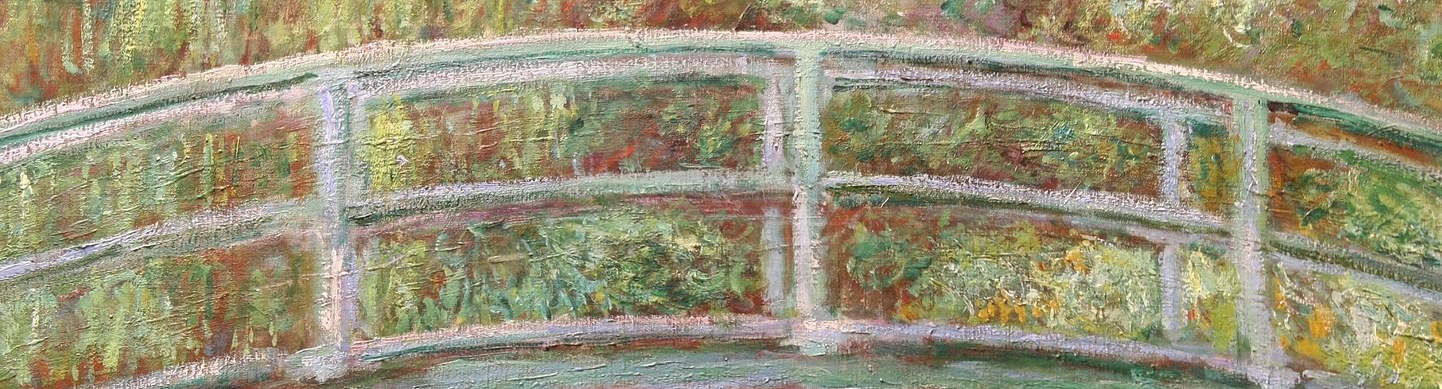
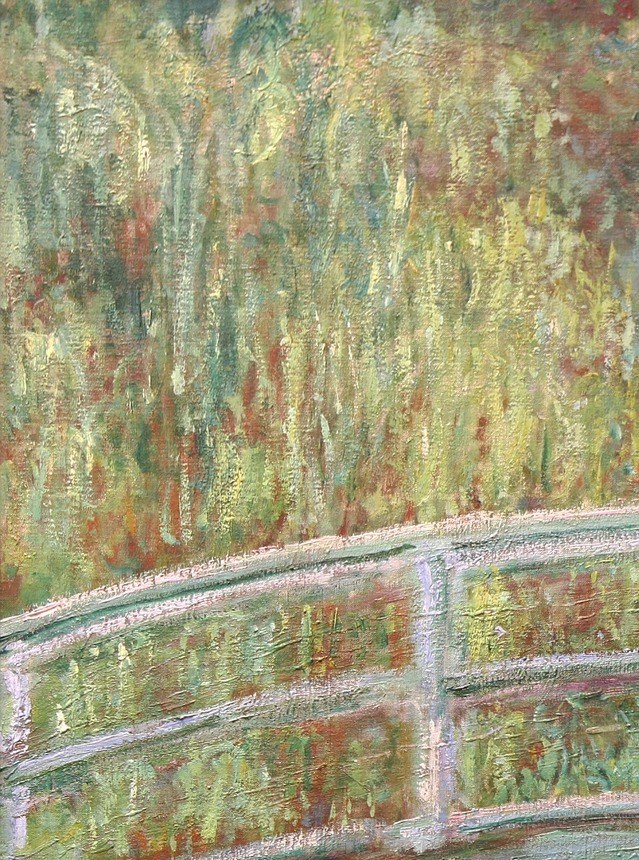
The painting shows the Japanese-style bridge Monet had built over the pond he had dug on land he did not yet own. The water's surface is a thick mosaic of vertical green, violet, and ochre strokes, with pink water lilies floating in impasto clusters. The bridge's pale arc is the only rigid line in a composition that dissolves everything else into atmosphere.
In 1899, Monet's dealer Paul Durand-Ruel contracted to buy his entire studio output. That year alone, Monet sold 35 canvases for 101,500 francs. Nineteen of those paintings depicted this pond. The series paid so well that Monet purchased the Giverny property outright in 1900, and soon after he expanded the water garden, eventually building the large studio where he painted the Orangerie murals.
He painted his way into owning the land that became his life's work. The bridge leads nowhere except deeper into a landscape Monet created, then bought, stroke by stroke.
Details
Transcript
By 1899, Claude Monet was no longer a struggling artist. His dealer had promised to buy the whole studio output. That year alone, he sold 35 canvases for a total of 101,500 francs. Nineteen of those paintings were of this same pond. Look at how the water itself is built. A mosaic of green, violet, and ochre strokes, no single brush rests. This painting was a line item in a contract that made Monet rich. Rich enough, in fact, to buy the house and the land outright.