Singing a Pathetic Song by Eakins, Thomas
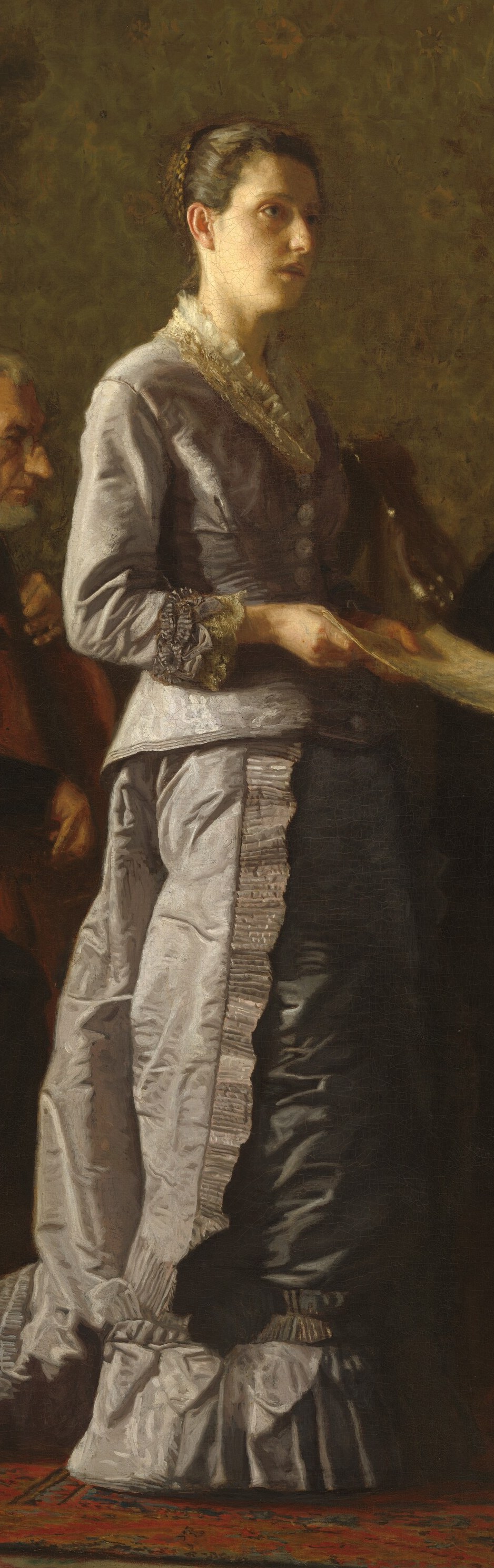
Thomas Eakins painted "Singing a Pathetic Song" in 1881, and it is now in the collection of the National Gallery of Art in Washington, D.C. The picture is a portrait of a private recital, but it is also a portrait of a specific transaction between the artist and a collector named James W. Pinchot.
The young woman holding the sheet music is Pinchot's niece, posed in the drawing-room of his own house. Eakins built the frame himself and carved the title directly into the wood, a signal that he considered the object a unified work, not just a canvas in a shop molding.
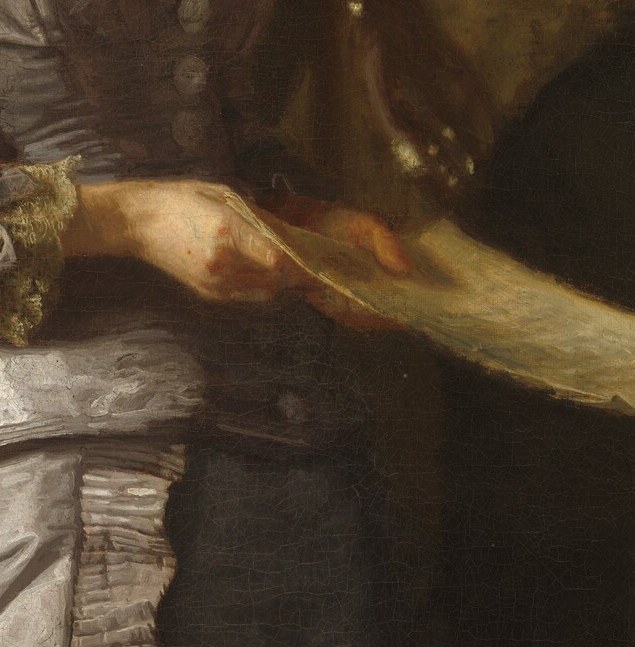
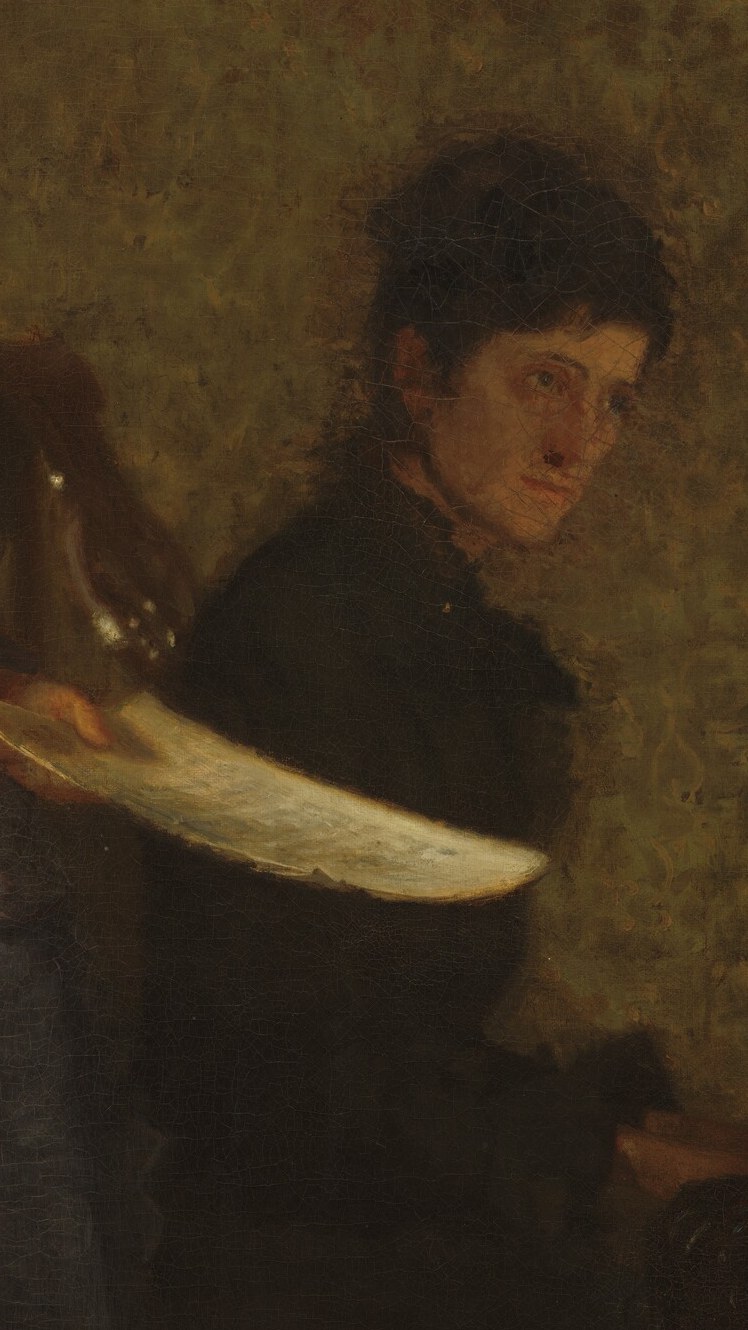
Pinchot paid Eakins to create the painting, but the finished work stayed in the family for decades. Eakins, who was then teaching at the Pennsylvania Academy, was already known for his unsparing realism, and this domestic scene avoids sentimentality in favor of an almost discomforting quiet. The sitters do not perform for us; they are absorbed in the music.
A painting like this was never meant to be a blockbuster. It was a private, carefully built thing that moved slowly from one collection to another until it entered the public trust. What do you notice about the woman's expression the longer you look at it?
Details
Transcript
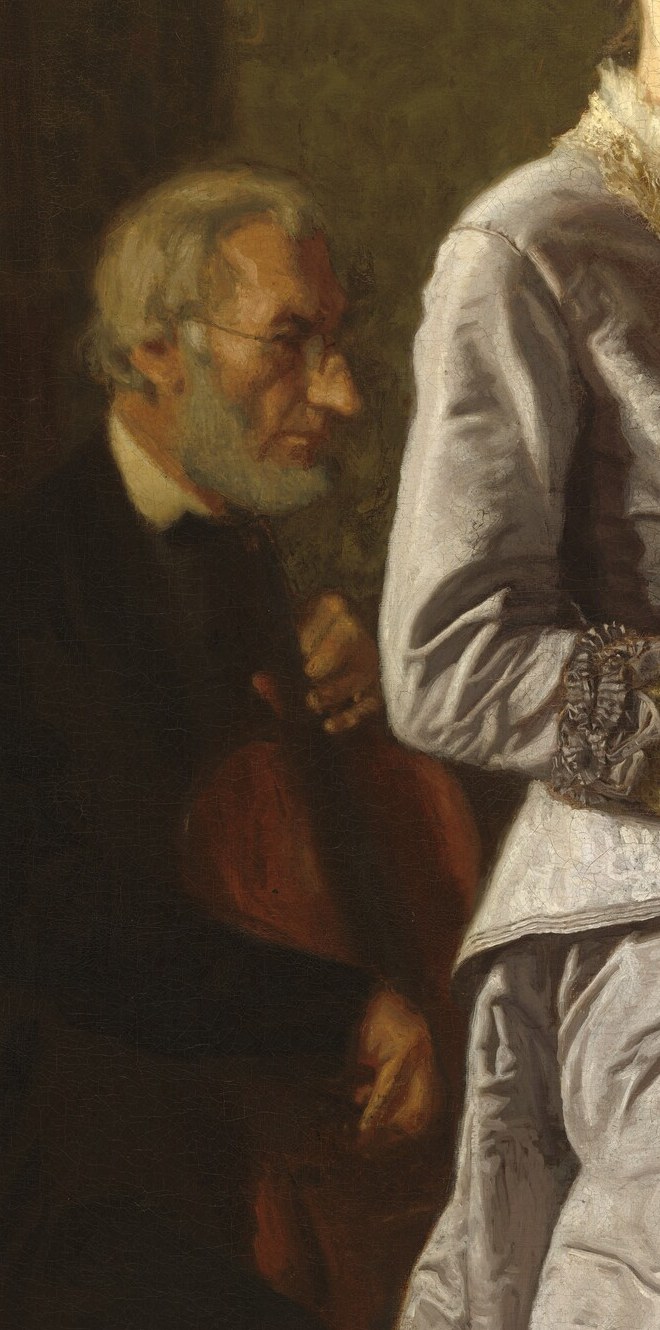
In 1881, a Philadelphia collector commissioned this painting. The singer is his niece, posed in his own drawing-room. This man, with his glasses and beard, listens like a patron. Eakins carved the frame himself and inscribed the title into it. The collector paid for a painting. He got a piece of furniture.