Rocks in the Forest of Fontainebleau by Corot, Jean-Baptiste-Camille
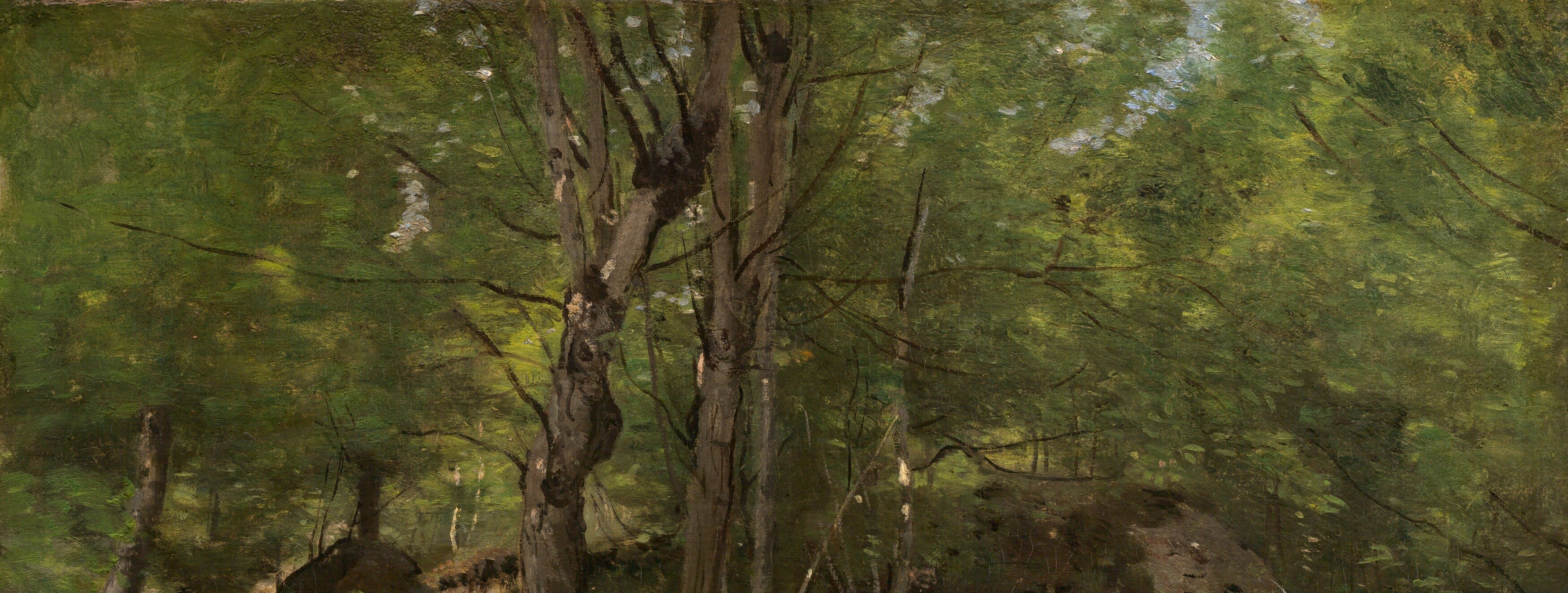
Jean-Baptiste-Camille Corot, a master of landscape painting, captured the rugged beauty of *Rocks in the Forest of Fontainebleau* (1860-1865). This oil on canvas, housed at the Museum of Fine Arts, Boston, exemplifies his pioneering approach to depicting nature.
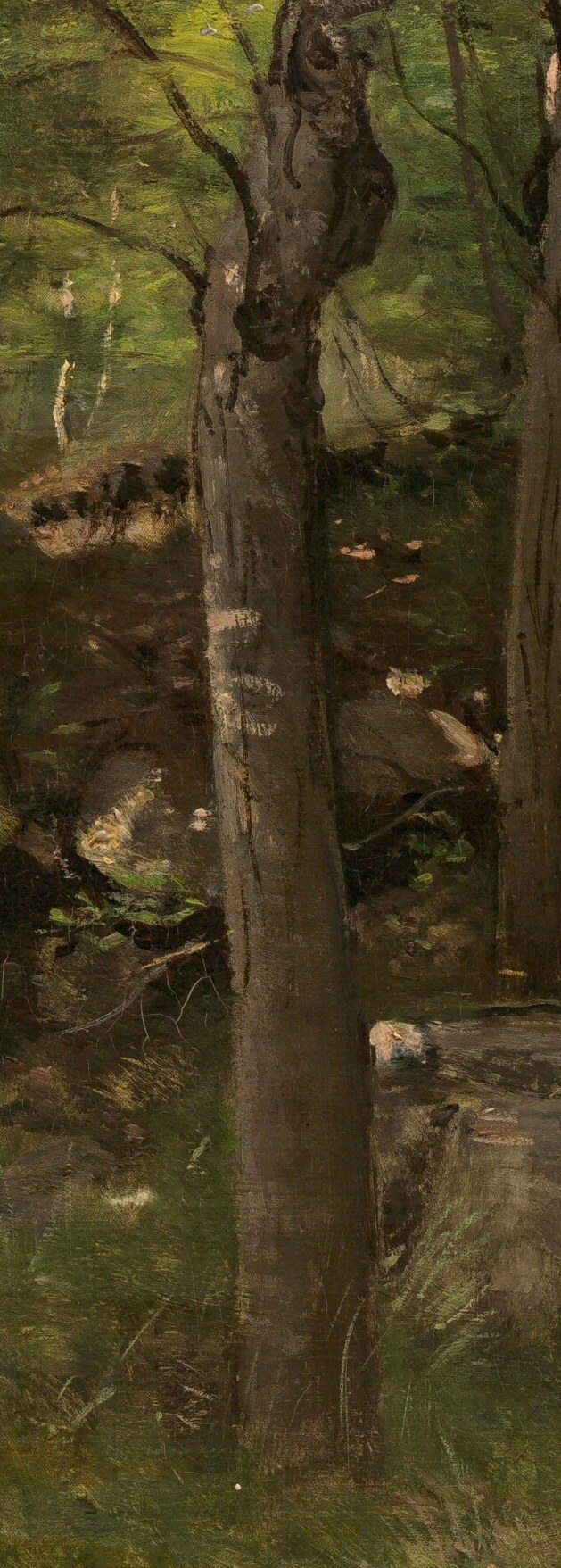
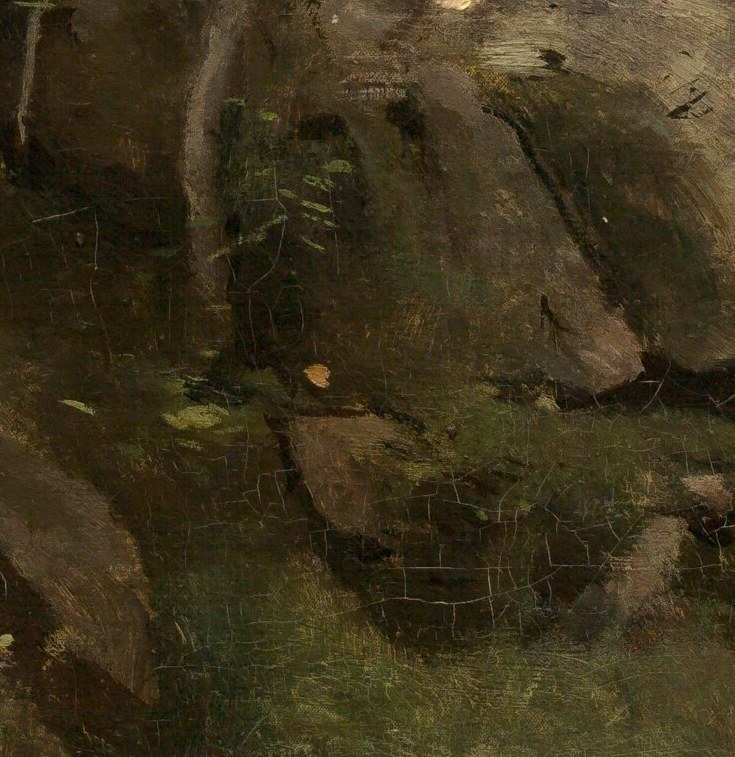
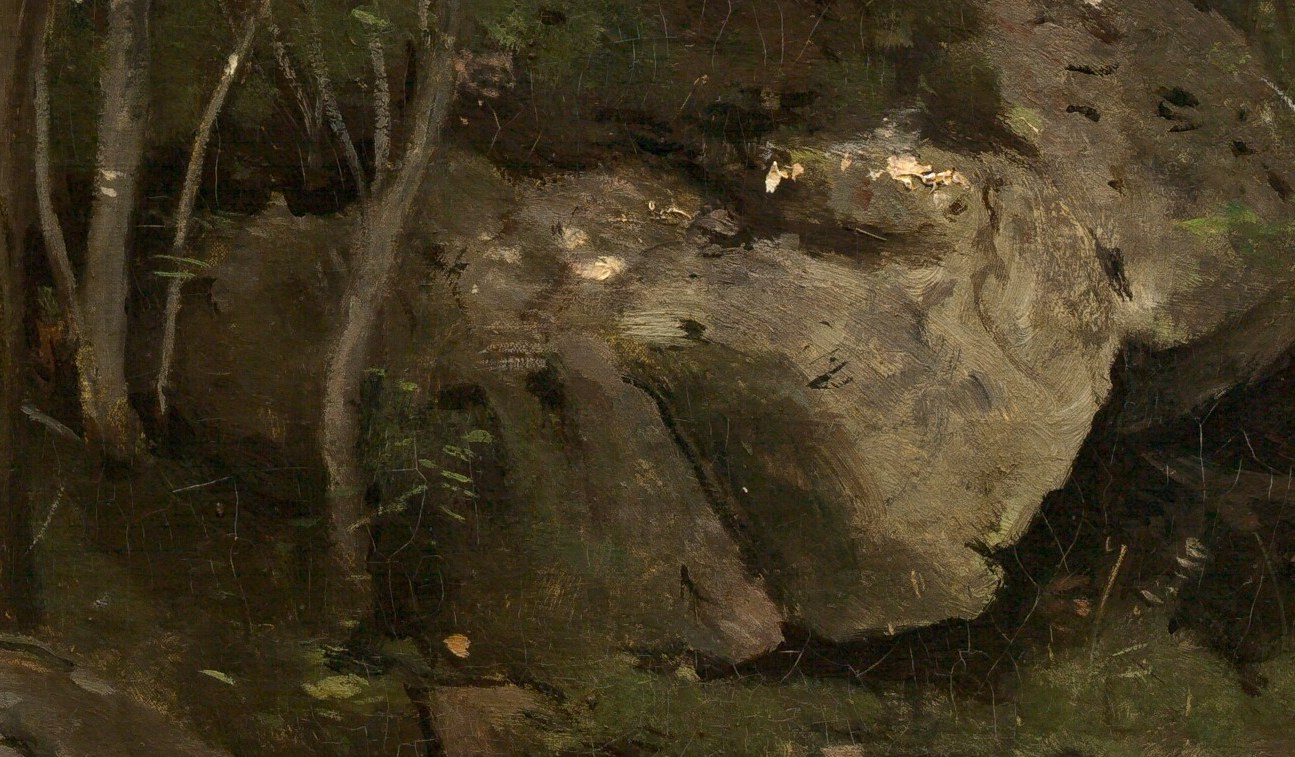
Corot was known for his dedication to plein-air painting, often working directly outdoors in places like the Fontainebleau Forest. Observe how he uses light and shadow to create a sense of depth among the gnarled tree trunks and sunlit rocks, inviting the viewer into the scene.
As a pivotal figure in the Barbizon School, Corot bridged traditional landscape art with the emerging Impressionist movement. His naturalistic observations and distinctive loose brushwork were highly influential, shaping how future generations of artists would approach capturing the natural world.
Have you ever spent time in a forest that felt as alive as this painting?
Details
Transcript
This painter was obsessed with light and nature. He walked the Forest of Fontainebleau daily, painting outdoors. Look at the twisted roots, grasping the earth. The forest feels alive with his brushstrokes. He signed it subtly, near the lower right.