The Road in the Woods by Sisley, Alfred
Alfred Sisley painted The Road in the Woods in 1879, and it is one of the most quietly instructive Impressionist landscapes you can study. It lives at the Musée d'Orsay in Paris, though Sisley made it roughly seventy kilometres southeast of the city, near the forest of Fontainebleau.
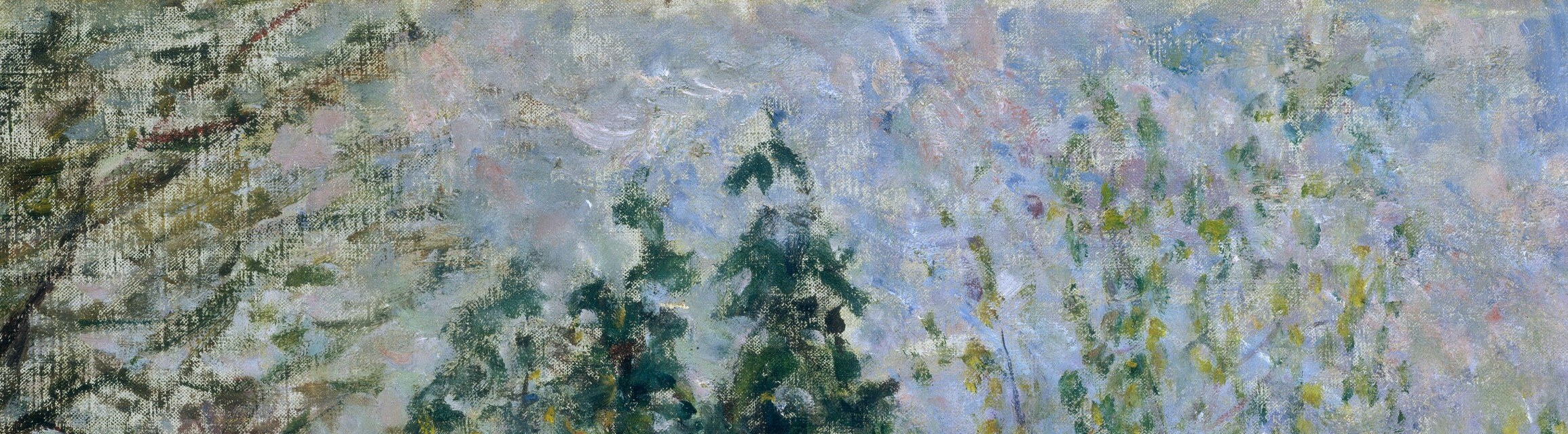
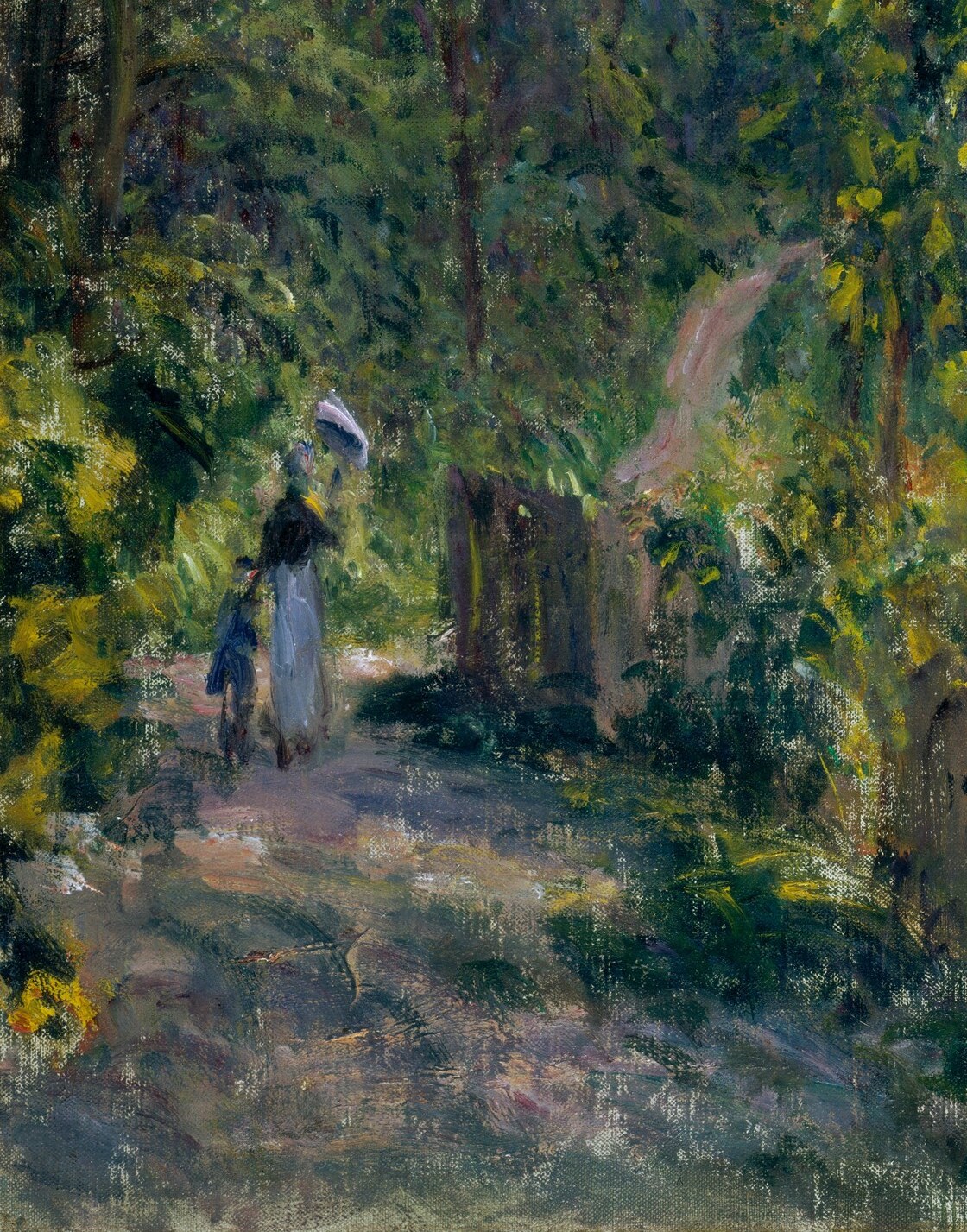
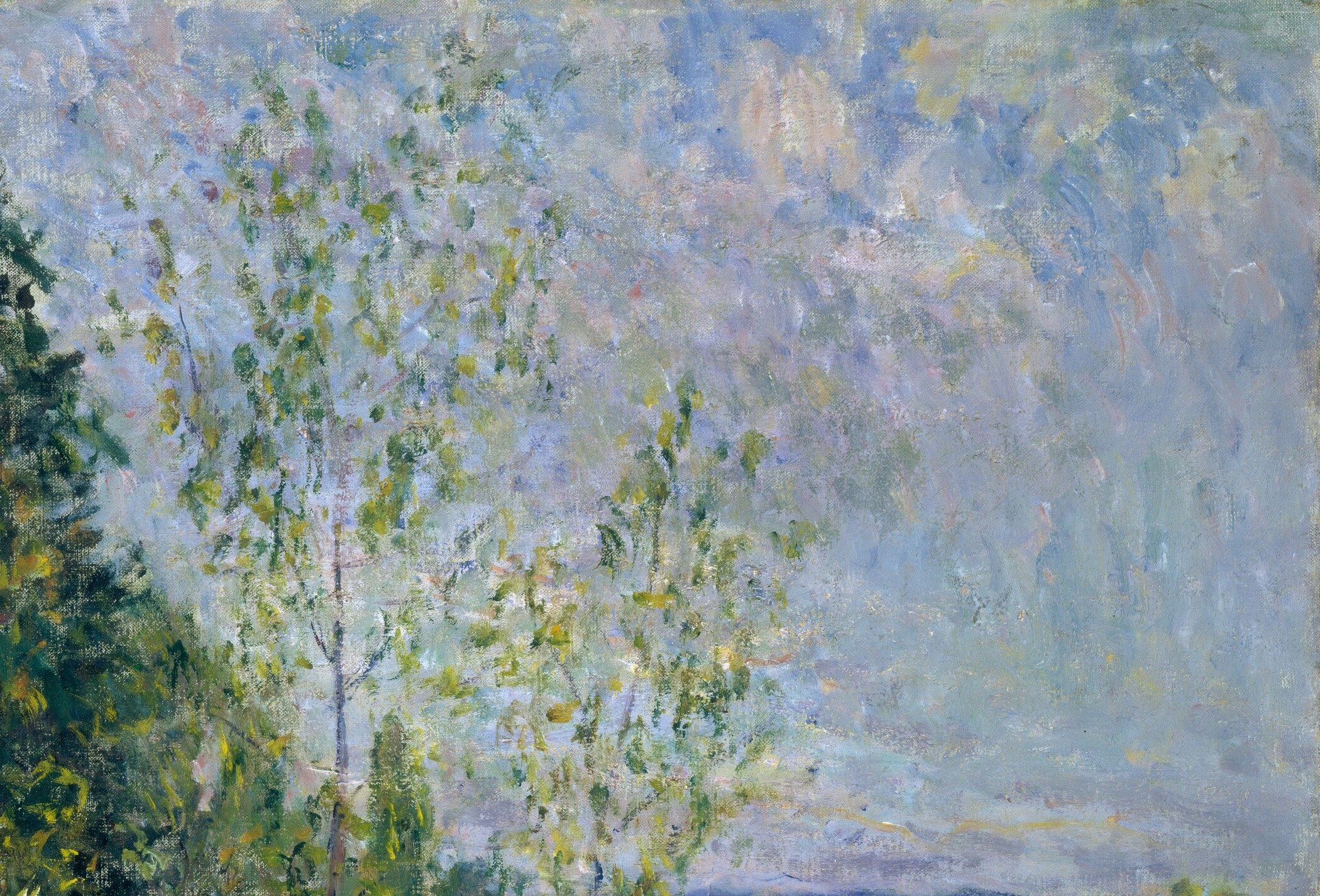
The painting is built on a single compositional move: a pale dirt road that curves into a tunnel of trees and disappears. The canopy above is the brightest zone on the canvas. Sisley did not mix his greens and yellows into a smooth blended glow. He laid separate strokes of lemon yellow, apple green, and pale ochre side by side, letting the eye do the mixing. The result is foliage that seems to vibrate with real midday light.
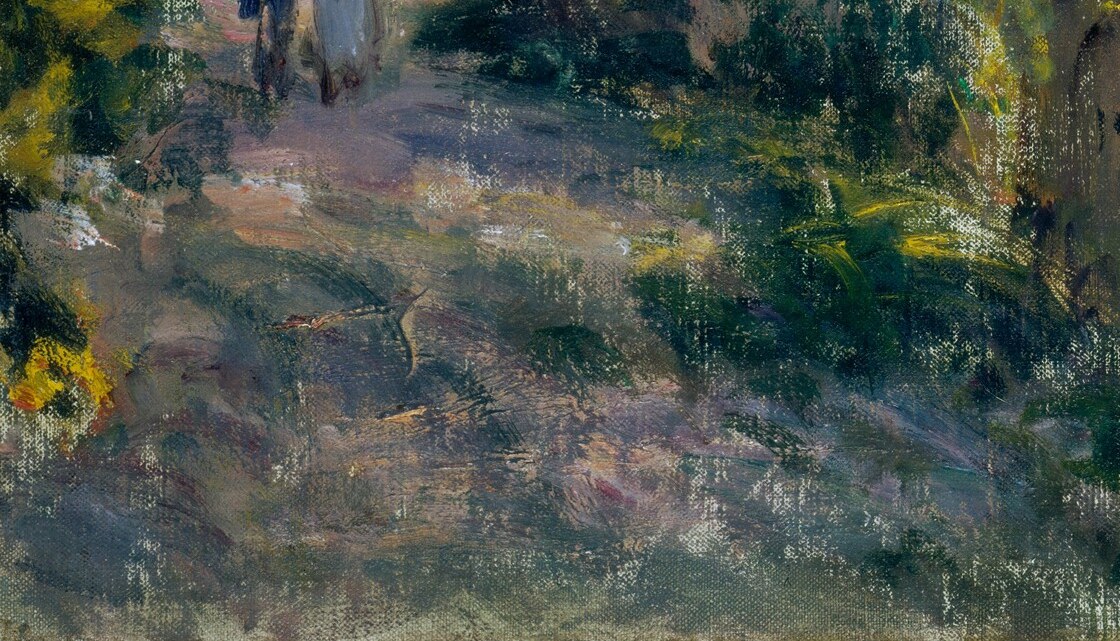
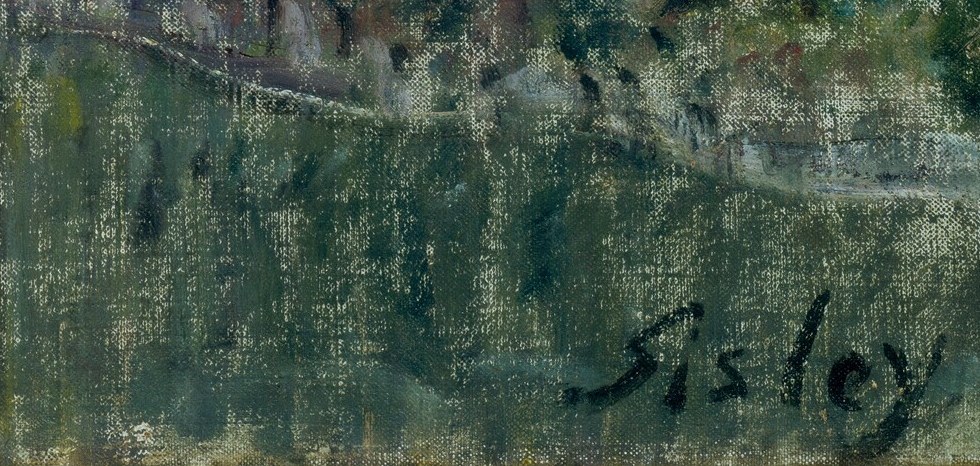
Look at the weedy verge along the roadside. That passage is where Sisley's technique is most exposed. Short, broken marks of ochre, violet, and grey-blue sit next to each other without blending. The paint is thin enough that the canvas weave shows through in places, a deliberate choice that stops the earth from feeling heavy and lets air circulate through the whole scene. A red roof barely visible through the trees is the only sign that anyone lives nearby.
Sisley was the most single-minded of the Impressionists. He painted almost nothing but landscape, outdoors, returning to the same quiet stretches of riverbank and woodland path year after year. He never saw the kind of success Monet and Renoir did in his lifetime. But in a painting like this you can watch him solve a specific, beautiful problem: how to make oil paint feel like sunlight moving through leaves.
Details
Transcript
A dirt road curves into the woods and vanishes. Sisley painted this outdoors, in a single session. Look up at the treetops. He built that glow with separate dabs of pale yellow and green laid side by side. Now look down at the verge. Broken strokes of ochre, violet, and blue read as weeds, ruts, and packed earth. From four feet away it dissolves. Step back and the road breathes.