Nighthawks by Edward Hopper
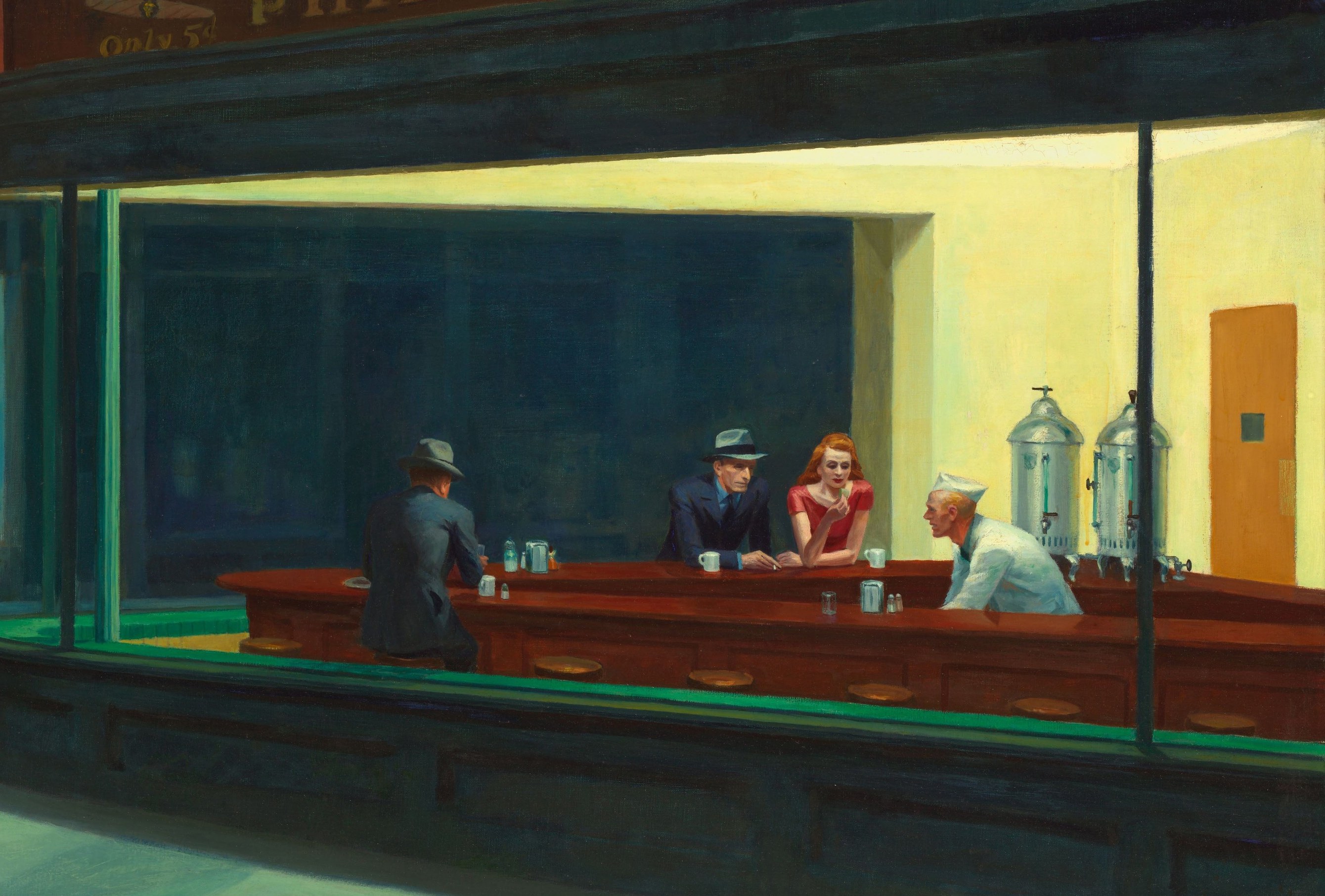
Edward Hopper painted Nighthawks in 1942, just months after the attack on Pearl Harbor, and the Art Institute of Chicago bought it that same year for $3,000. It has never left their collection. What you are looking at is not a general mood of loneliness. It is a specific American moment, painted while the country was entering a world war, set on a specific Greenwich Village street corner Hopper knew well.
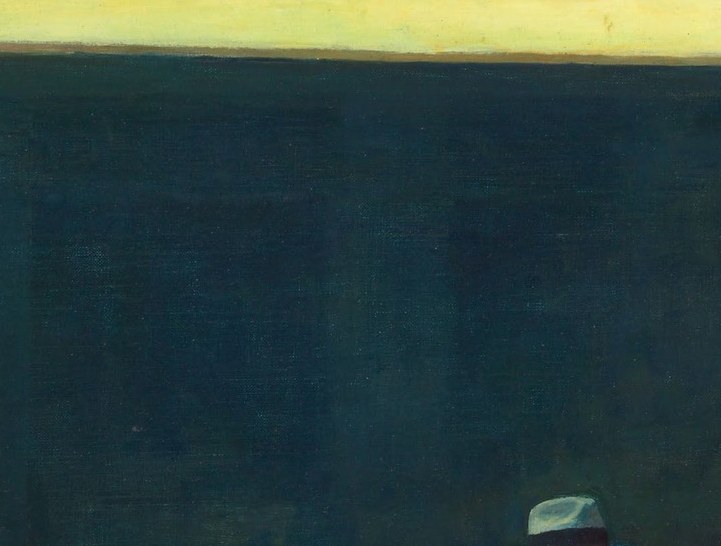
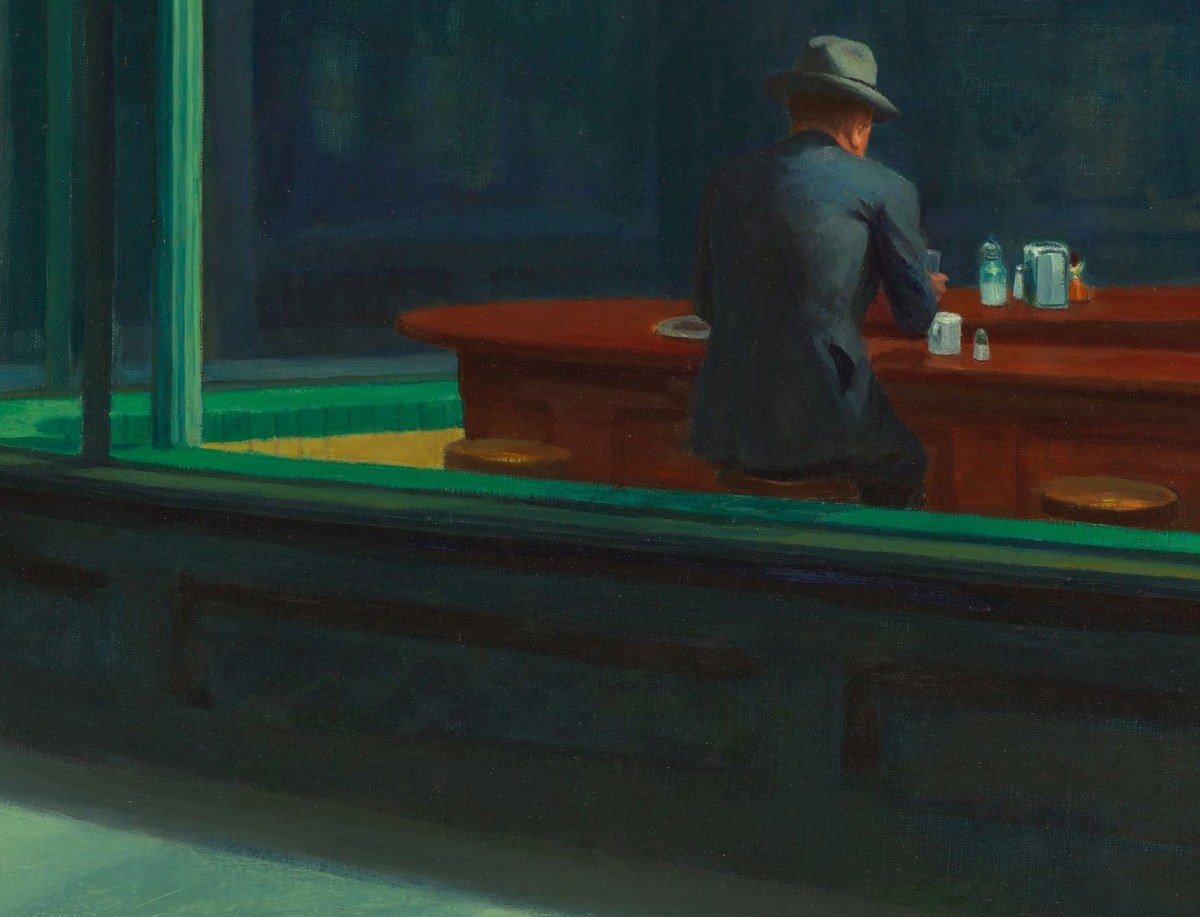
The first thing to notice is the glass. Hopper painted the diner window as a single curved sheet with no visible door, no seam, no way in. The counter wedges toward you like the prow of a ship, but you remain outside, on the dark sidewalk. The light spills onto empty pavement where no one is standing to receive it.
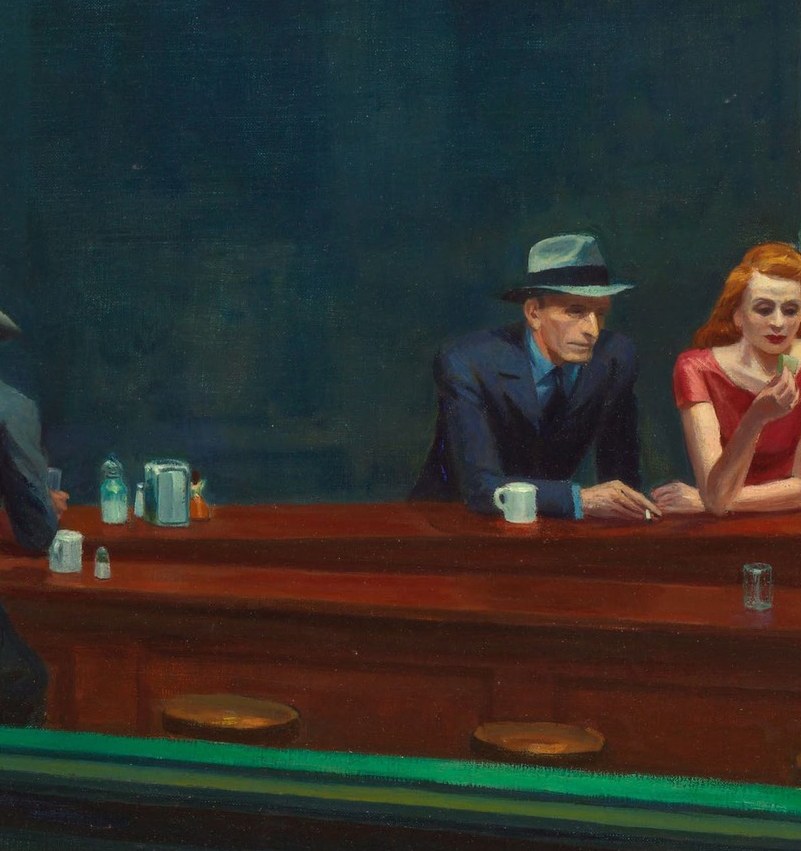
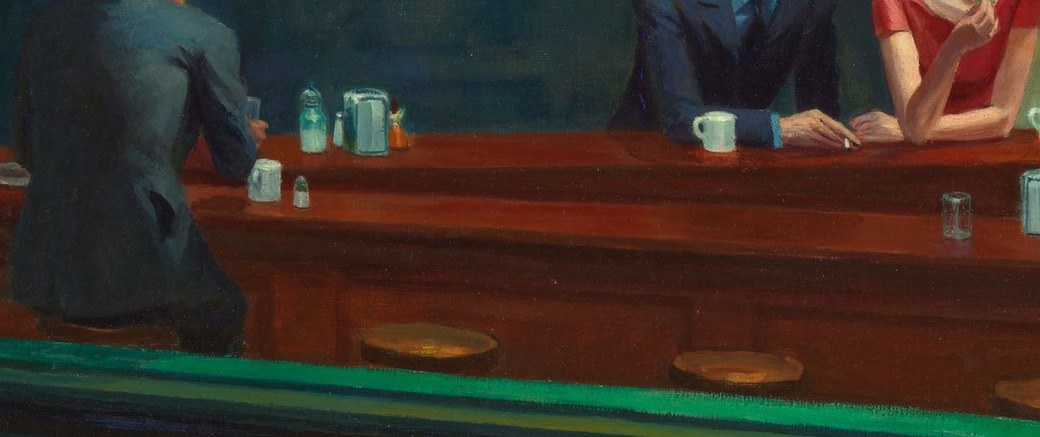
Look at the woman in red. Her dress is the only warm, saturated color in the entire painting, everything else is green, ochre, black, and the cold silver of the coffee urns. She sits beside a man whose hand rests near hers on the counter, but their fingers do not meet. Hopper makes you decide whether they arrived together or simply happen to be adjacent at two in the morning.
The diner is a real place, a Phillies cigar sign anchors it to an actual American brand, but Hopper stripped away every exit. The result is a terrarium of light in a blacked-out city. Four people, impossibly close and impossibly separate, frozen inside a painting the museum has refused to let go for over eighty years.
What do you think the man with his back to us is looking at?
Details
Transcript
Chicago, 1942. Three months after Pearl Harbor. Four people inside a diner. No one is looking at anyone. Her red dress is the only warmth in the whole city. Their hands are close. But they do not touch. There is no door. Hopper removed it. You can look in, but you can never walk inside. The Art Institute paid $3,000 for it that same year. It has never been sold since.