Mahantango Valley Farm by American 19th Century
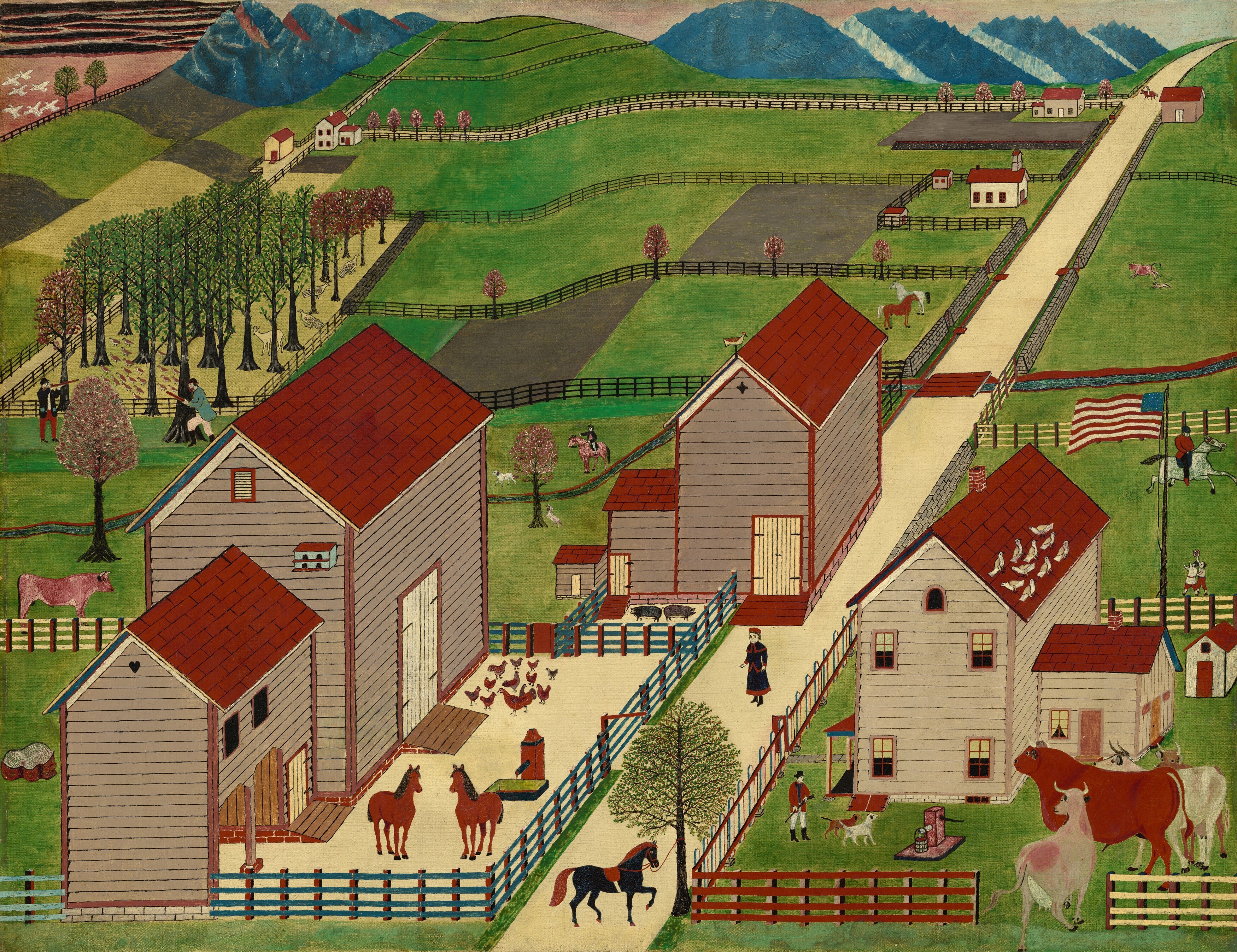
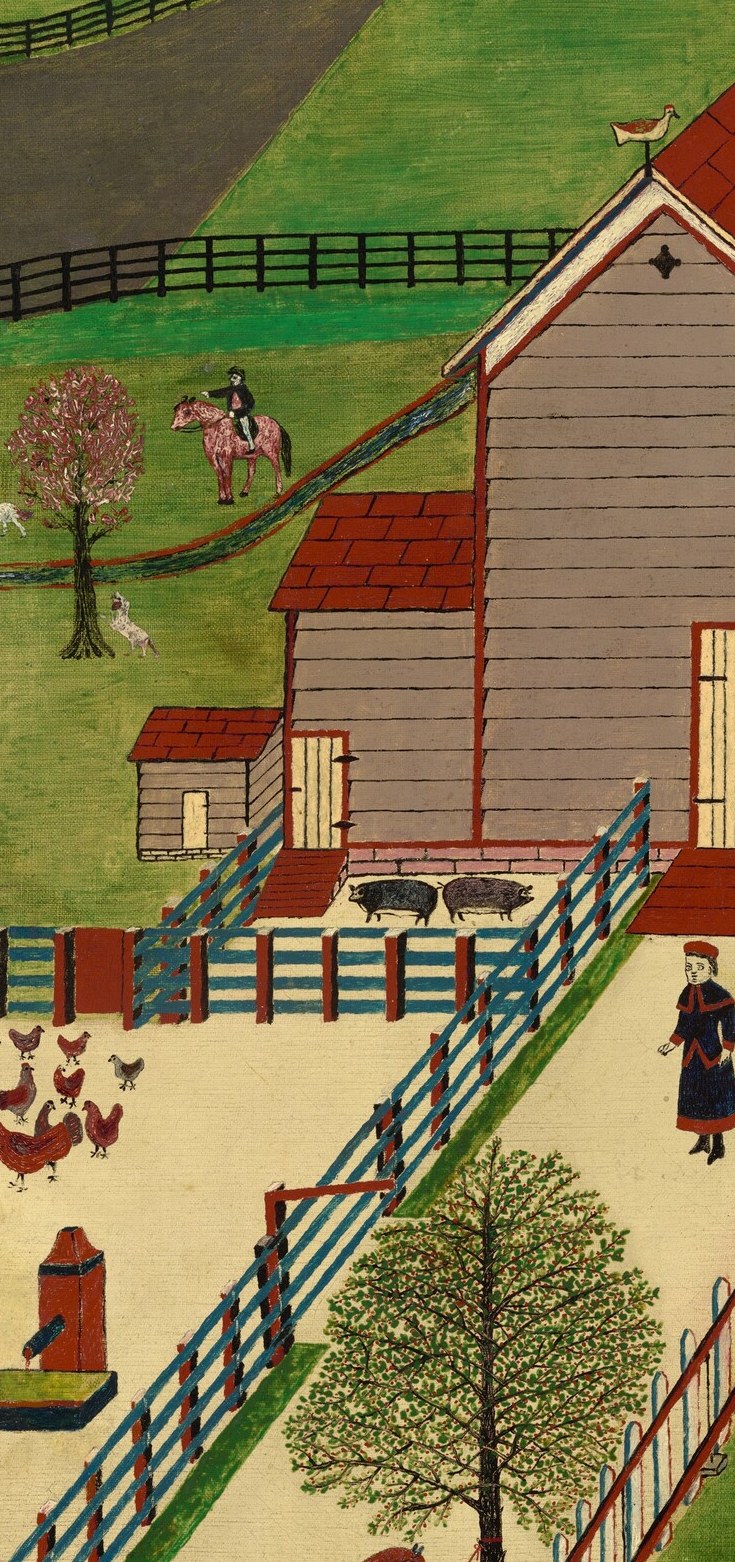
Mahantango Valley Farm, painted in the late 19th century by an unknown American artist, lives in the National Gallery of Art. It is an oil painting on an actual window shade, not a canvas. That material choice is the first and deepest fact about this work. The artist took an object designed to block out light and made it a surface for capturing light.
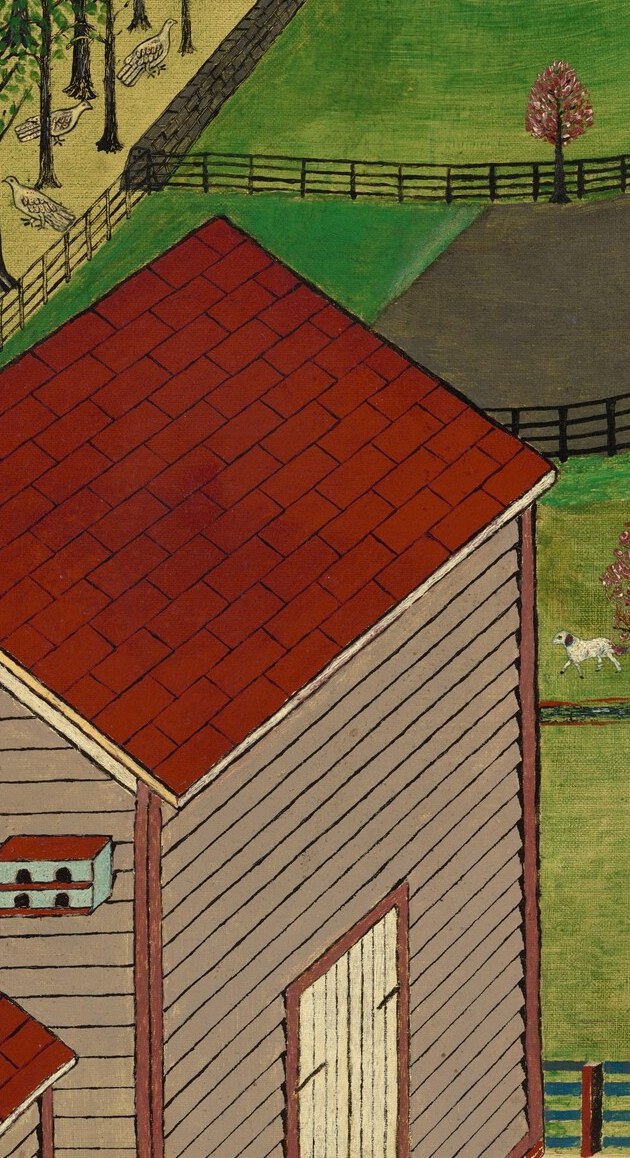
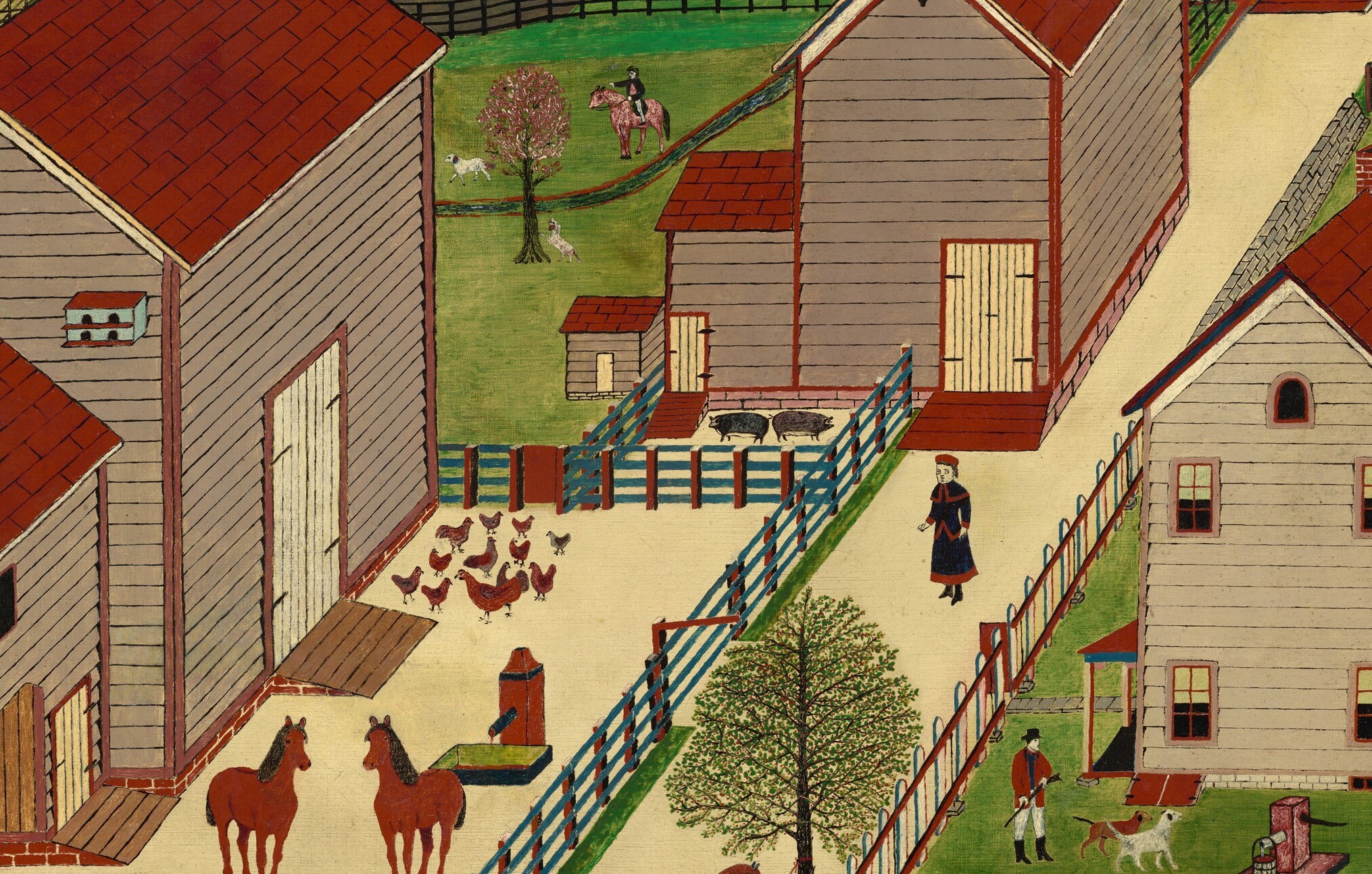
Lean in and you can still see the weave of the fabric in the open sky. The ground glows a warm ivory through the paint, a tint no primed canvas would give. Quick loose strokes build the red roofs and the tall bare tree, and the artist never fights the texture of the shade, the clouds are partly the paint and partly the threads.
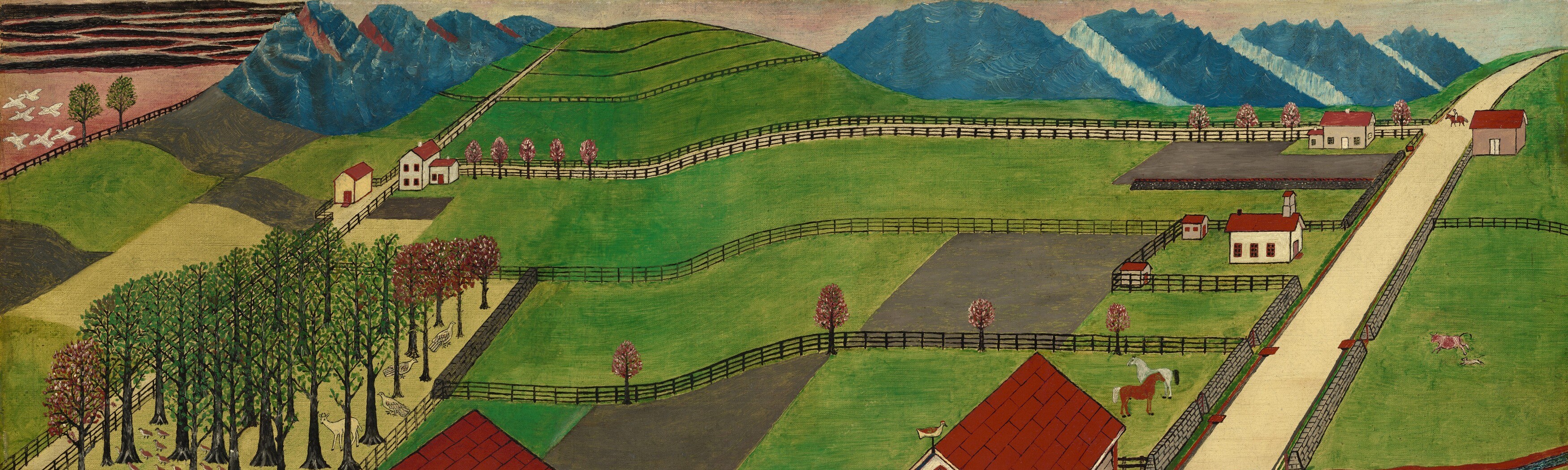
Why a window shade? It was likely at hand in a rural Pennsylvania farmhouse, a practical surface that cost nothing. The painting belongs to the Mahantango Valley school, a regional folk tradition that favored direct observation over academic perspective. This painter stacked green hills in quilted planes below a pale blue mountain ridge and caught early spring in the pink blossoms flanking the lane.
It is an object that could have been rolled up and tucked away forever. Instead someone saw a landscape in it, and now it hangs among the American masters. What everyday surface have you looked at today that could hold a whole valley?
Details
Transcript
Look closely at the bare sky. A faint woven texture runs through the clouds. This isn't canvas. The painter used an oil-stained window shade. The fabric grain becomes the sky itself. Against it, each red roof and bare branch sits with quick, confident strokes. An entire Pennsylvania valley, glowing in late light. All of it held on a surface meant to be pulled down and forgotten.