Interior with Paintings and a Pheasant by Édouard Vuillard
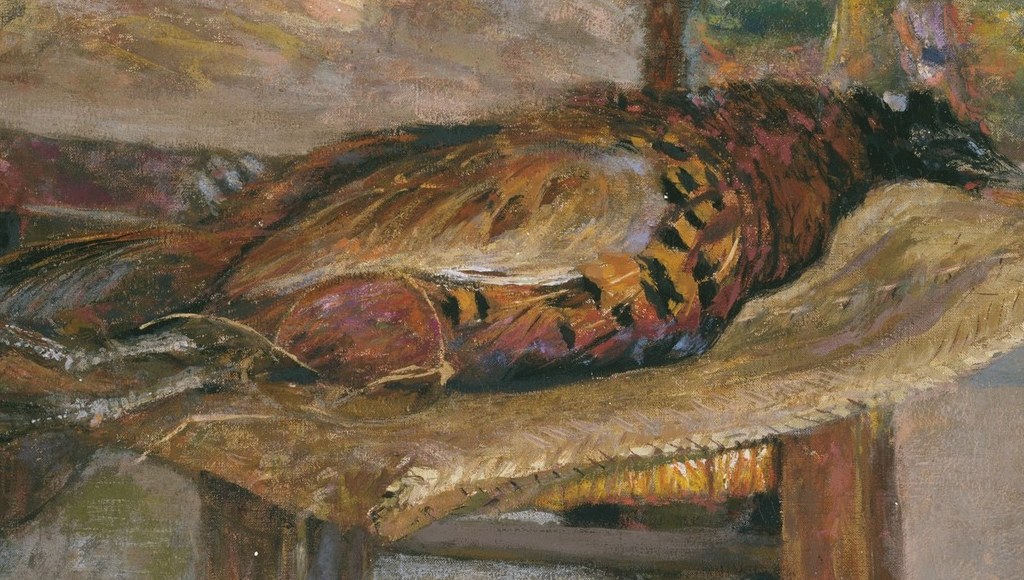
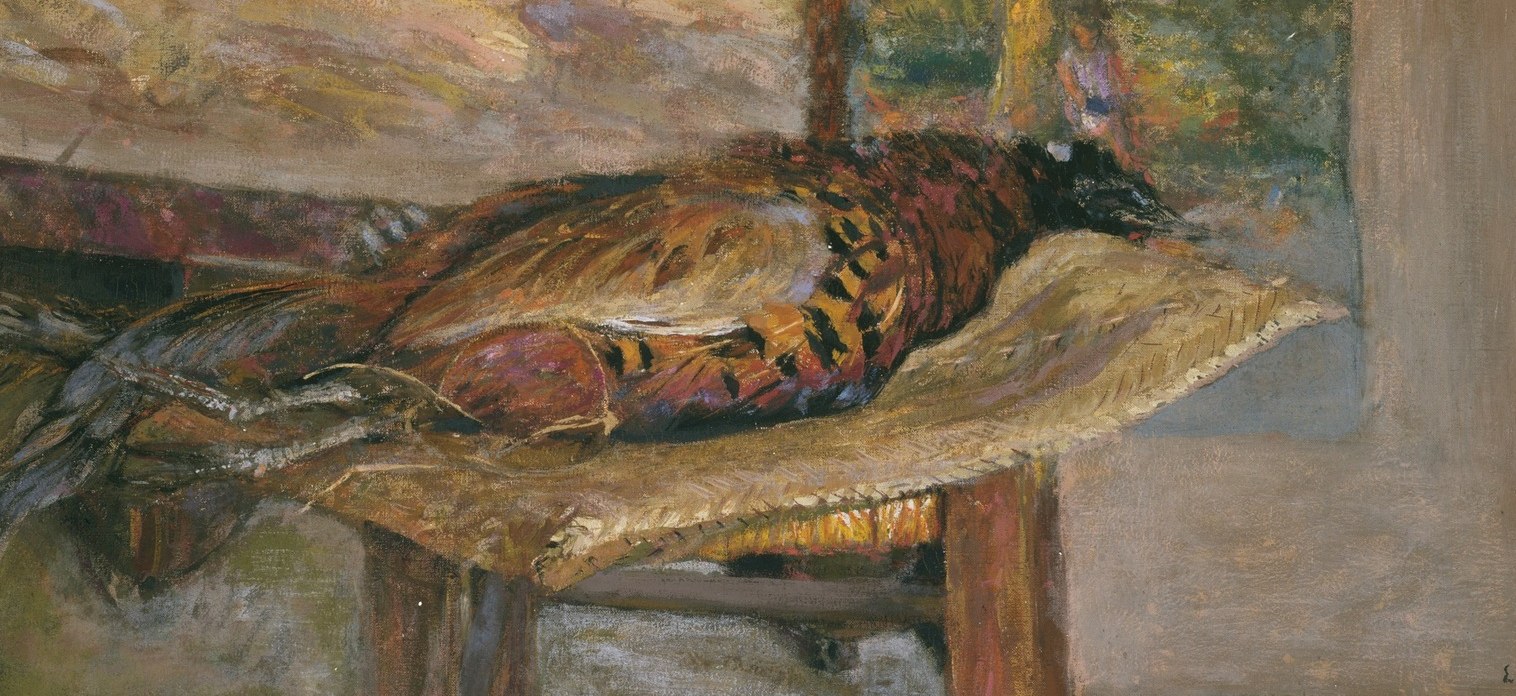
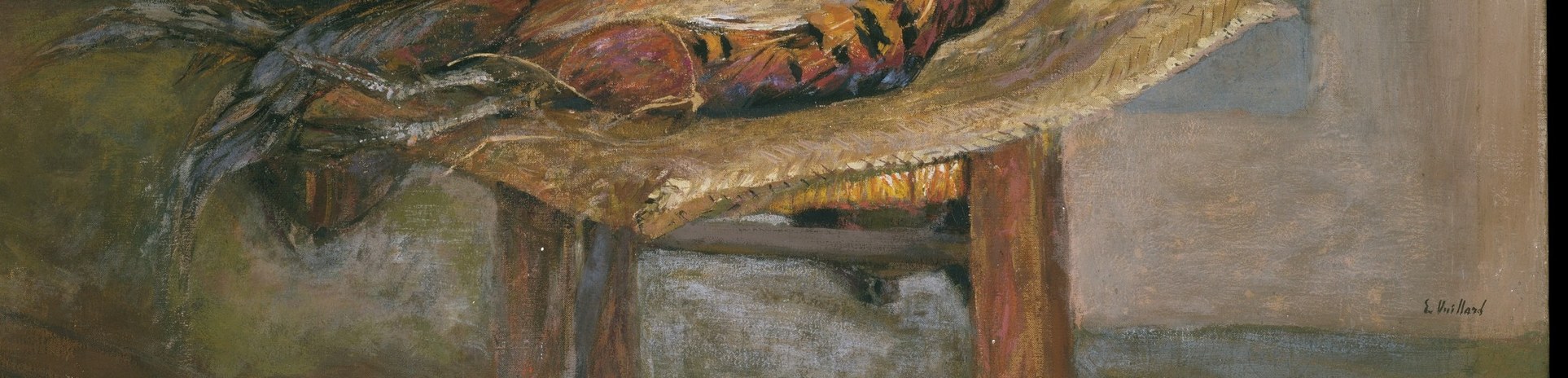
In 1928, Édouard Vuillard painted a dead pheasant in the home of the David-Weill family. The French banker and collector David David-Weill was one of the most significant art patrons of the early 20th century. The painting is not about the bird. It is about what hangs on the wall behind it.
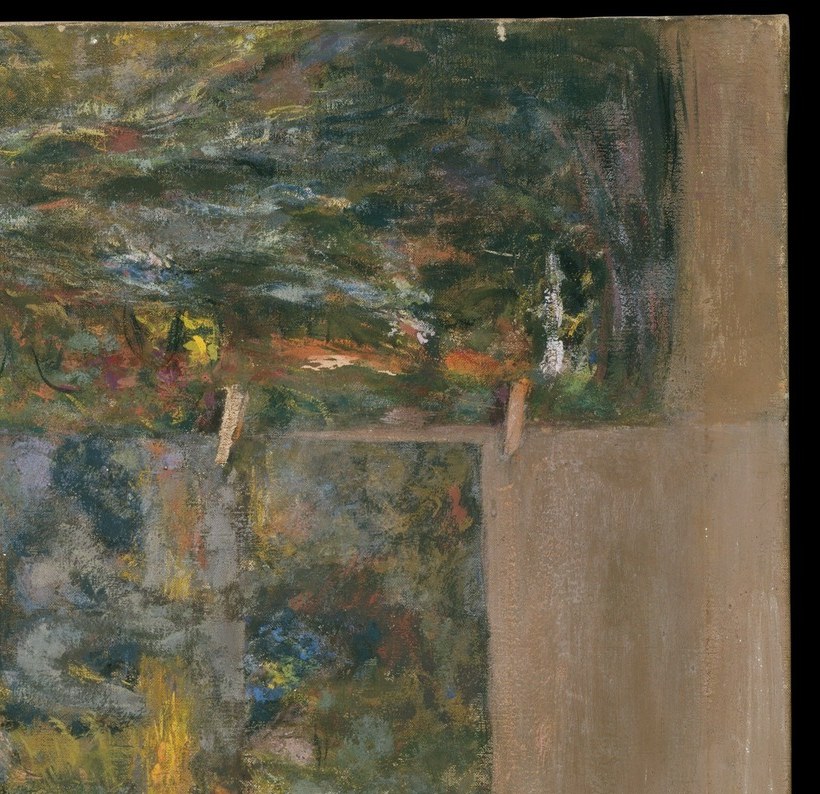
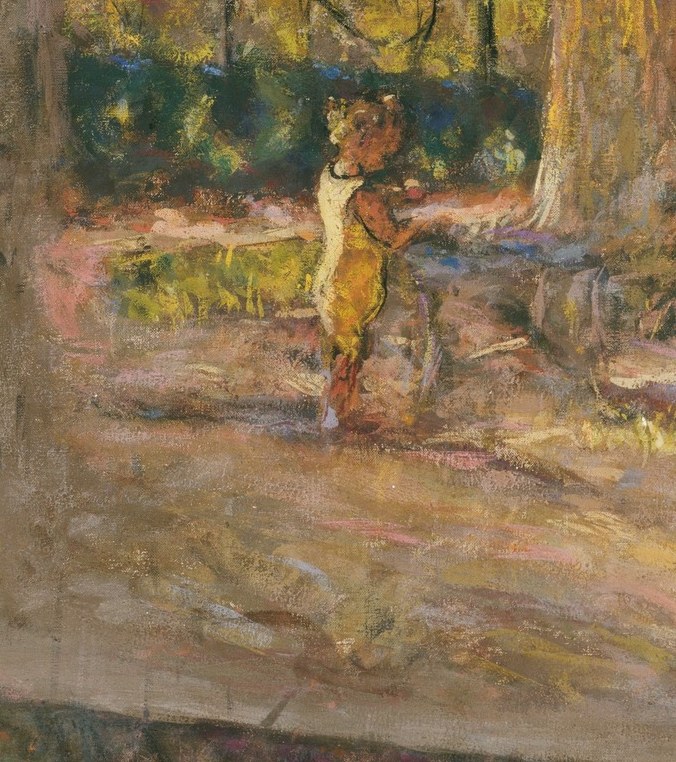
Look to the upper right corner. Those faint rectangles are framed paintings from David-Weill's legendary collection. Vuillard makes them nearly illegible, dissolved into the dim light. The two figures in the room, Antoinette David-Weill and her nephew Maurice, are treated the same way, more atmosphere than likeness. The painter's loyalty is to the quiet, cultured space they inhabit.
Vuillard had left the avant-garde Nabis group by this time. He was the painter of choice for wealthy French families who wanted their interiors recorded, not their faces. He delivered the truth of a room: the density of the air, the grain of a wooden board, the chromatic shock of a dead bird's feathers against muted walls.
Why do you think Vuillard made the paintings on the wall so hard to read? Was it discretion, or an instruction to look harder?
Details
Transcript
A hunted pheasant, laid out in a shadowed room. Its feathers contain every color this painting can offer. Now look past the bird, to the wall on the upper right. Those barely legible rectangles matter. This is a collector's home. The owners are here too, dissolved into the wallpaper beside their art. Vuillard paints them as atmosphere, not as portraits. The true identity is in the collection.