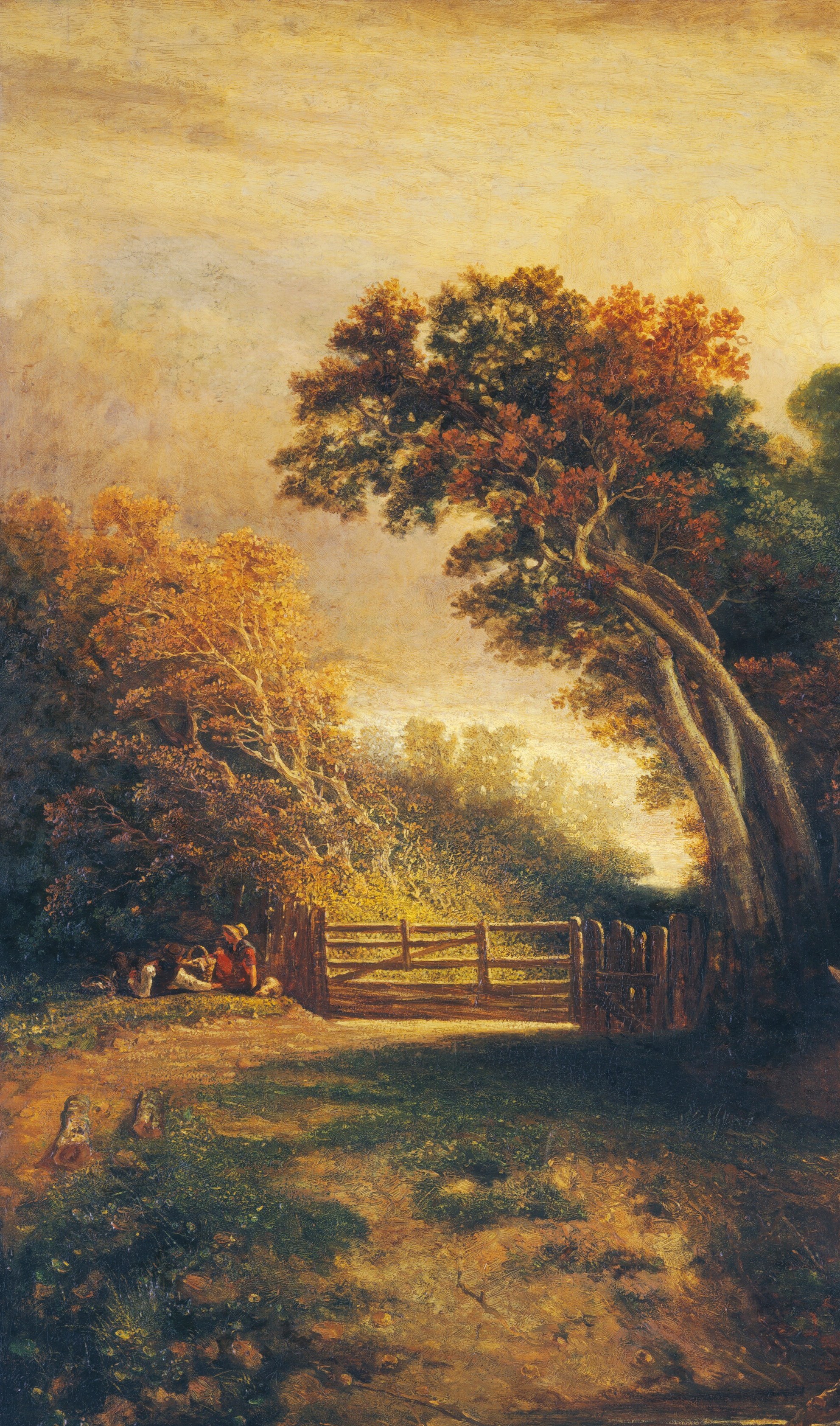
Landscape with Picnickers and Donkeys by a Gate by Paul, Joseph
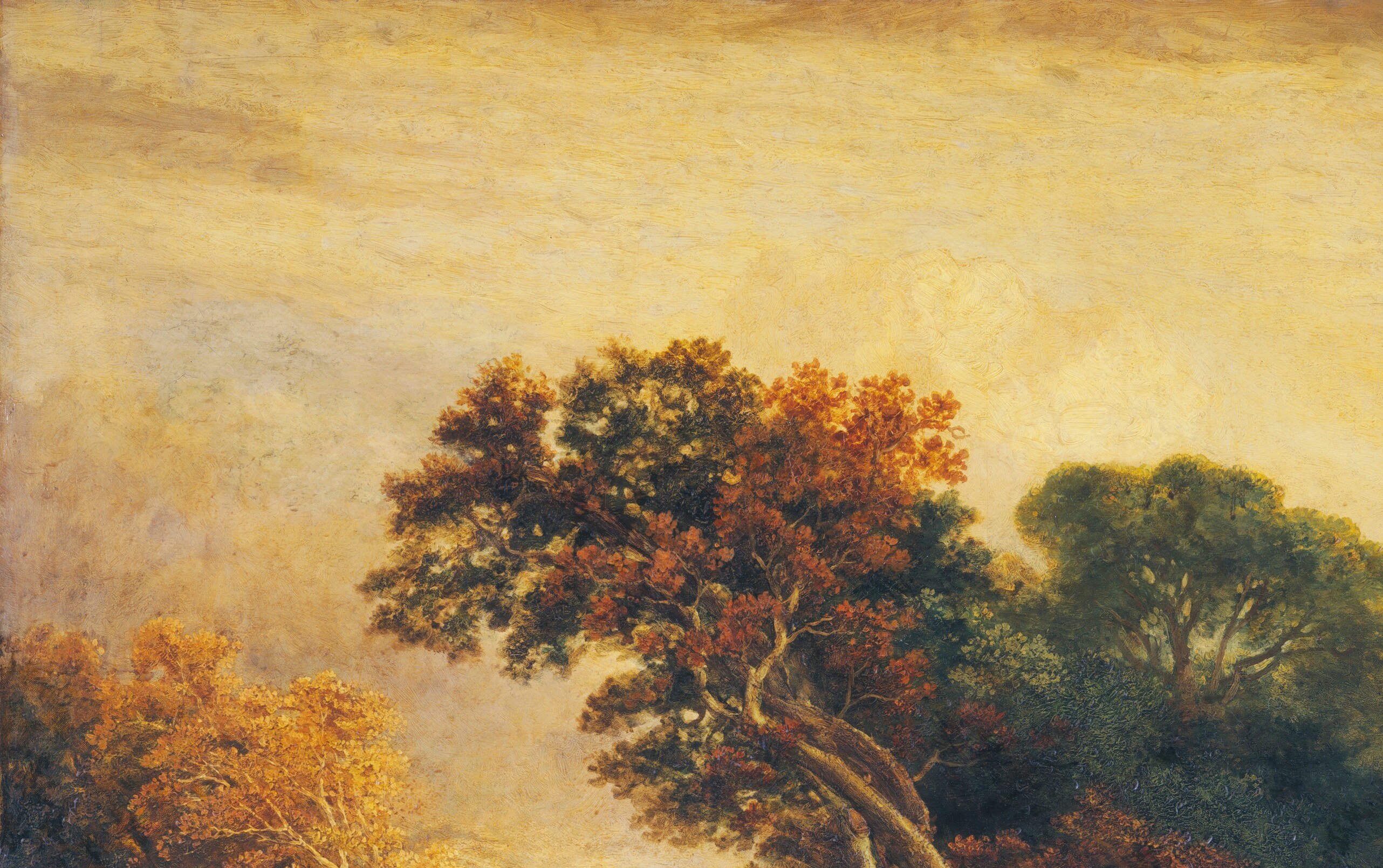
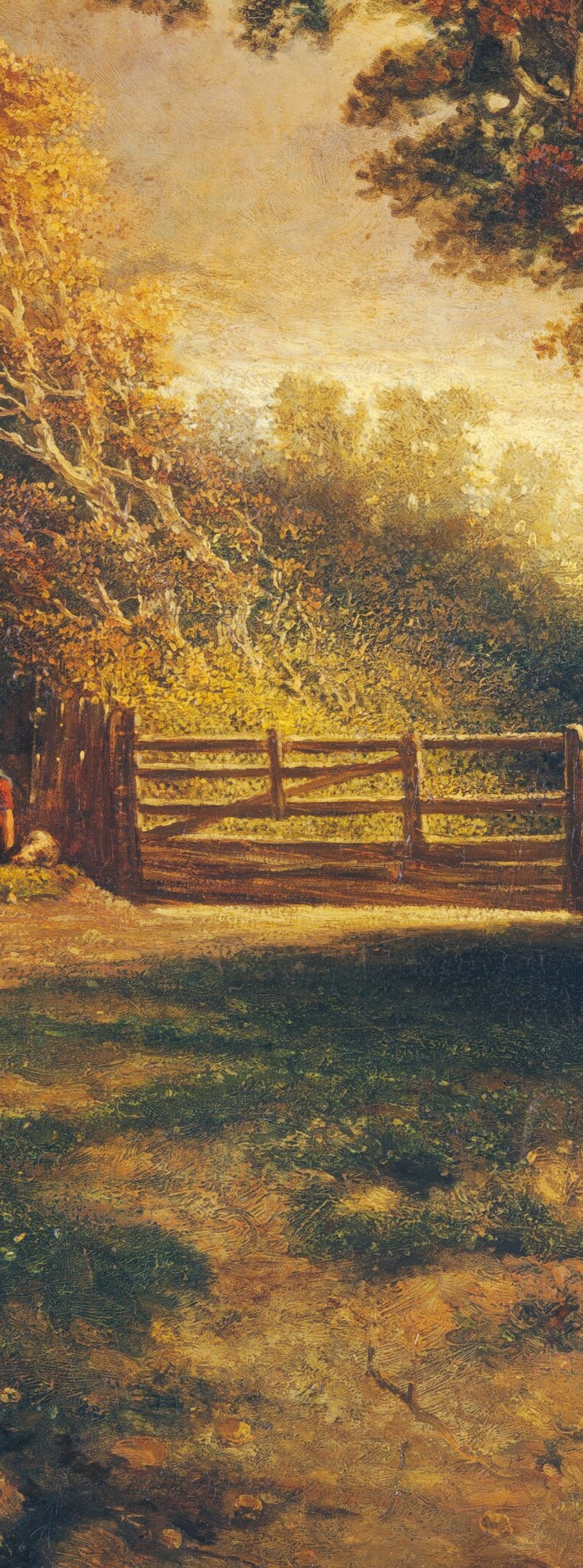
Landscape with Picnickers and Donkeys by a Gate, painted by Joseph Paul around 1850, looks at first like a quiet Victorian picnic scene. What holds it together is a single, startling patch of light.
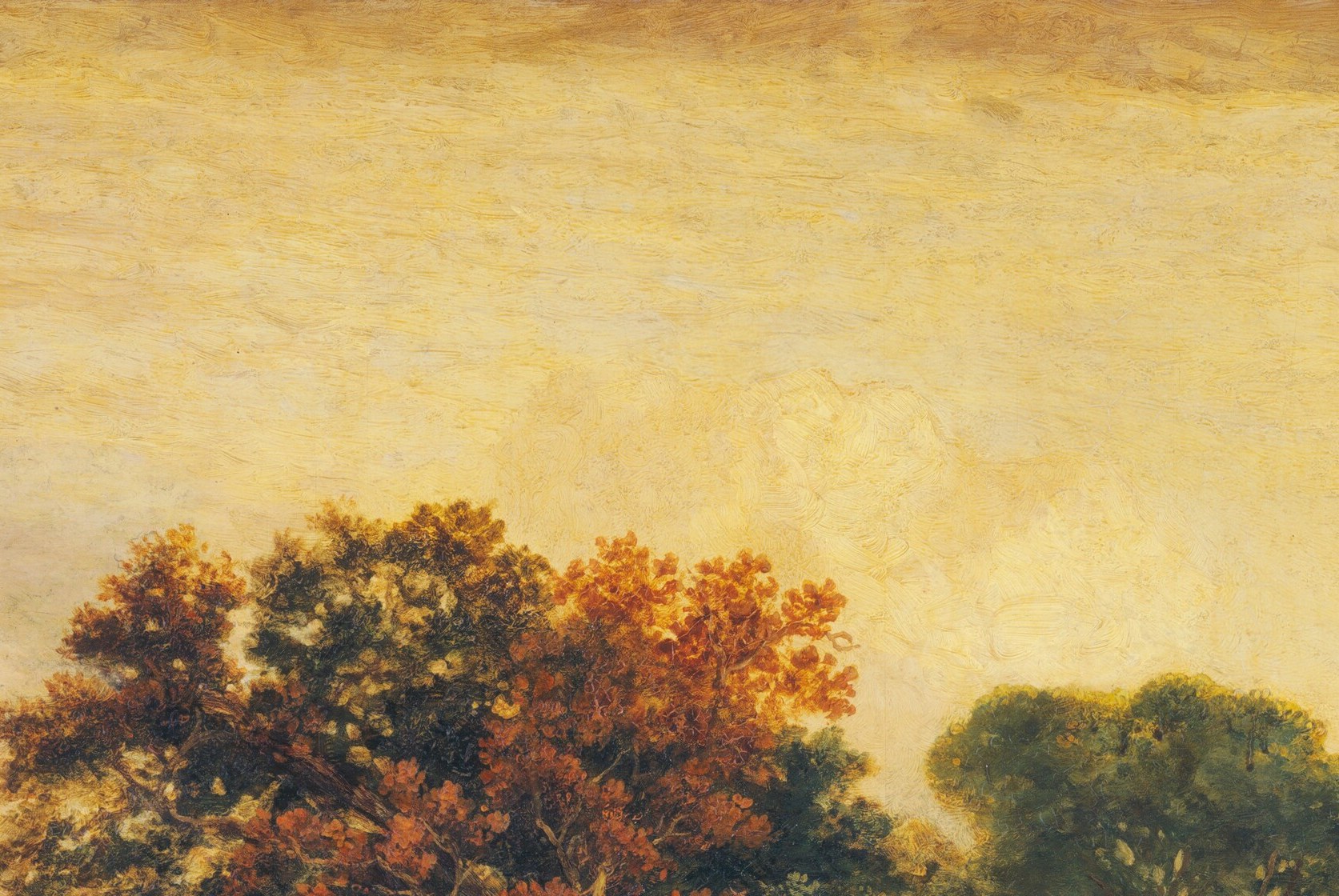
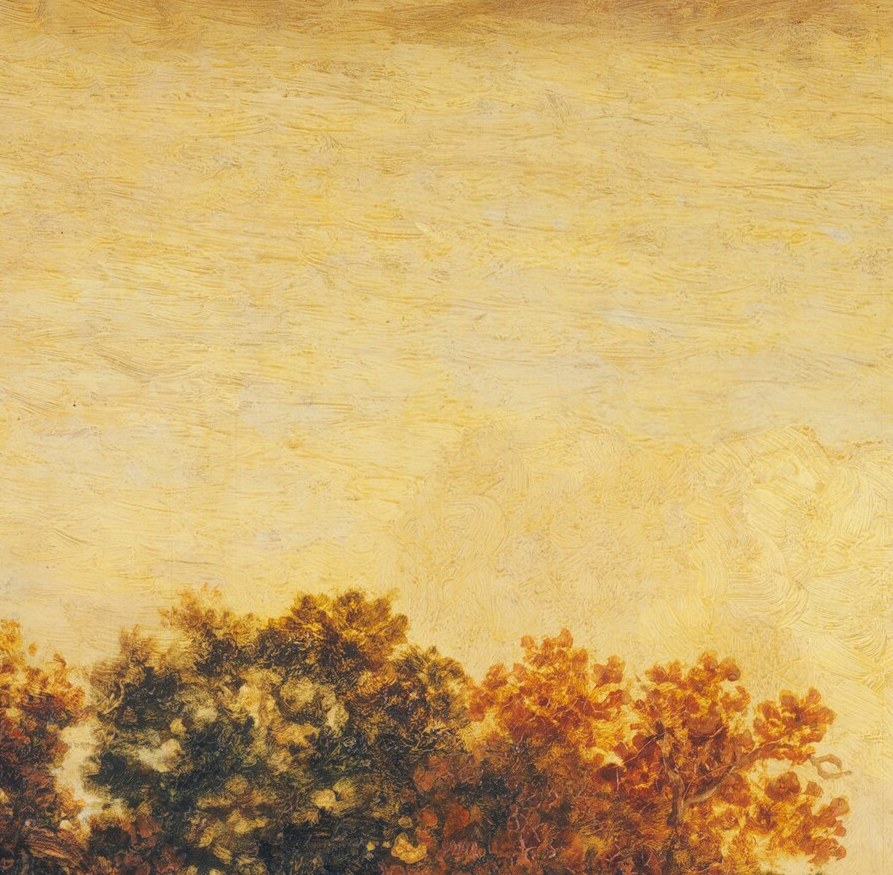
Look straight at the canopy. The brightest passage in the painting is not the open sky beyond the gate, it is that small, glowing hole where the branches part at the upper centre. Paul knew that the eye will always travel to the highest contrast, so he placed his purest, warmest tone deep inside the tree's silhouette, giving the whole oak a vast, enveloping presence.
Joseph Paul (1830-1880) was a British landscape painter working in a tradition that inherited the tonal lessons of Wilson and Turner. He built the dark mass of the canopy in rich impasto, then glazed thin, luminous yellows into the gaps, a technique that makes the light feel as though it is coming through the canvas rather than sitting on top of it.
What is the quietest trick you have noticed in a landscape painting?
Details
Transcript
The whole scene sits under one enormous oak. A branch arches across the top like a curtain rod. Late 19th-century painters knew a secret about light. The brightest spot on the canvas is not the direct sun. It is a tiny gap in the canopy, burning through the leaves. Joseph Paul glazed warm golds into the branches' dark edge.