Boulevard des Italiens, Morning, Sunlight by Pissarro, Camille
View the artwork: Boulevard des Italiens, Morning, Sunlight →
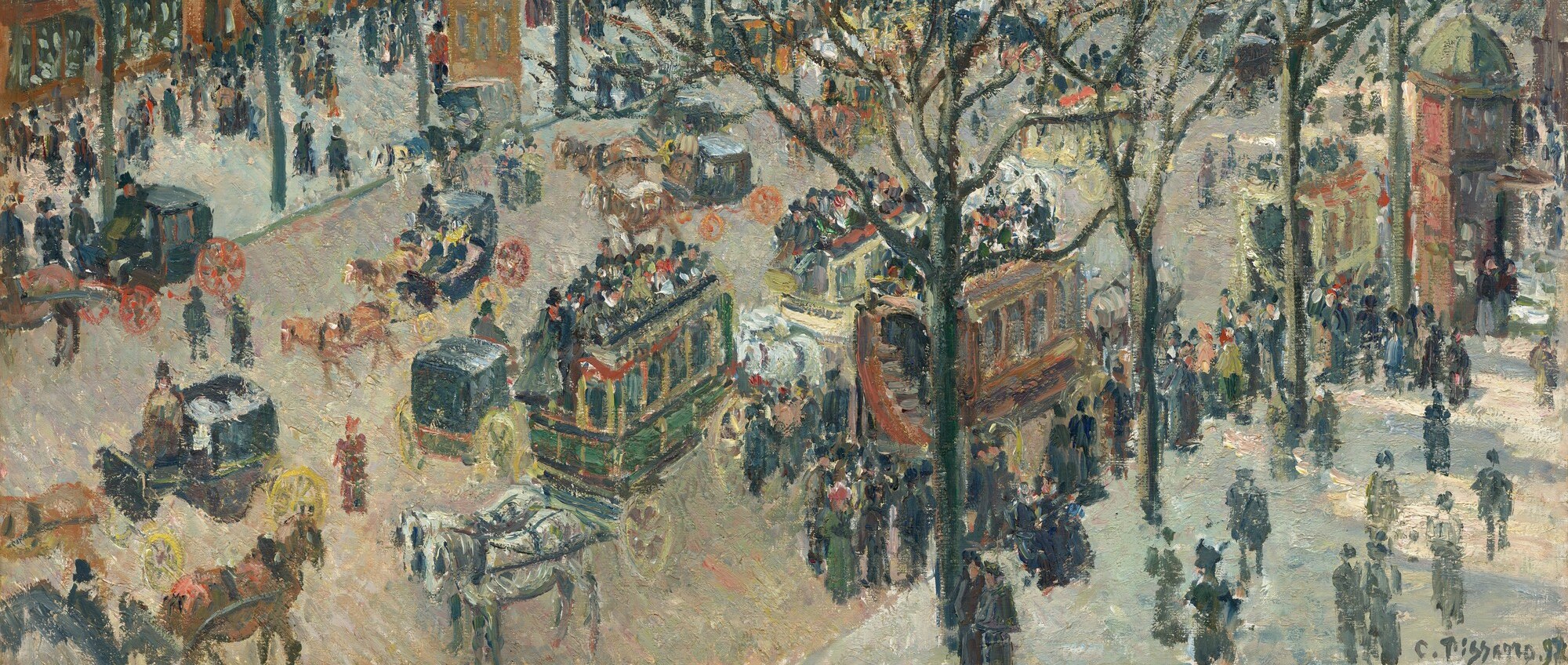
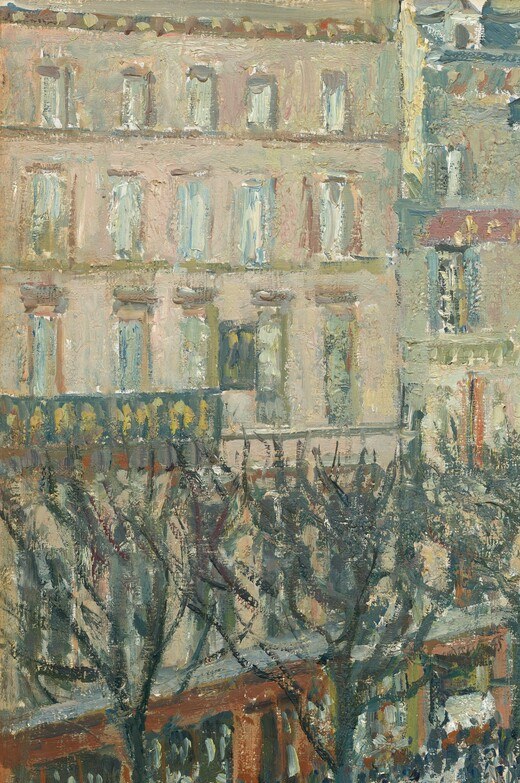
Camille Pissarro's Boulevard des Italiens, Morning, Sunlight (1897) is a view of modern Paris made by an artist who was slowly losing his sight, now in the National Gallery of Art in Washington.
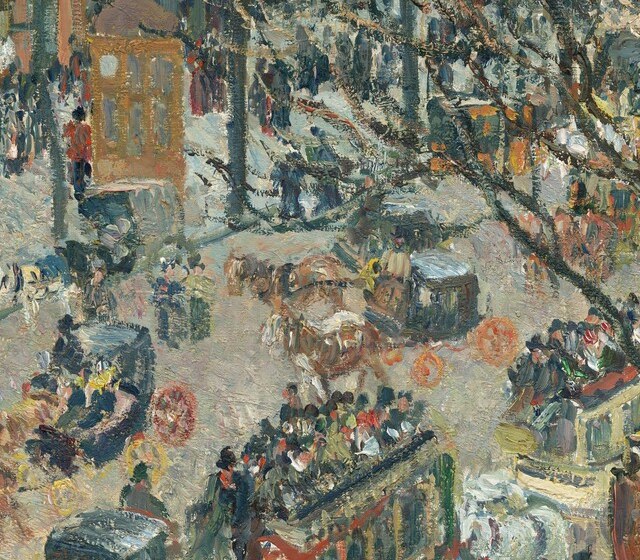
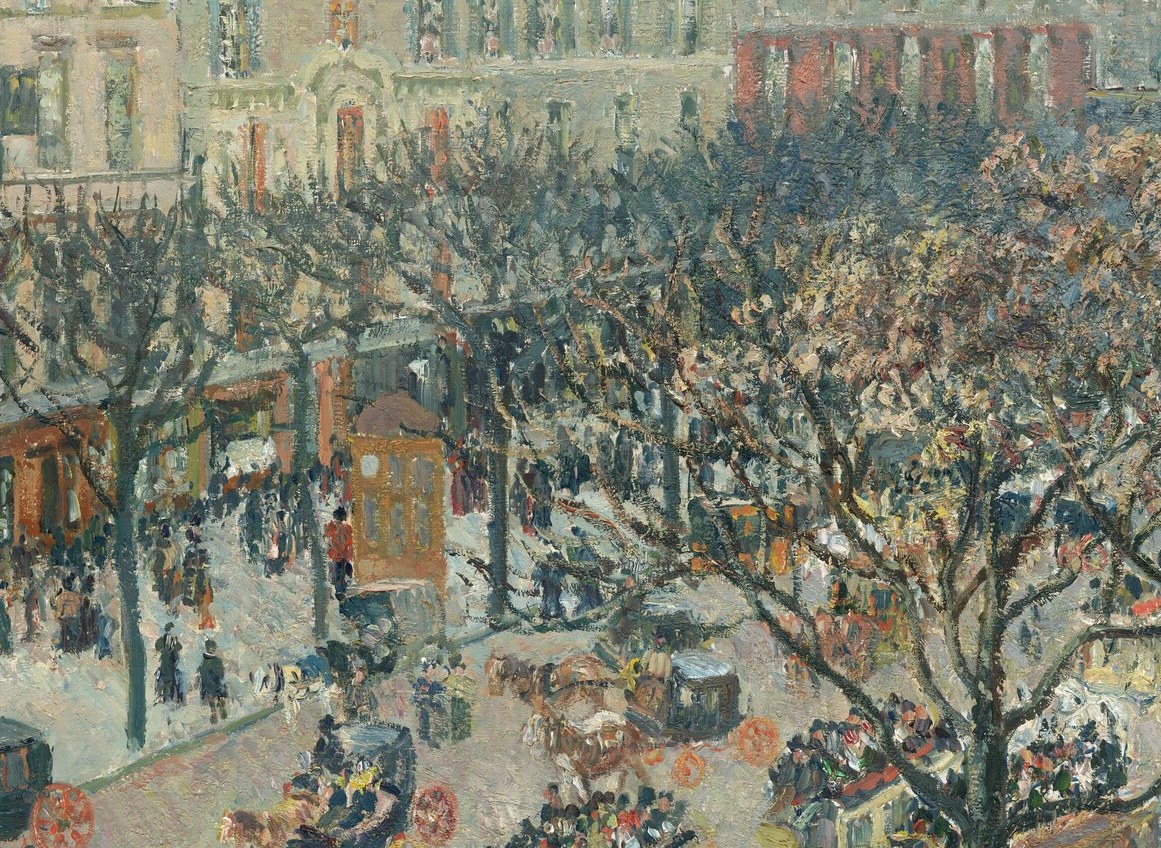
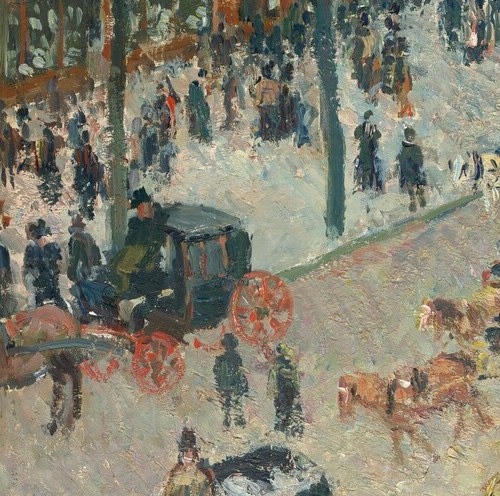
Painted from the window of a hotel on the Boulevard des Italiens, the canvas captures the first tram of the morning, a dense crowd of commuters, and the long, slanting shadows that give the series its name. If you look closely at any single pedestrian, you will see they are barely painted: a dab of a brush, a gesture. Up close, each person dissolves into pure light and air.
In the 1890s, Pissarro checked into Paris hotels to paint the new city that Baron Haussmann had built. He returned to the same window at different hours, making a systematic study of light and weather. His eyesight was failing, and the elevated view spared him the need to set up in the street. The series was a race against his own body, a decision to keep working at the height of his observational power even as his vision dimmed.
It is a triumph without a single visible face: a city of strangers, held still by a man determined to see clearly for as long as he could.
#arthistory #impressionism #camillepissarro
Details
Transcript
In 1897, Camille Pissarro checked into a Paris hotel. He was sixty-seven, and his eyesight was failing. So he painted from the window. The same window, over and over. He watched the first tram arrive as the sun cleared the rooftops. Look at the crowd. Each person dissolves into light and air, up close. Everyone is moving. But the painting stops the morning, forever. His signature is clear and firm. At the end, his hand was still sure.