Artwork
Boulevard des Italiens, Morning, Sunlight
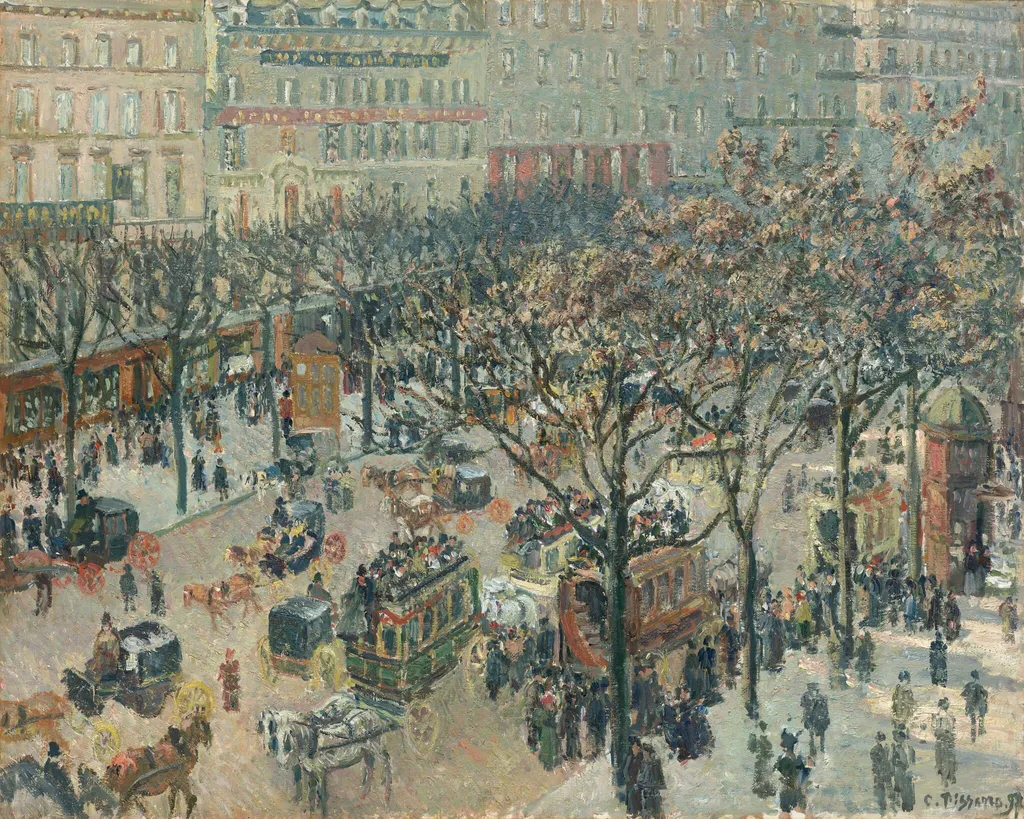
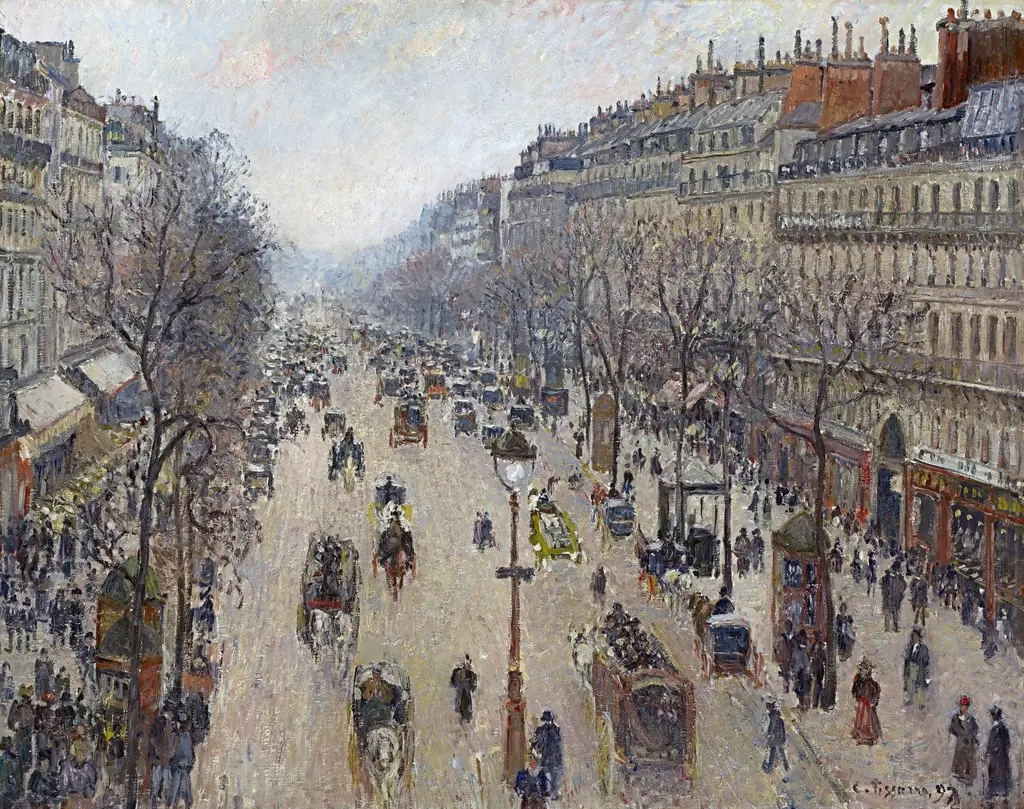
Boulevard des Italiens, Morning, Sunlight is an oil painting by the Impressionist artist Camille Pissarro. It dates from 1897 and is held in the collection of the National Gallery of Art.
- Inscription
- Inscribed:lower right: C.Pissarro.97
About this work
History & Provenance
Dale purchased the painting later that same year, and upon his death in 1962, the artwork was transferred to the National Gallery the following year.
The work was painted in 1897 by Camille Pissarro. It was consigned by the artist to Durand-Ruel, Paris, on 11 May 1897 and sold by that gallery the same day. On 26 March 1904 Durand-Ruel resold the painting to Paul Cassirer in Berlin (and London), who transferred it the same day to A. Idell; thereafter it passed through the hands of Lessing, Berlin, and was acquired by Paul Rosenberg & Co., London and New York.
In February 1929 Rosenberg sold it to Wildenstein & Co., who placed it with Chester Dale of New York; Dale bequeathed the painting to the National Gallery of Art, Washington, D.C. in 1963.
Camille Pissarro's Boulevard des Italiens, Morning, Sunlight (1897) is held in the collection of the National Gallery of Art in Washington, D.C., where it was accessioned in 1963 as a bequest from Chester Dale. The work's provenance begins with its sale by the artist to Durand-Ruel in Paris on May 11, 1897. It subsequently passed through the hands of Paul Cassirer in Berlin and London, A. Idell, Lessing, and Paul Rosenberg before being acquired by Wildenstein & Co. in 1929.
Dale purchased the painting later that same year, and upon his death in 1962, the artwork was transferred to the National Gallery the following year. The gallery currently lists the painting within its holdings, identifying it as an oil on canvas cityscape.
Overview
Boulevard des Italiens, Morning, Sunlight is an 1897 oil on canvas by Camille Pissarro, depicting a bustling Parisian thoroughfare viewed from an elevated perspective. Executed during the artist's late period, the work captures the dynamic atmosphere of the city in the morning light, with long shadows stretching across the pavement and bright sunlight illuminating the facades of the buildings and the canopy of trees. Pissarro painted this series from the window of his hotel room, a method he adopted to systematically observe and record the changing effects of light and weather at specific times of day.
The composition features a dense arrangement of carriages, pedestrians, and architectural elements, rendered with the loose, rhythmic brushstrokes characteristic of Impressionism. Despite the rapid application of paint, the forms remain distinct, conveying the energy of urban life. This painting is part of a larger group of cityscapes Pissarro produced in the 1890s, marking a significant phase in his career where he focused on modern Parisian subjects, blending his Impressionist techniques with a more structured approach to composition and light.
Subject & Meaning
This work portrays a lively section of the Boulevard des Italiens in Paris, observed during the morning hours. The artist emphasizes the interplay of natural light, which illuminates the street and creates strong contrasts through the long, bright shadows. The composition conveys the dynamic atmosphere of city life, with its constant movement and the architectural presence of the surrounding structures.
Technique & Style
Pissarro employed a distinctive painterly approach in this work. His brushstrokes, while visibly loose and free, effectively delineate forms and maintain the structural integrity of the depicted elements. This technique allows for a vibrant surface texture while still conveying the recognizable shapes of buildings, trees, and figures, contributing to the painting's overall impressionistic quality.
Context
The artist created this particular view from a window of his hotel, a common practice for him when exploring urban landscapes. This method allowed Pissarro to observe and record the subtle shifts in light and atmosphere at various times of day. By returning to the same vantage point, he could systematically study the transient effects of sunlight on the city environment.
Own this work as a print
Artist & collection