Portrait of a Man by John Smart
This striking "Portrait of a Man," painted by John Smart in 1786, is a superb example of the miniature portraits popular in the 18th century. Executed on ivory, this small, intimate work is now part of The Cleveland Museum of Art's collection.
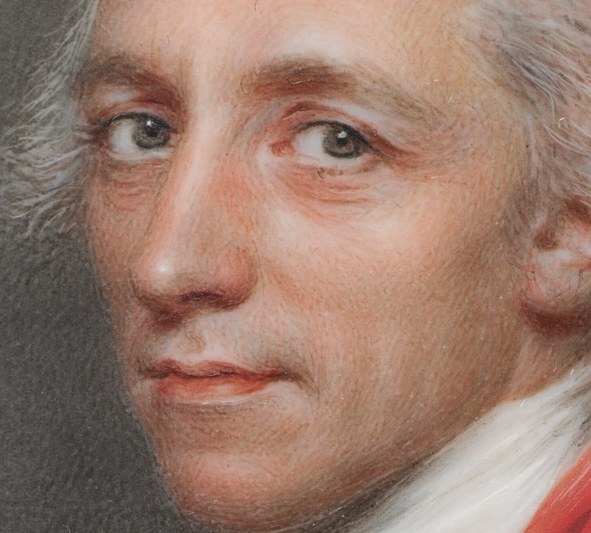
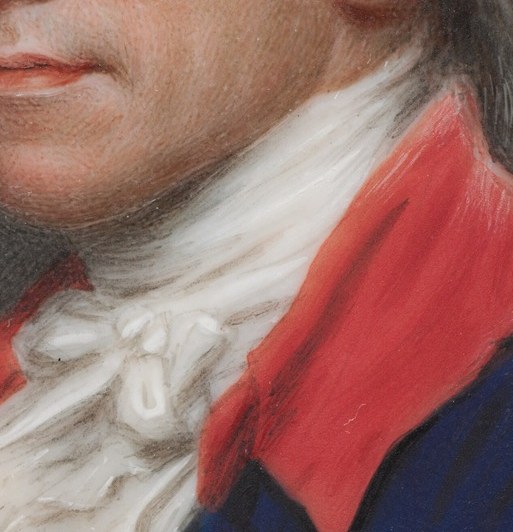
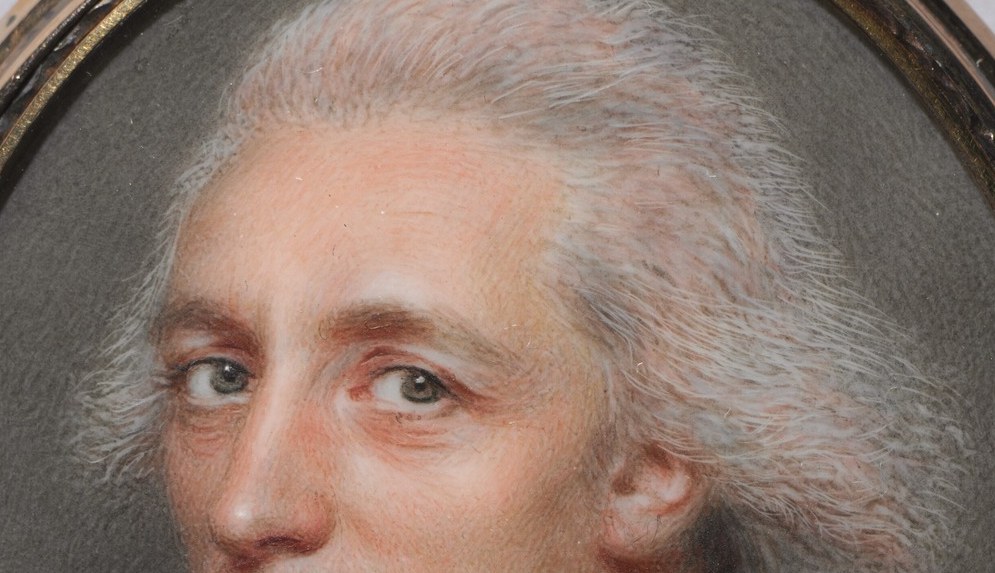
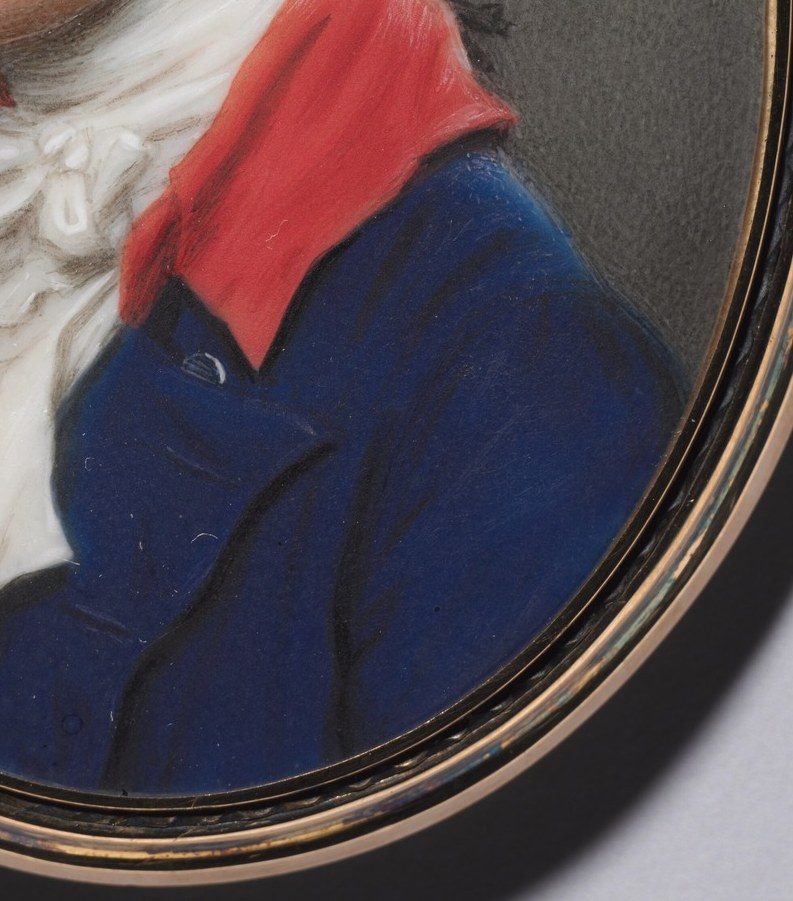
Smart, a contemporary of other notable miniaturists, was celebrated for his meticulous detail and realistic approach. Observe the delicate rendering of the man's powdered hair, his ruffled cravat, and the sharp contrast between his blue jacket and red lapels. The artist's skill in handling light and shadow (chiaroscuro) gives the portrait remarkable depth and dimensionality, bringing the unidentified sitter to life.
Miniature portraits served as cherished keepsakes, tokens of affection, or mementos of individuals. Despite its small scale, Smart's work captures the essence of a person with an intensity that rivals much larger paintings. What details surprise you most in this small masterpiece?
This painting offers a fascinating glimpse into the artistic trends and social customs of its era, proving that great art can come in small packages.
Details
Transcript
In 1786, miniature portraits were a popular way to capture a likeness. This artist was known for his realistic detail and delicate brushwork. He painted on ivory, a challenging surface that required great precision. Notice the powdered hair, a distinct fashion of the late 18th century. His use of chiaroscuro creates depth, making the man seem lifelike. Even in miniature, his eyes convey a real sense of presence.