A Brook in a Clearing (possibly "Brook, Valley of Fontcouverte; Study") by Gustave Courbet
Gustave Courbet painted A Brook in a Clearing in 1862, and the painting is an argument. The argument, made in thick oil paint, is that the physical world as it actually appears is a sufficient subject for serious art.
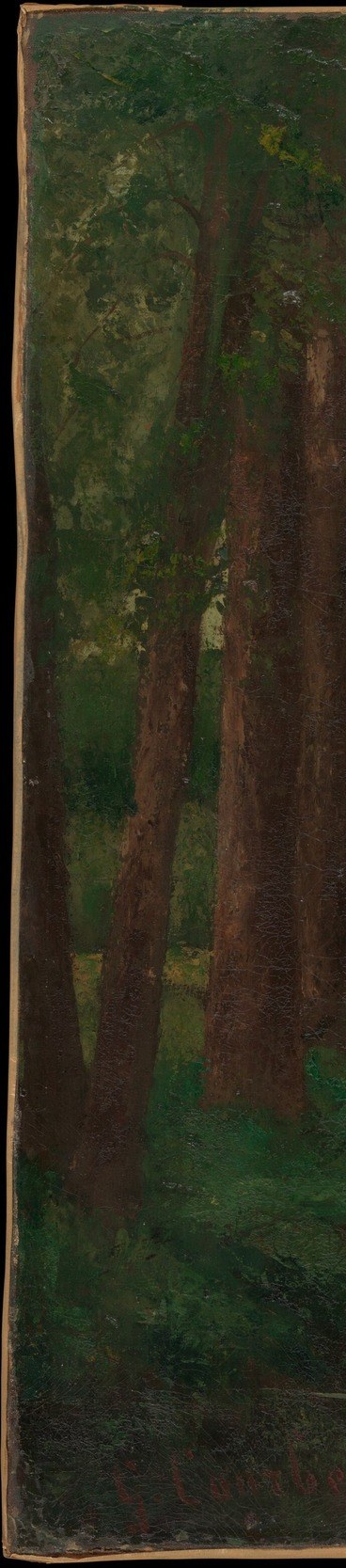
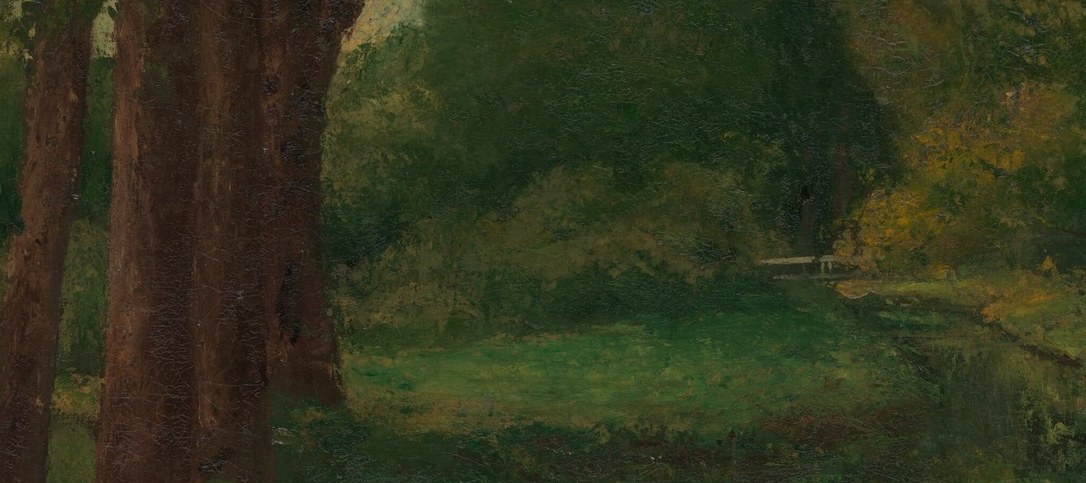
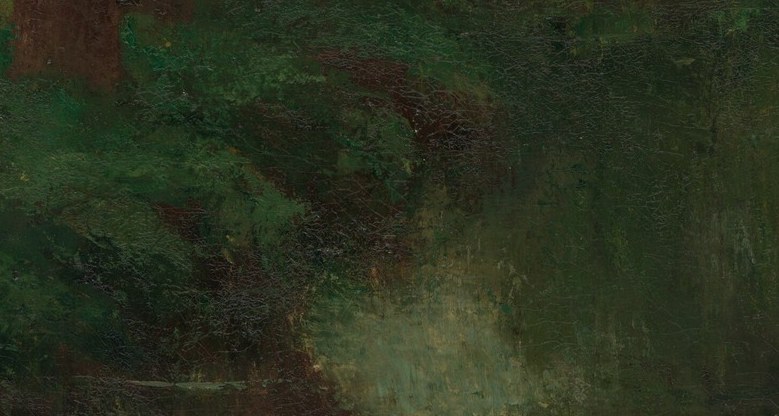
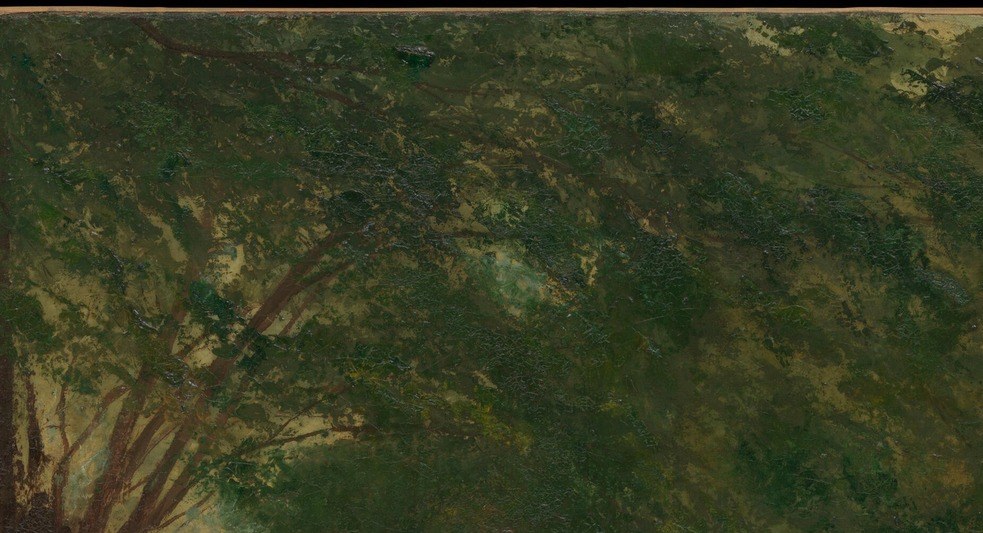
Look at the surface. The left tree trunk is not brushed; it's troweled. Courbet loaded a palette knife and dragged the paint across the canvas, leaving ridges and crusts that mimic bark. The undergrowth in the middle distance is a single complex stroke. He refused to itemize the ferns. The painting says: this is paint, and this is a forest floor, and those two things are not in conflict.
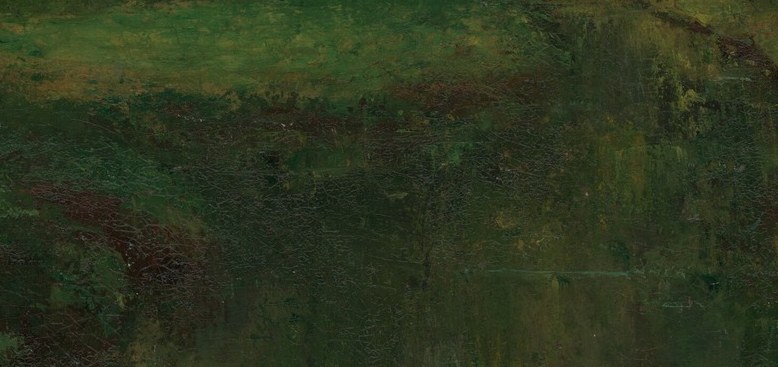
The brook itself is barely visible, identifiable mainly by the faint silver-green reflection of sky on its surface. Courbet painted plein-air in the valley of Fontcouverte, working from direct observation. No nymphs, no ruins, no allegory. Just a dark trunk, a patch of moss, a log half-sunk in the water.
Courbet's insistence on material truth, both in his subjects and in the physical fact of his paint, changed the direction of French art. The Impressionists learned from his broken color and everyday scenes. Later, the Cubists saw in his thick, worked surface a reminder that paintings are objects. This quiet brook in a clearing is a hinge of modernism.
Details
Transcript
This painting is a clearing in a forest. But Courbet didn't paint it with delicate brushes. He used a palette knife, troweling thick paint onto the canvas. Look at the undergrowth. It's one massed stroke. He refused to distinguish ferns from grass from twigs. This is realism: paint as physical fact, not illusion. The water is nearly invisible without the sky's reflection. Courbet's thick paint would influence both the Impressionists and Cubism.