The Pink Dress (Albertie-Marguerite Carré, later Madame Ferdinand-Henri Himmes, 1854–1935) by Berthe Morisot
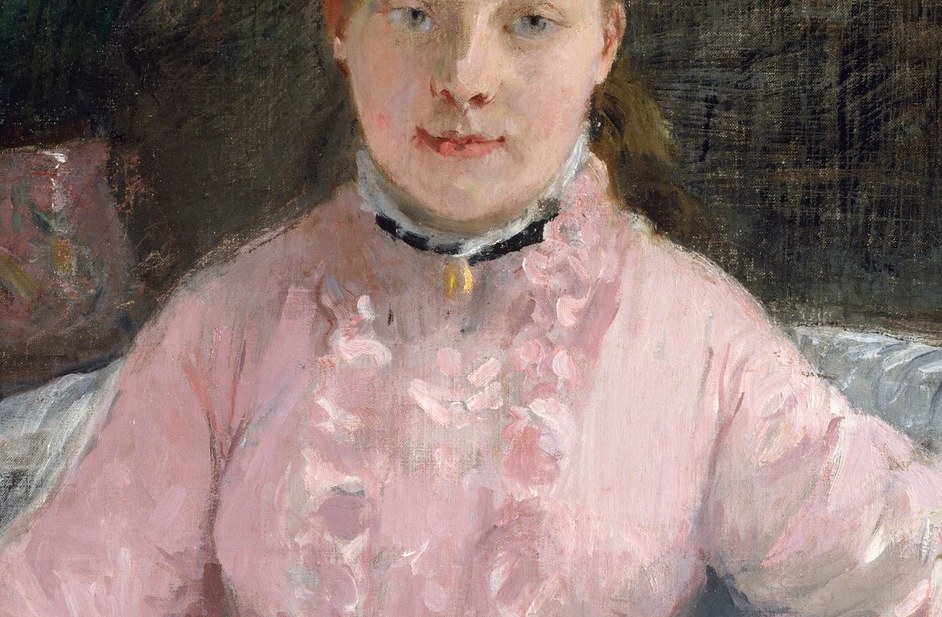
Berthe Morisot painted "The Pink Dress" in 1870, a formal portrait of Albertie-Marguerite Carré in a Parisian interior. The painting now lives at The Metropolitan Museum of Art. Its title quietly redirects our attention: she named it for the pink silk, not the young woman wearing it.
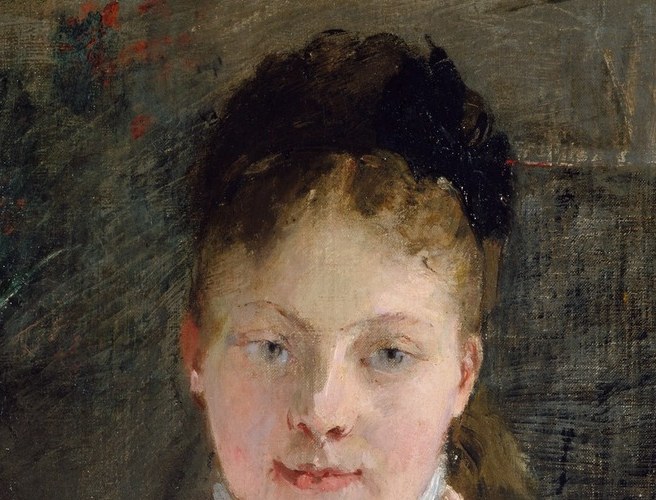
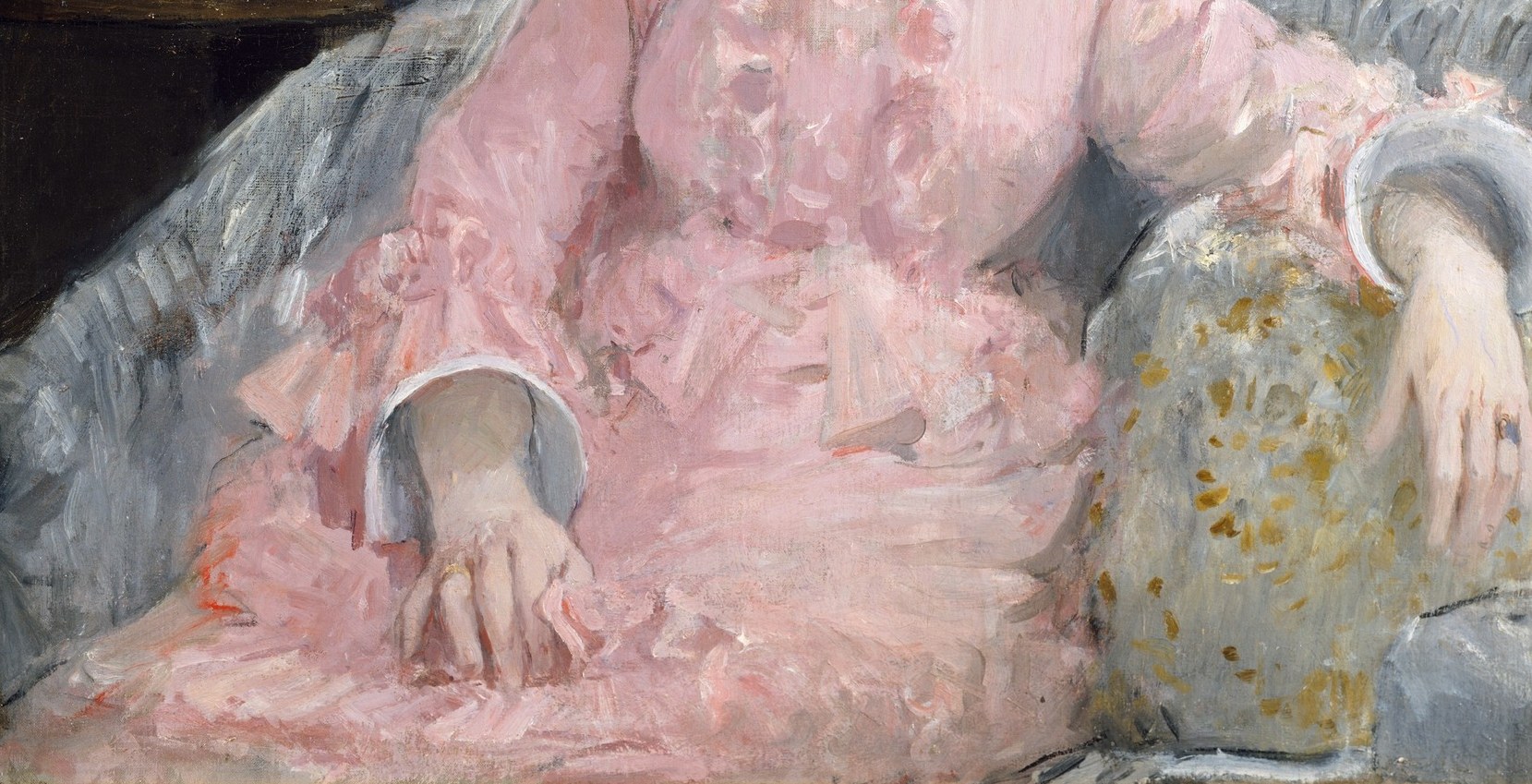
Look closely and you can see Morisot working in two registers at once. The sitter's face is handled with a careful, academic finish, smooth, composed, what a bourgeois patron paid for. But move your eye down to the skirt and everything accelerates. The brushwork loosens into visible, flickering strokes. The fabric is suggested rather than described.
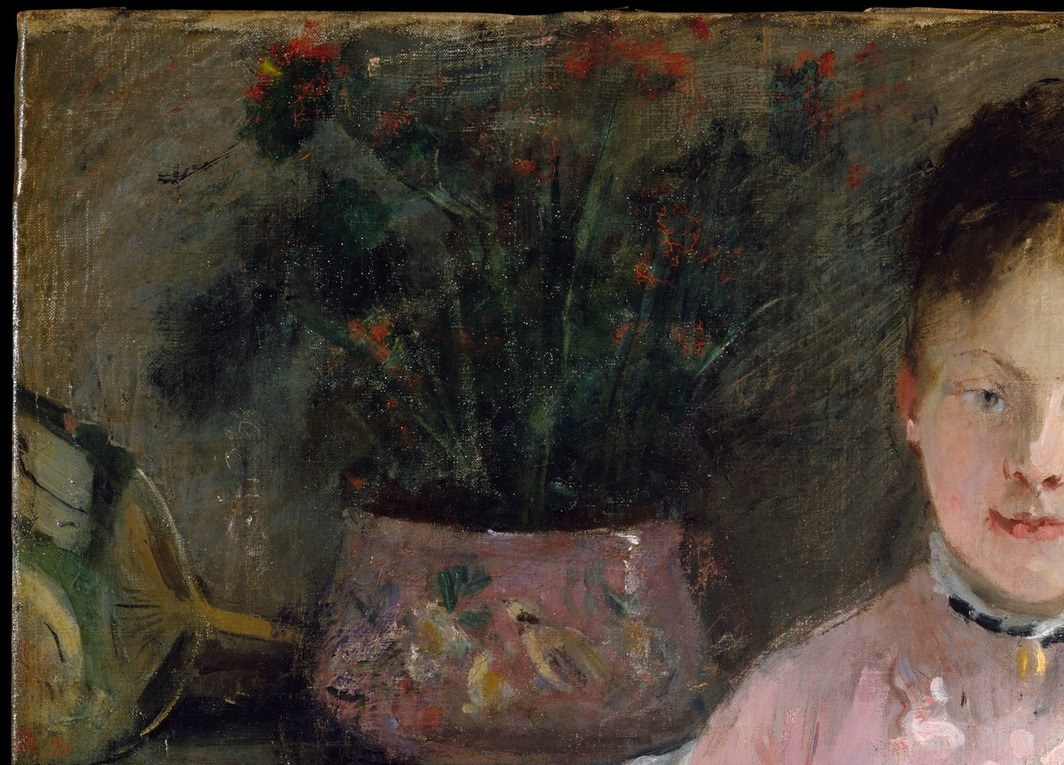
The real shock is the upper-left background. There, Morisot barely paints the leaves at all. She reduces them to loose green gestures dissolving into atmosphere. This corner is a rehearsal for the full-blown Impressionist she would become, smuggled into a still-conventional portrait.
She gave her patron a finished face and a respectable likeness. She gave herself the freedom to break the rules everywhere the sitter wasn't looking.
Details

Transcript
This is a portrait of a pink dress. Berthe Morisot named the painting for the fabric, not the sitter. Look at her face. Tight, composed, finished. Now look at the skirt. Flickering, loose, barely brushed in. In this corner, she paints pure atmosphere. The leaves dissolve into air. The finished face satisfied her patron. The rest was for herself.