Miss Catherine Tatton by Gainsborough, Thomas
This is Thomas Gainsborough's portrait of Miss Catherine Tatton, painted in 1786, two years before his death, and it shows a painter at the absolute top of his technical game, doing something that shouldn't work.
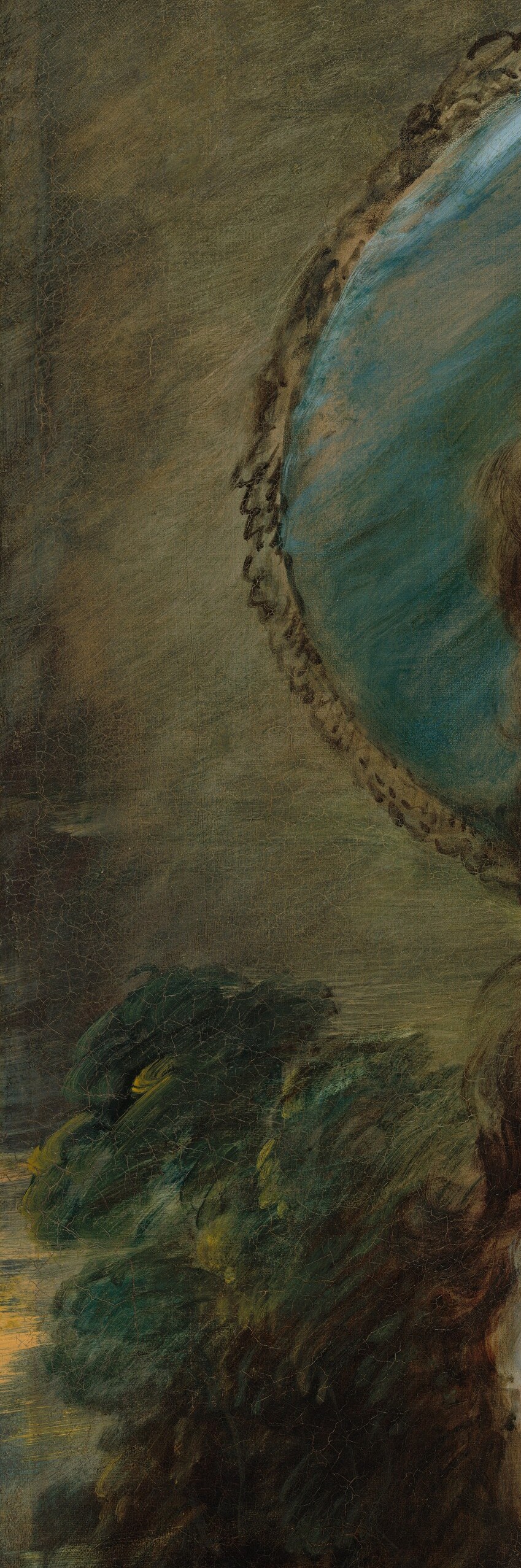
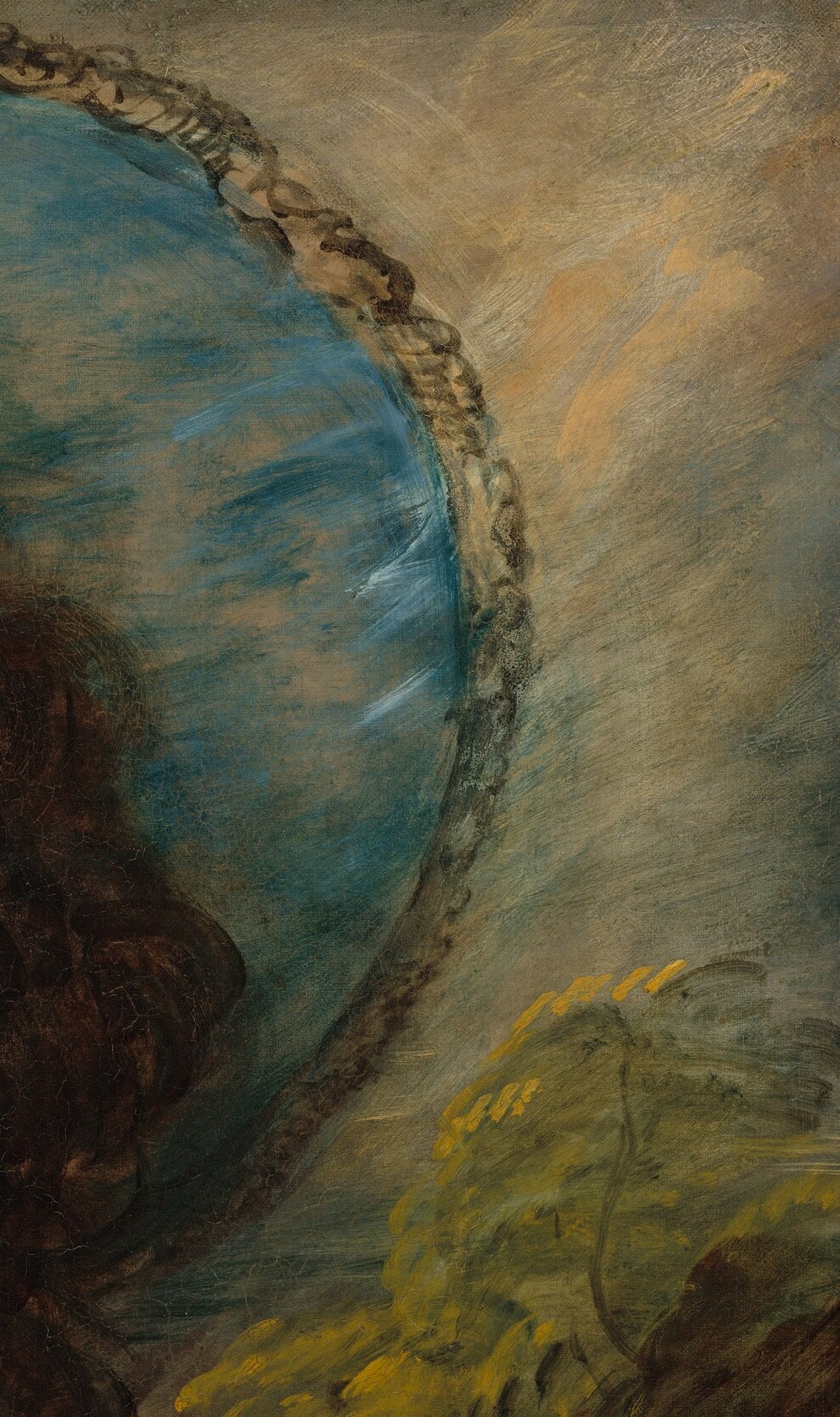
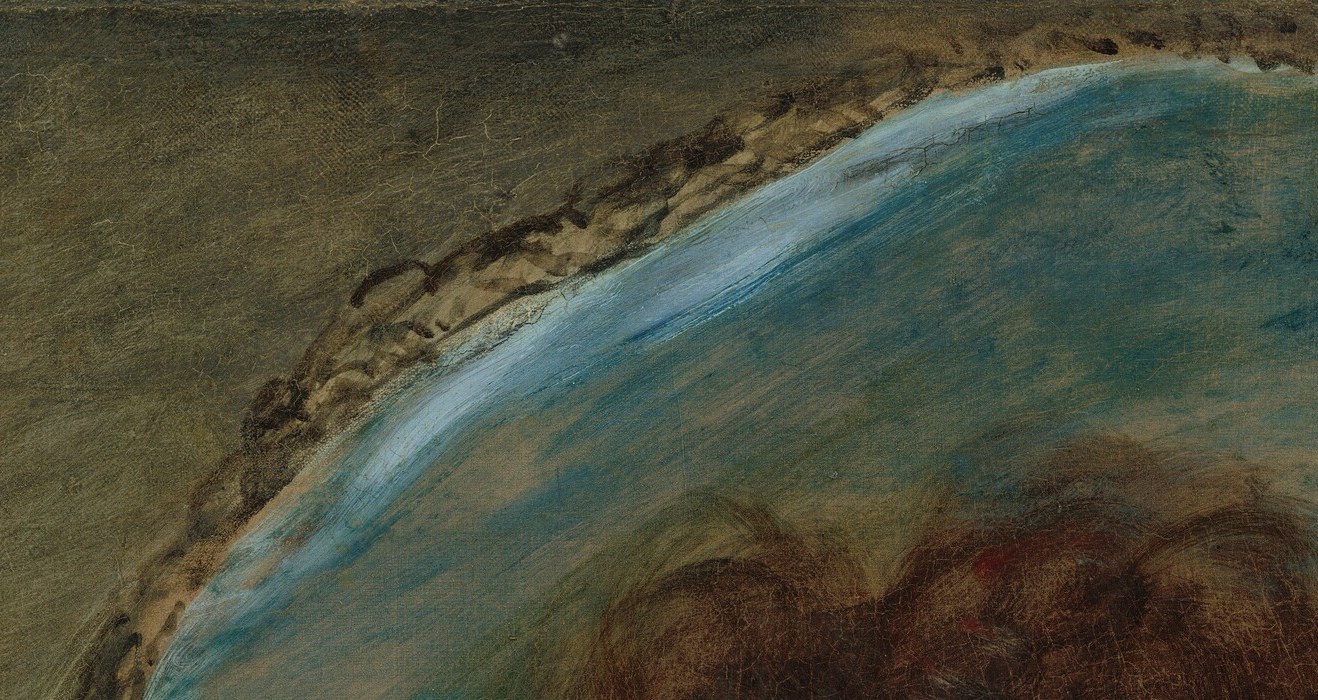
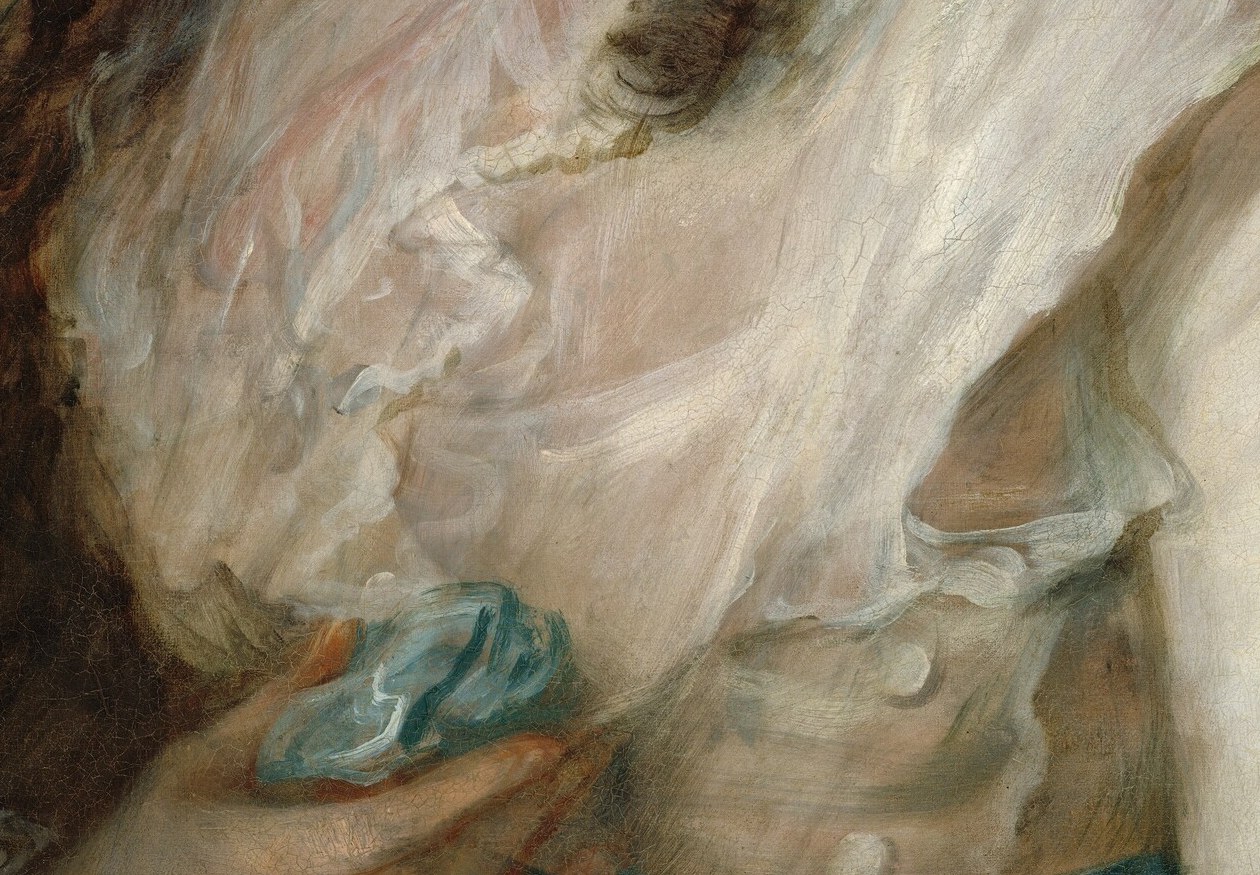
Zoom in on the grey ostrich feather tracing the brim of her blue hat. Gainsborough renders the entire passage in maybe five dragged strokes of a dry brush. Up close it's almost nothing, just a few smudged trails of pale grey, but step back and it reads as soft, weightless plumage catching the light. He does the same trick across her white silk bodice: rapid, broken sweeps of paint that your brain assembles into shimmering fabric.
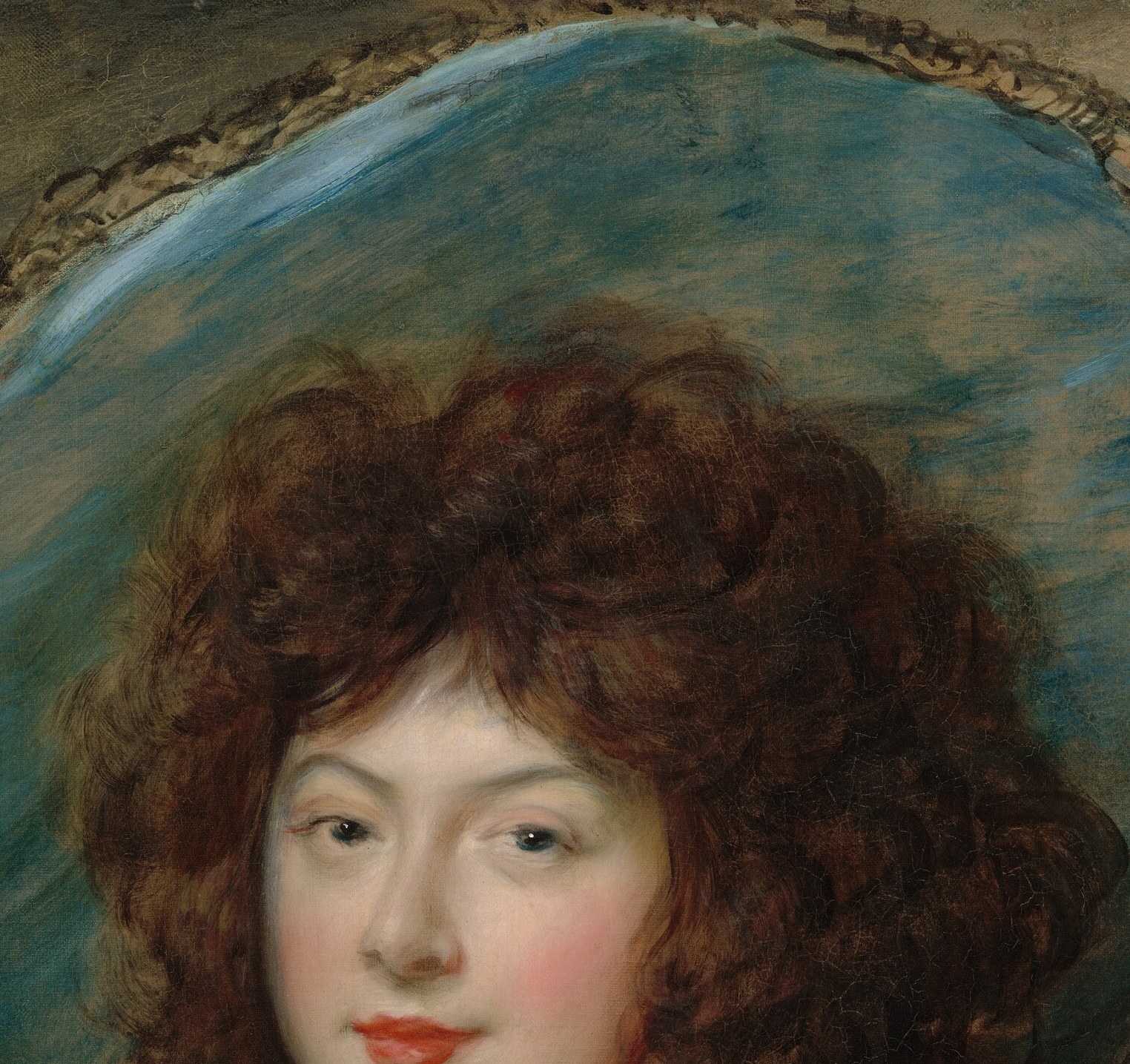
Now look at her hands, clasped at her waist. They're barely finished, a few light outlines and a suggestion of fingers. Gainsborough frequently left hands sketchy in his late portraits, placing all his attention on the face instead. He understood something about how people actually look at paintings: you go to the eyes first, and if the eyes hold you, the rest becomes atmosphere.
Gainsborough was one of the two titans of 18th-century British painting, alongside Joshua Reynolds. But unlike Reynolds, who treated portraiture as grand, serious public art, Gainsborough saw it as a job. What he really wanted to paint was landscape. You can see that in the blurred parkland behind Miss Tatton: it's not a backdrop he phoned in. It's the landscape he wished he was making, smuggled into a commission.
A painting that tells you where to look, and trusts you to feel the rest.
Details
Transcript
They called him the most sought-after painter in England. But Gainsborough hated portraiture. He painted landscapes for himself. This blurred woodland behind her is what he actually wanted to be doing. He painted fast. This entire canvas likely took days, not weeks. Now look at the grey feather across the hat brim. Five dragged strokes of the brush. That's all the luxury he needed. Then look at her hands. He left them barely more than a sketch. He knew exactly where your eye would go instead.