Lady with a Harp: Eliza Ridgely by Sully, Thomas
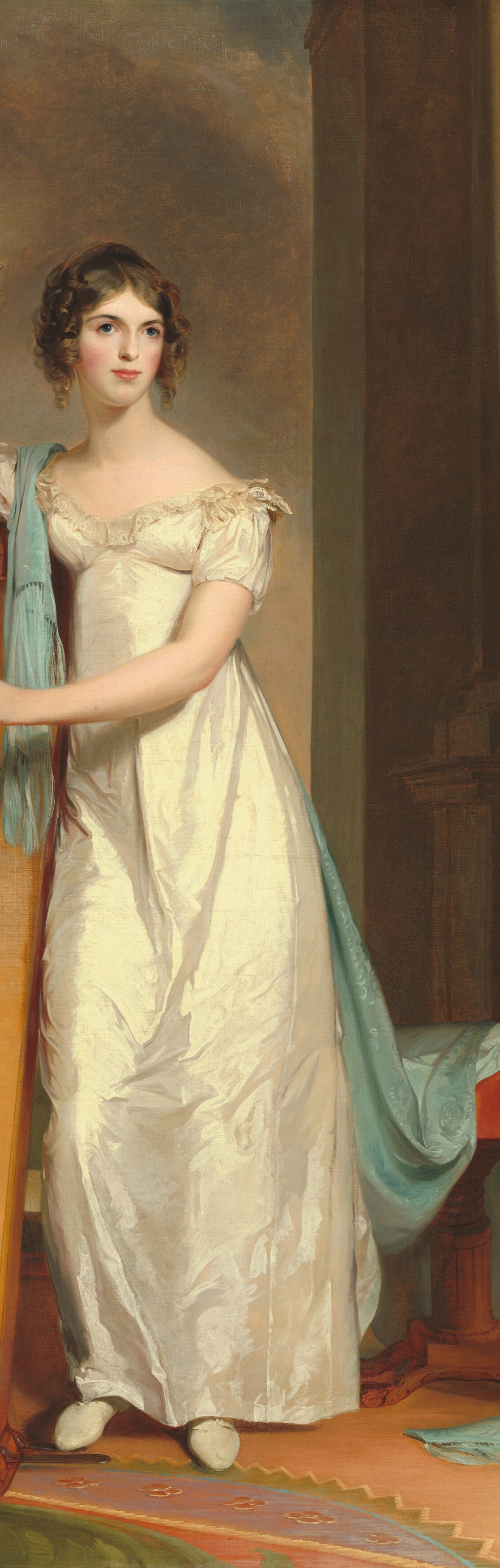
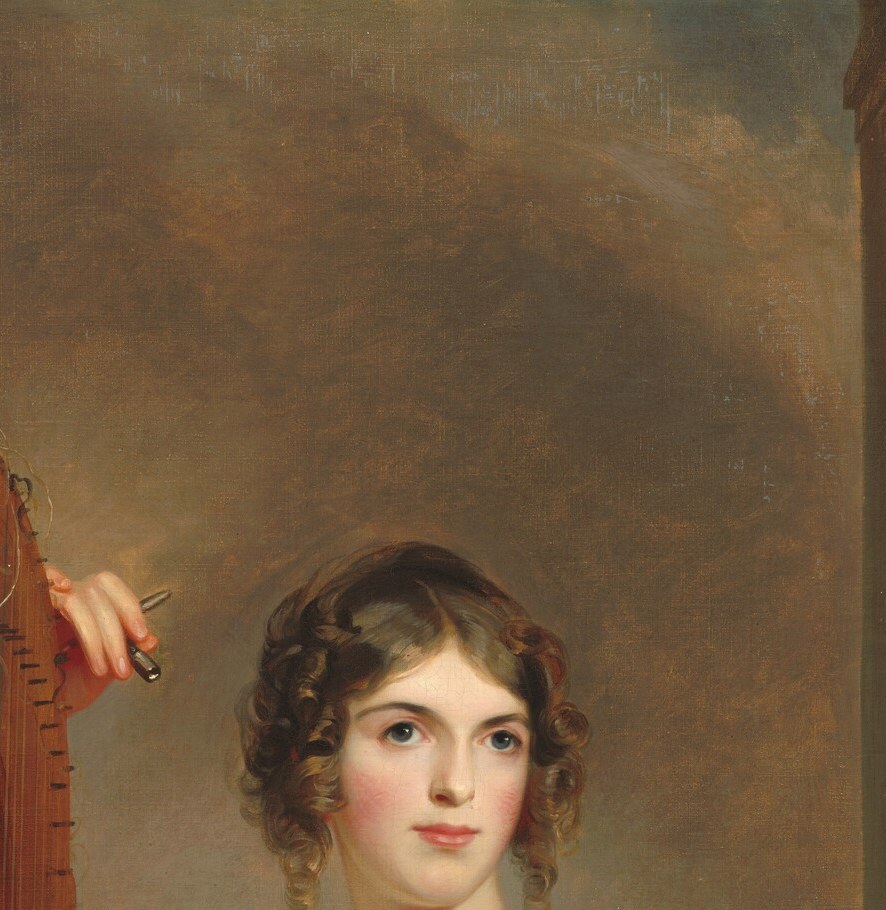
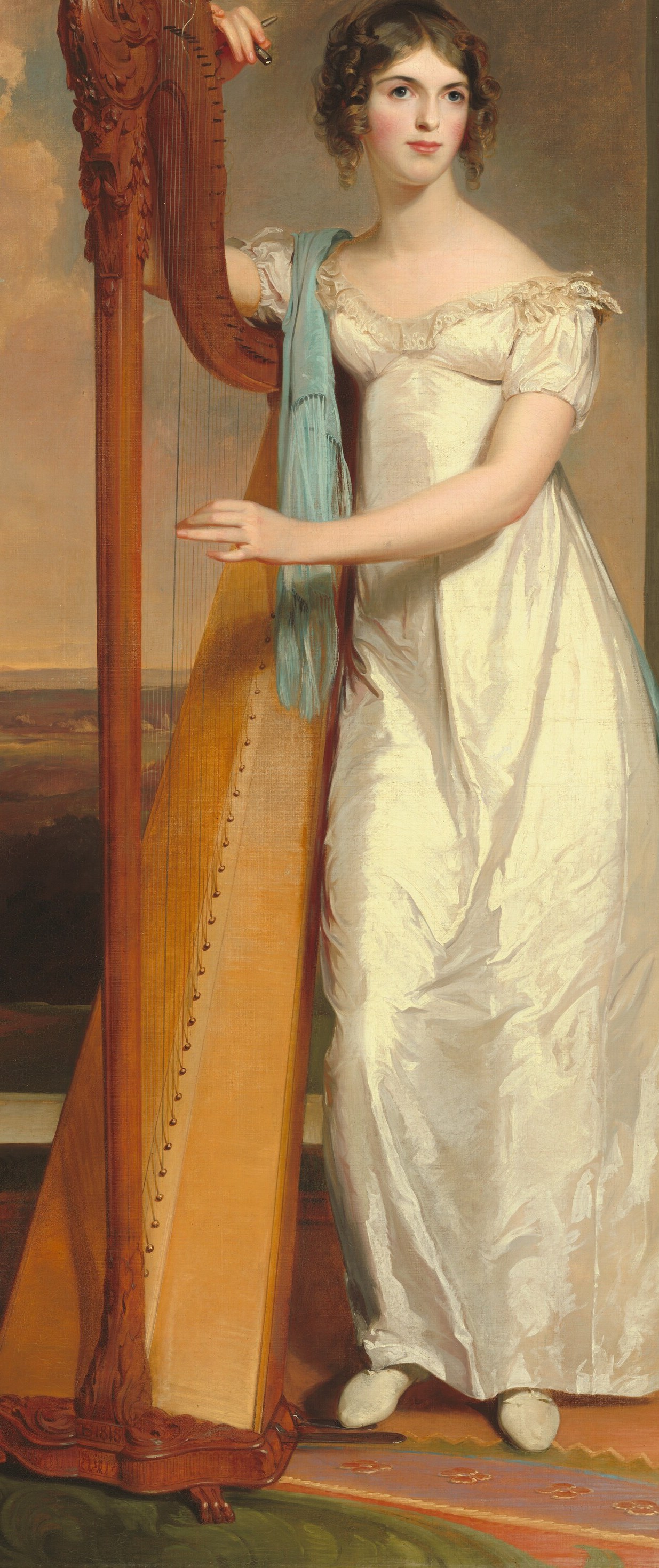
Thomas Sully's portrait of Eliza Ridgely captures the ambitions of a young American elite. Painted in 1818, it hangs today in the National Gallery of Art in Washington, D.C. Eliza, only fifteen, posed in an Empire-waist gown beside a grand gilded harp, a European status symbol that was wildly impractical in the humidity of a Maryland summer.
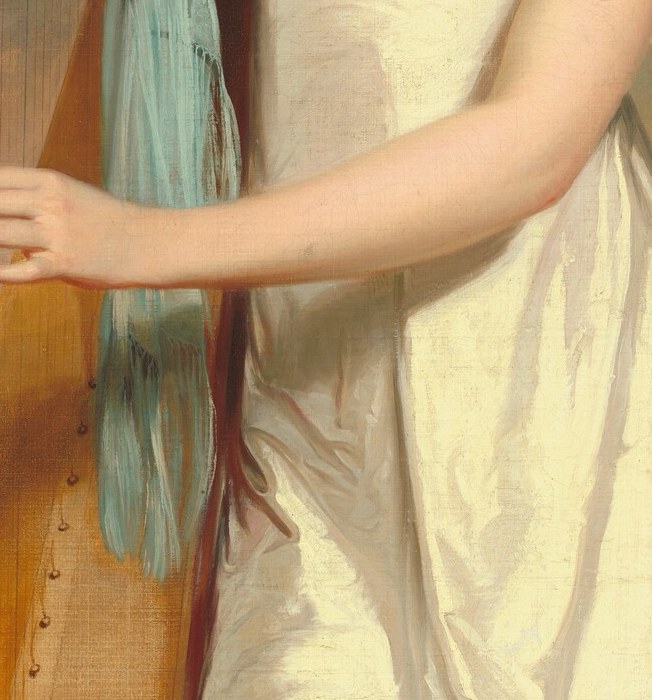
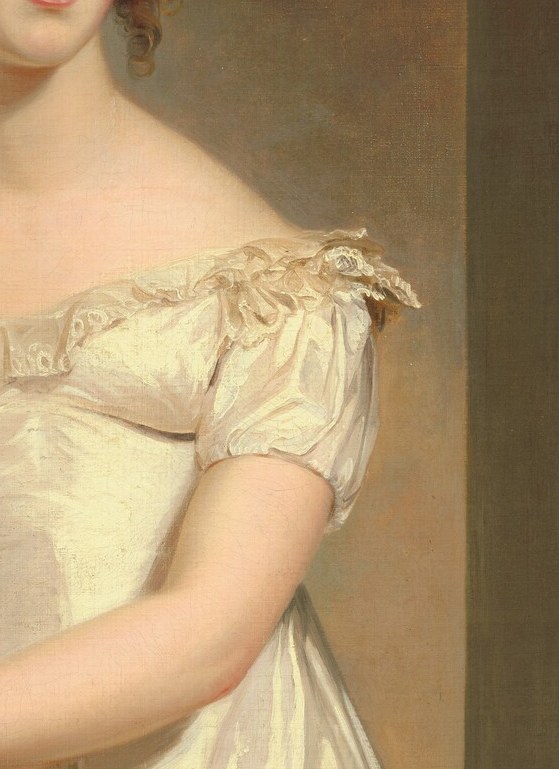
Look closely at the way Sully handles fabric. The white dress is rendered with such translucent delicacy that you can feel the difference between the sheer sleeves and the denser satin of the skirt. The single bold note of color is the teal sash draped over her left arm, a compositional device that pulls your eye across the canvas. The harp, a double-action pedal instrument, identifies the Ridgely family as not just wealthy but culturally sophisticated.
Sully charged roughly $100 for a full-length portrait of this kind. To put that in perspective, a skilled Baltimore laborer at the time might earn that sum in an entire year. The painting was an investment in image-making, commissioned by her father, a wealthy merchant, to present his family not as provincial Americans but as heirs to a European tradition of taste and accomplishment.
What feels like a simple, graceful portrait is actually a quiet declaration of belonging to a new American aristocracy, one that still looked across the Atlantic for its models of culture.
Details
Transcript
Harp strings were made of gut and would snap in a Baltimore summer. Owning this gilded instrument still meant you had arrived. Eliza Ridgely was fifteen when she sat for this. Her father paid Thomas Sully to make his family look like European gentry. The luminous white dress alone declared serious money. Sully charged a hundred dollars for a full-length portrait. A Baltimore laborer earned that in a year.