Noli me tangere by Antonio da Correggio
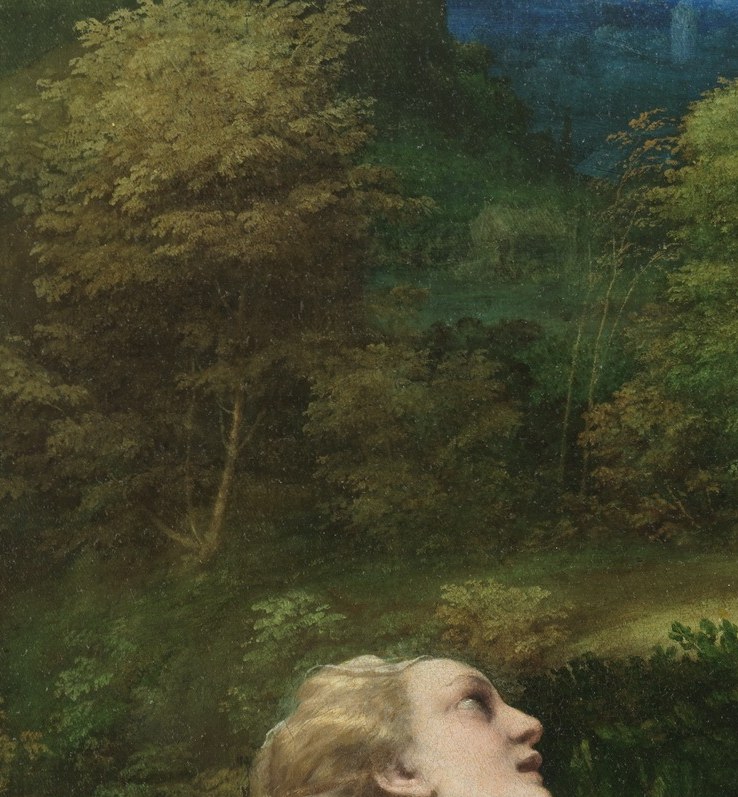
A single physical gap carries an entire theology. This is Correggio's Noli me tangere, painted around 1525 and now in the Museo del Prado, Madrid, where it sits behind protective glass as one of the collection's prized High Renaissance holdings.
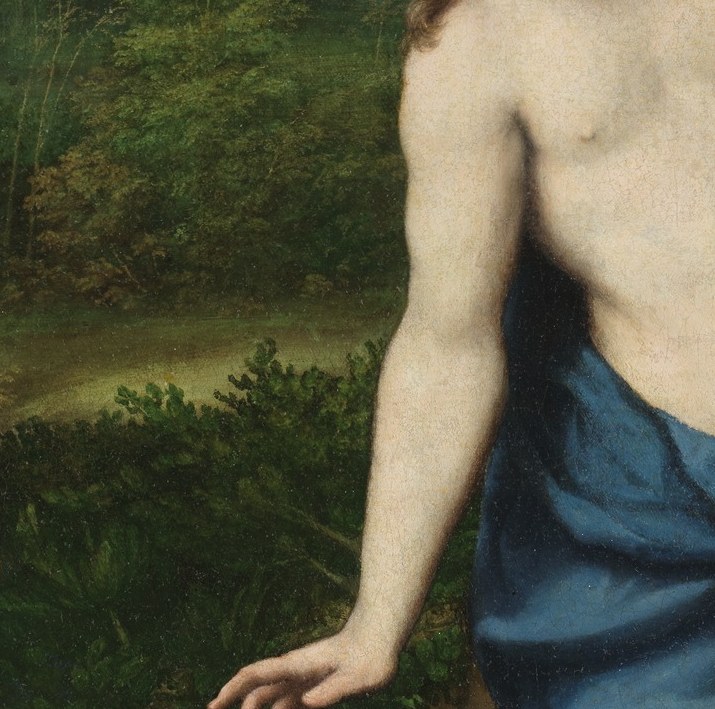
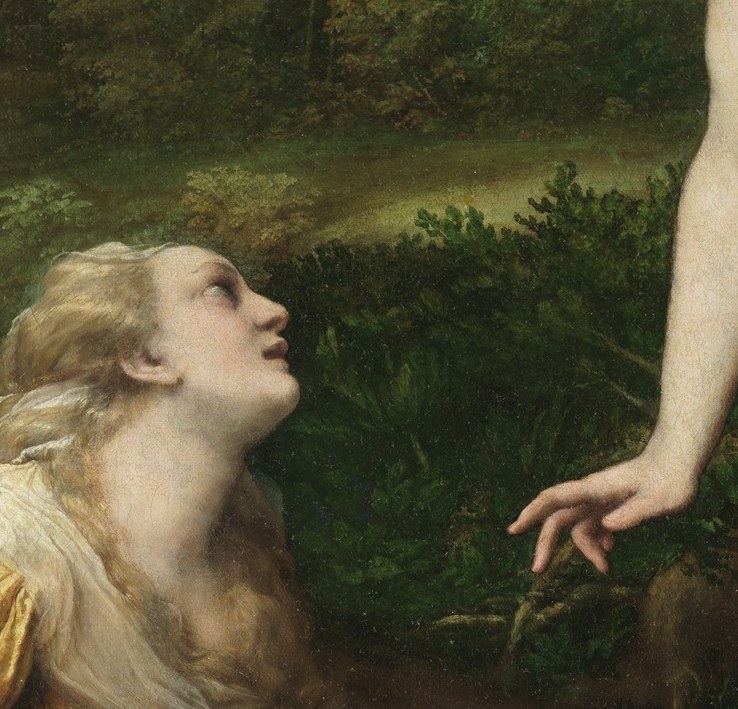
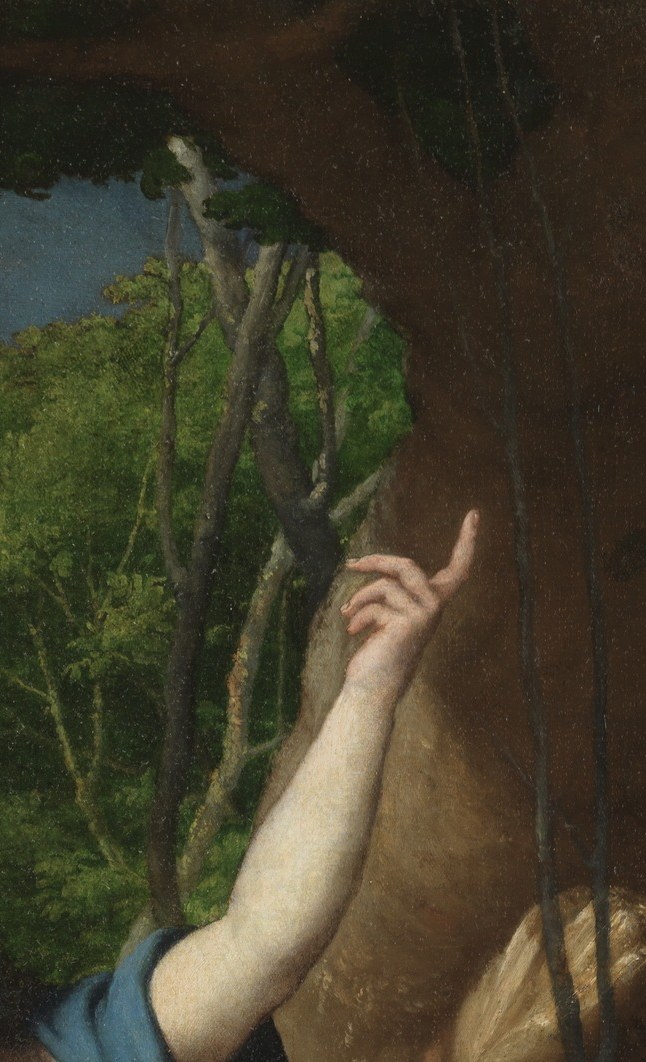
Look at the charged space between Christ's outstretched palm and Mary Magdalene's reaching hand. Her fingers extend almost to his garment, but not quite. The open palm enacts the title's Latin command: "Do not touch me." At her feet lies the alabaster jar of ointment she brought to anoint a dead body. In Christ's other hand, a gardener's hoe literalizes her initial misidentification. Correggio painted the prop explicitly, a rare iconographic decision that anchors the biblical text to the canvas.
The painting was completed for a private patron in the early 1520s and eventually entered the Spanish royal collection, where it has remained for centuries. Correggio himself barely left the Emilia region, yet his mastery of sfumato and foreshortening reached Madrid and influenced Baroque painting across Europe. The Prado guards this work as a cornerstone of its Italian Renaissance rooms.
The gap between those two hands contains the entire hinge of the story: recognition, prohibition, and the promise of a departure still to come. What do you see in the space Correggio left between them?
Details
Transcript
The Prado holds this painting behind glass. Its insured value enters eight figures. The entire scene turns on a single word. His open palm arrests her mid-reach. The gap between her fingers and his body holds the doctrine. She mistakes him for a gardener. Correggio painted the hoe literally, a rare choice. The Latin command gives the painting its name: Do not touch me.