Fantastic Landscape by Francesco Guardi
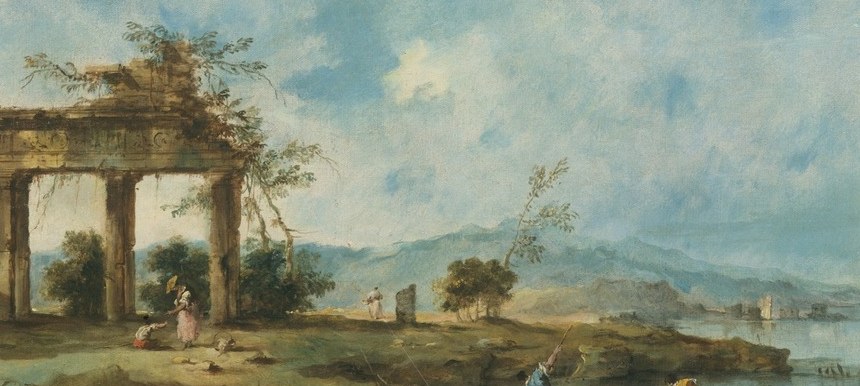
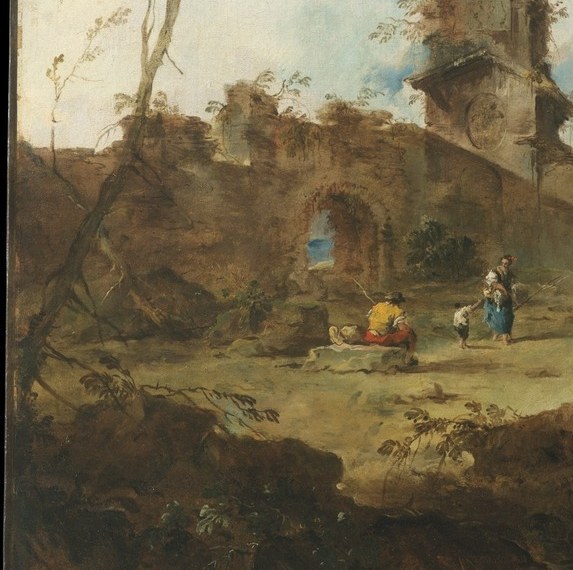
Francesco Guardi's 'Fantastic Landscape' (1765) at The Metropolitan Museum of Art is a pure architectural fantasy, or capriccio. The noble Venetian painter didn't sketch this crumbling port from life; he assembled it from memory and imagination in the studio.
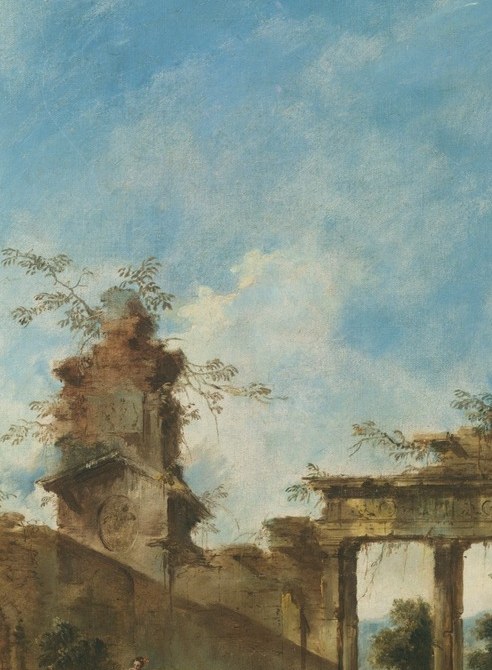
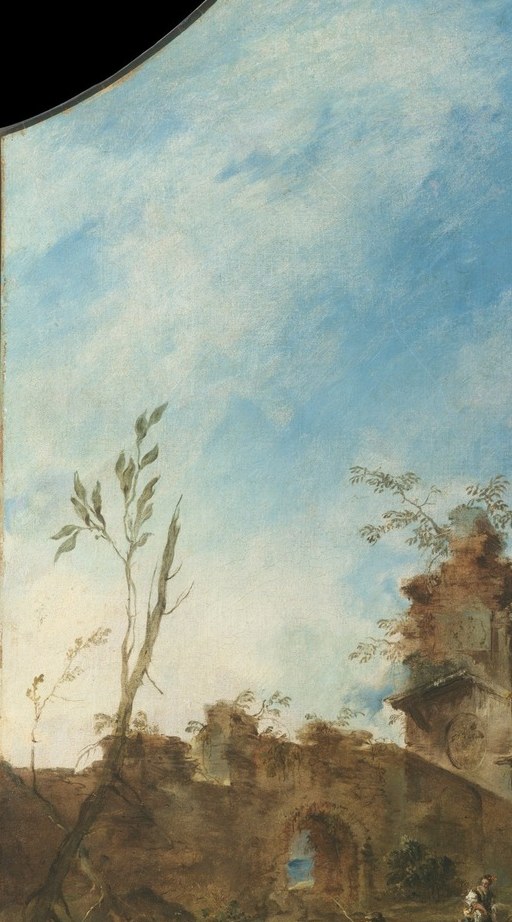
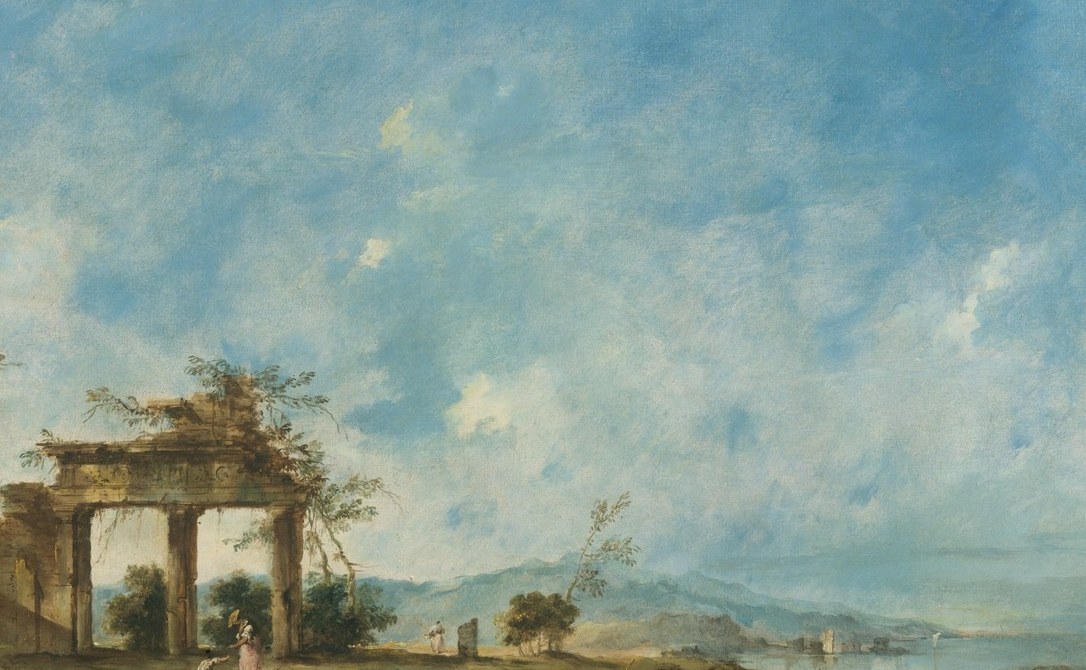
Look first at the triumphal arch and the ruined tower. These are stage sets, not real ruins, designed to frame the pale, infinite lagoon and draw your eye into a vanishing horizon that barely separates water from sky. But the real subject of this painting is the light itself. Don't just look at the lagoon, study its surface.
Guardi applies oil paint in swift, broken comma-strokes. These marks don't blend into a smooth mirror; they sit on the canvas as distinct flecks of white and blue, catching the light almost violently. The scrubby vegetation in the foreground shows the same raw, sketch-like urgency. This "anti-finish" technique deliberately defied the polished, precise vedute of his rival Canaletto.
In this radical shorthand, Guardi captured the flicker of light a full century before the Impressionists took up the same fight in Paris. He traded architectural truth for atmospheric truth, and in doing so, pointed the way toward modern painting. What do you notice more in this scene, the weight of the ruins, or the motion of the reflections?
Details
Transcript
An ancient, crumbling port. Forever sunset. A Roman arch frames a dreamy, infinite lagoon. Guardi didn't just paint Venice. He invented it. This is a capriccio, pure architectural fantasy, 1765. Now look at the water. Forget the ruins. Light isn't blended smooth. It's broken into commas. A century early, Guardi found the Impressionist touch.