Innocence by American 19th Century
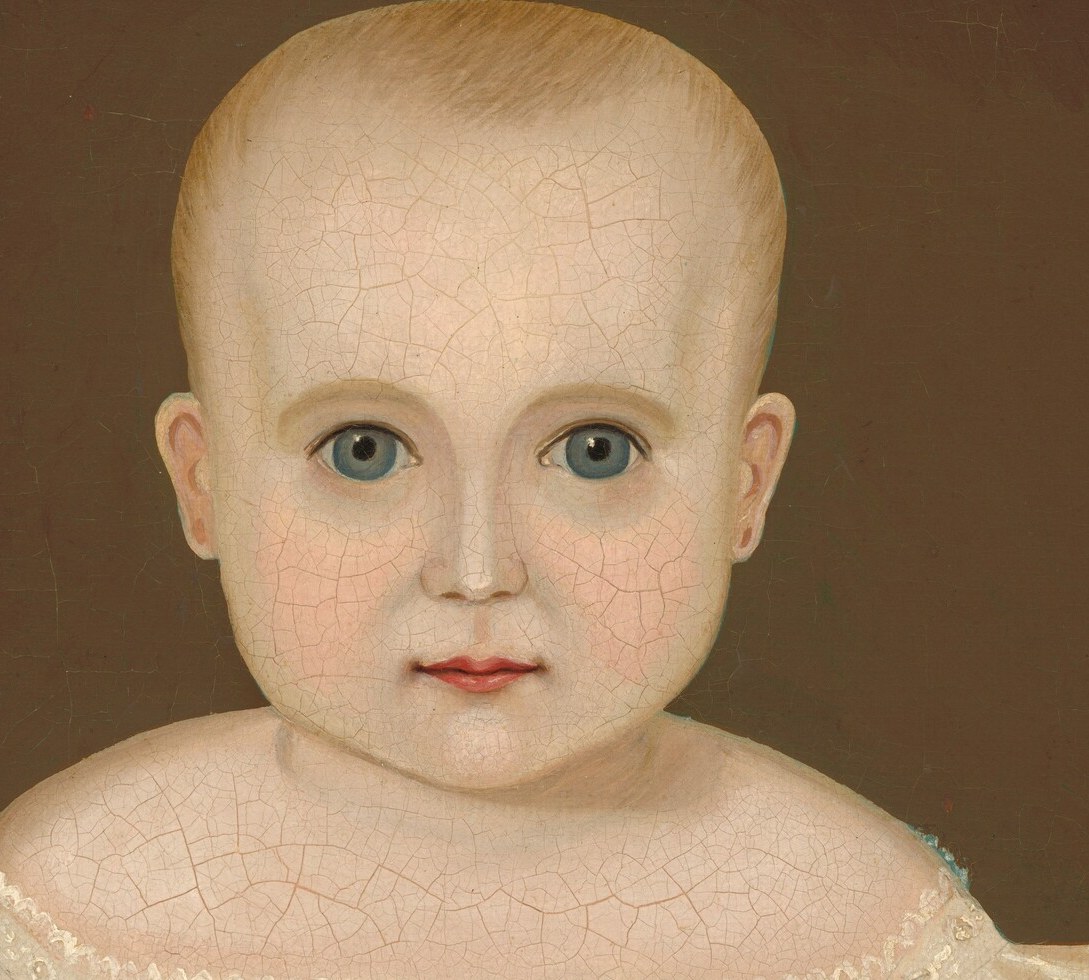
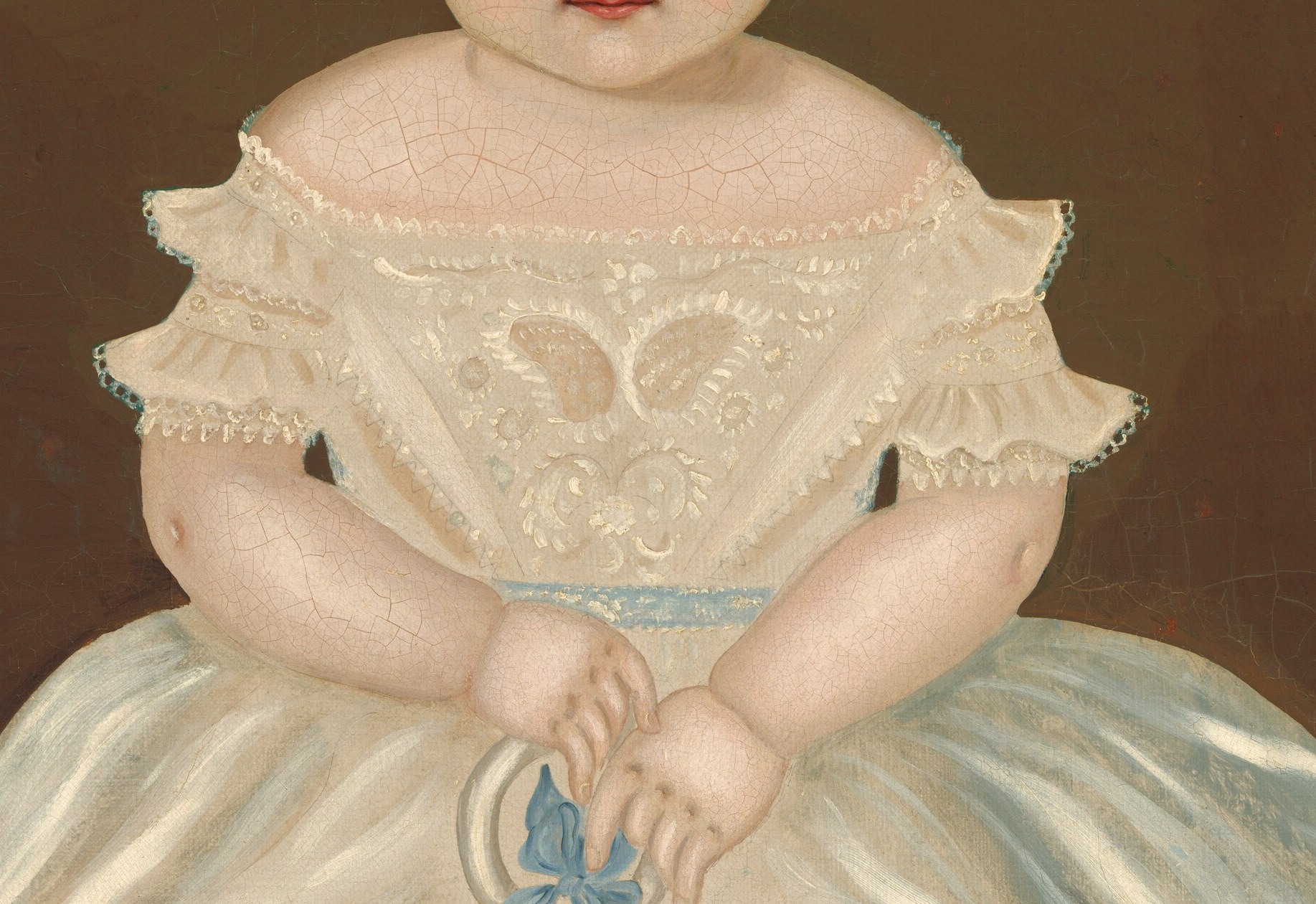
This striking portrait, titled 'Innocence', captures the 19th-century ideal of childhood purity. Created around 1830 by an anonymous American artist, it now resides in a private collection.
The artist's deliberate choices emphasize simplicity and tranquility. Notice the child's direct, unblinking gaze and the delicate lace of the white dress. Even the fragile glass rattle held in tiny hands, adorned with a blue ribbon, underscores a sense of preciousness and vulnerability.
The sparse, dark background ensures that all attention remains on the child. The scattered rose petals, though subtle, suggest the transient nature of beauty and youth, adding a poignant layer to the painting's message. This understated presentation was a common artistic method of the era to convey the concept of innocence.
What details do you find most captivating in this portrayal of childhood?
Details
Transcript
This 19th-century portrait is titled, simply, 'Innocence'. The artist aimed for pure, unadorned simplicity. Look at the baby's wide, clear blue eyes. Even the baby's hands hold a fragile glass rattle. Scattered rose petals hint at the fleeting nature of youth. Every element directs your eye to this tranquil moment.