River Scene by Asher Brown Durand
View the artwork: River Scene →
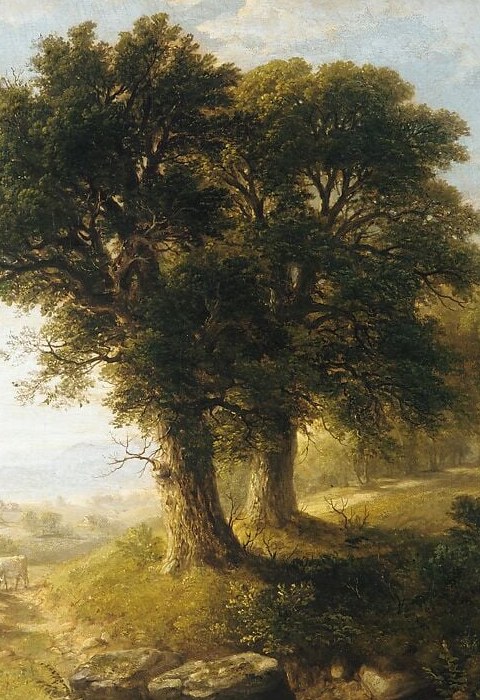
Asher Brown Durand's 1854 oil on canvas, River Scene, achieves the impossible: a complete, breathing world collapsed into just 35 inches of paint. Now in the Metropolitan Museum of Art, it is a masterclass in how to see an afternoon.
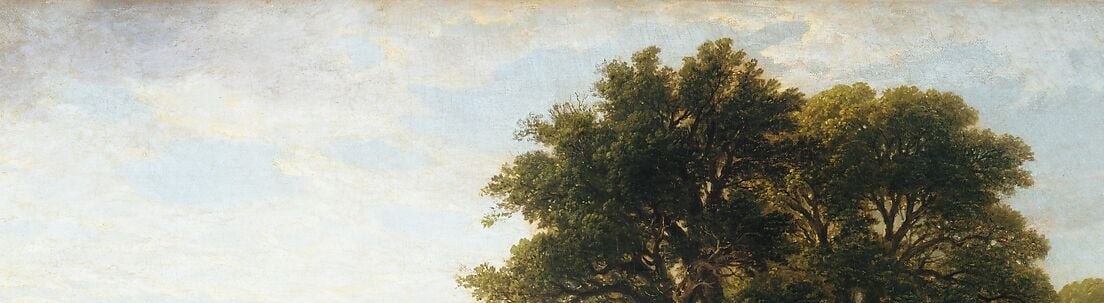
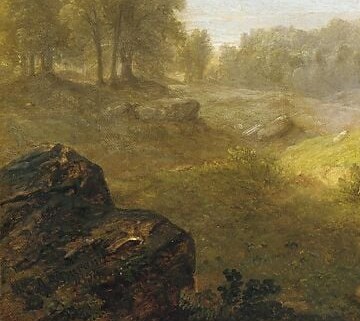
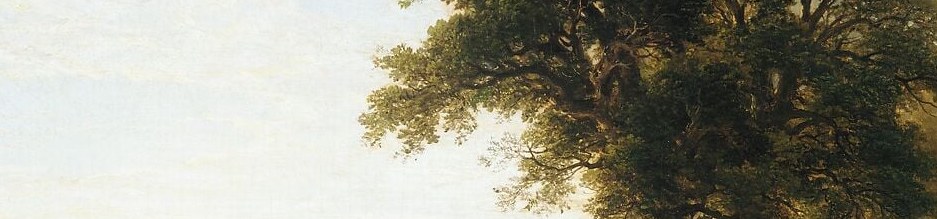
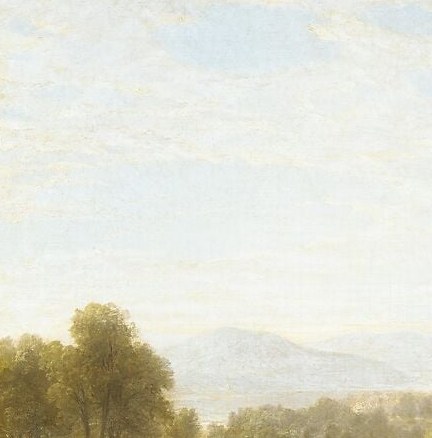
Durand painted the foreground rocks not as generic filler but as specific geological surfaces, a habit he built through rigorous plein-air sketching. Move up to the oak canopy and the trick deepens: each leaf cluster is built from dozens of tiny, interlocking strokes that catch the light so precisely the tree seems to sway. The river in the middle distance doesn't reflect with a single dramatic gleam, but with a soft, broken shimmer that knits the warm foreground to the cool, hazy hills beyond.
A former banknote engraver, Durand had traveled to London in the 1840s and absorbed John Constable's pastoral naturalism. By the time he painted this, he was president of the National Academy of Design and was about to publish his famous "Letters on Landscape Painting," urging American artists to study nature directly. He believed a quiet meadow held as much truth as any epic canyon.
The result is a painting where the real subject isn't the cattle or the hidden barn, but the light itself. A viewer doesn't just see the distance; they feel it.
#arthistory #hudsonriverschool #asherbrowndurand
Details
Transcript
A rutted road pulls your eye past dark rocks into a sun-drenched pasture. Look closely at the rocky foreground. This is not generic filler. Durand painted specific geological surfaces from plein-air studies. Now find the massive oak canopy. Each leaf cluster is built from dozens of tiny overlapping strokes. The tree breathes. The river shimmers not with a single reflection, but with soft, broken light that unifies the whole scene. This light dissolves the distant hills into a blue-grey exhale. Durand, a former engraver, argued you could find the sublime not in a waterfall, but in a single afternoon light.