Artwork
River Scene
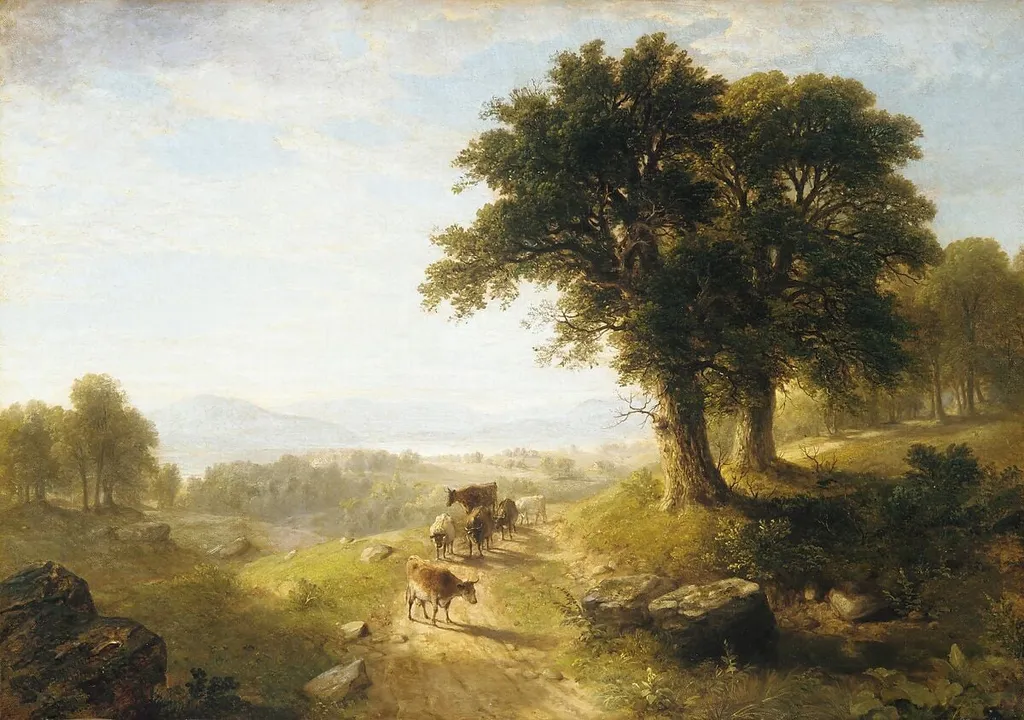
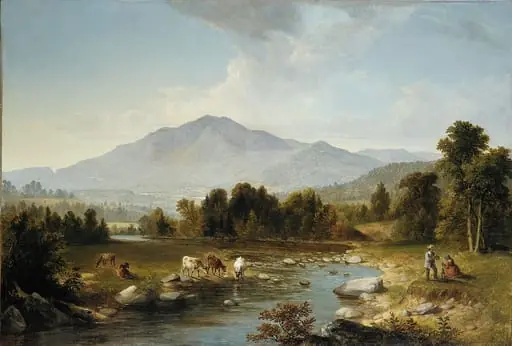
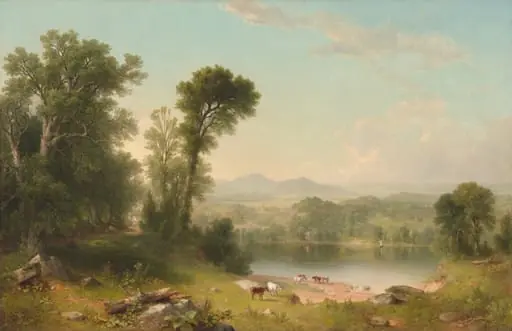
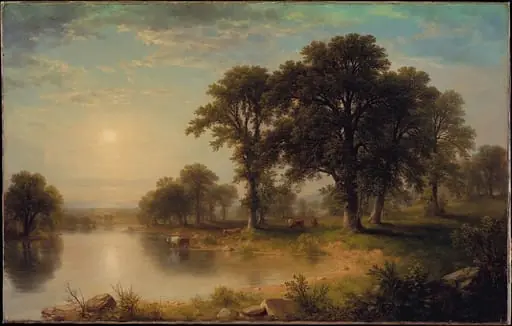
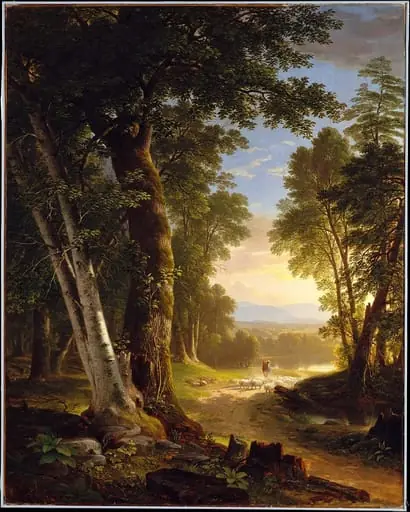
River Scene is an oil painting by the Barbizon school artist Asher Brown Durand. It dates from 1854 and is held in the collection of the Metropolitan Museum of Art.
About this work
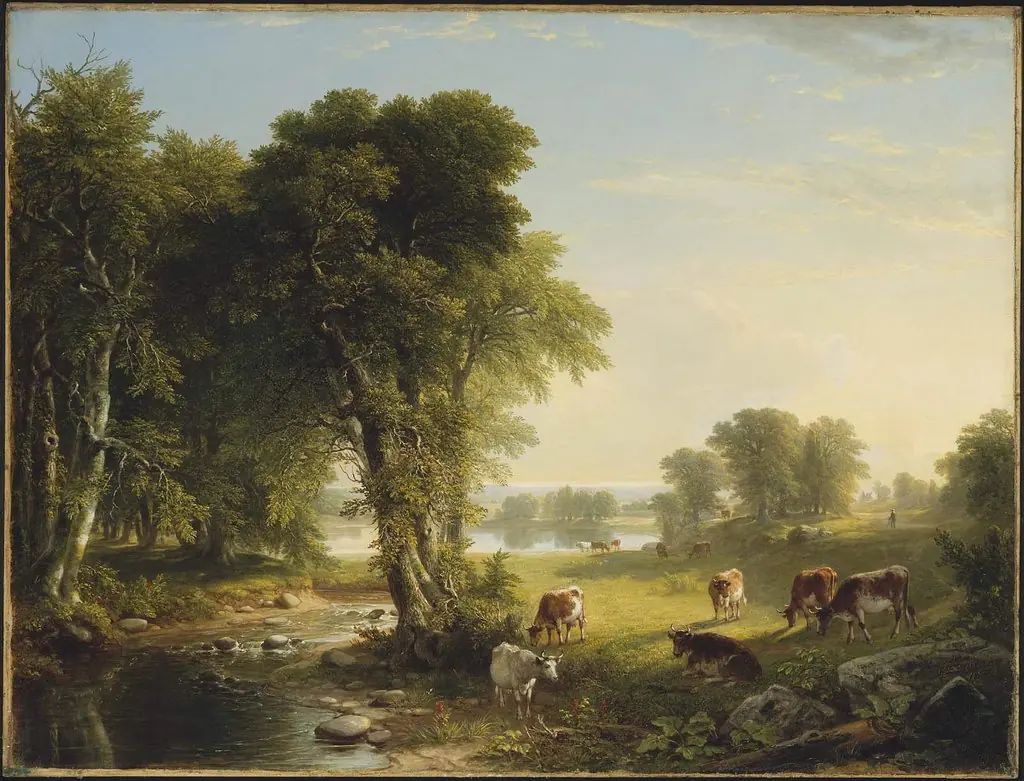
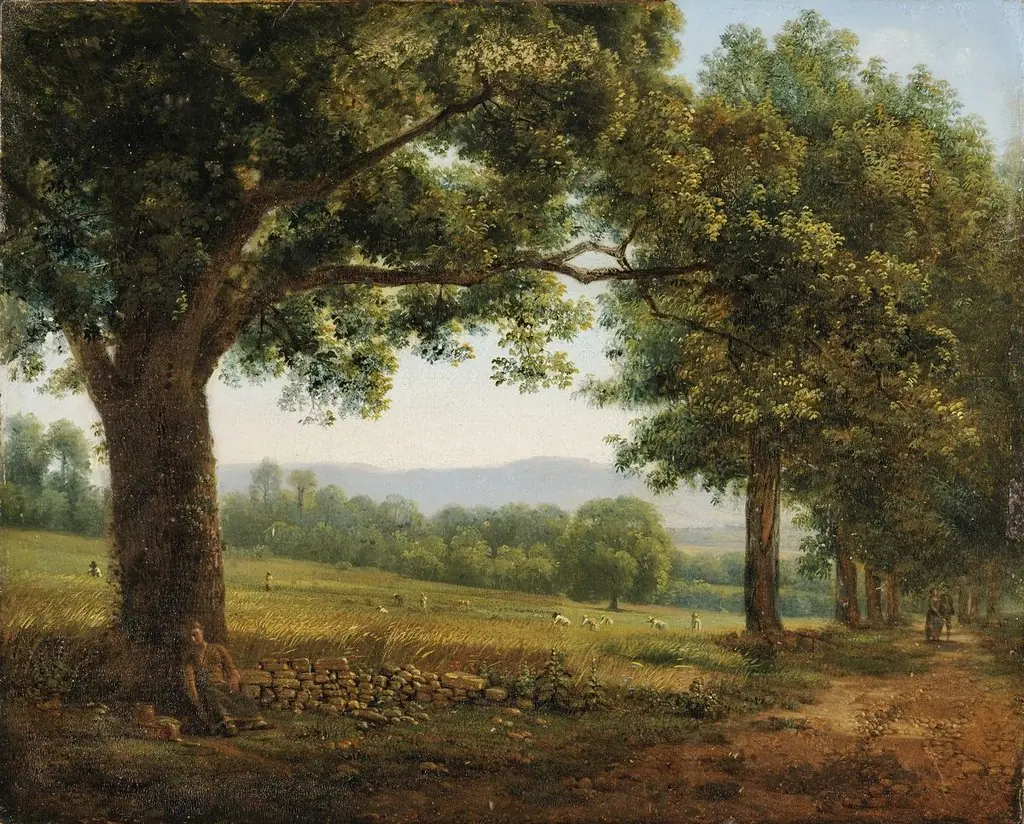
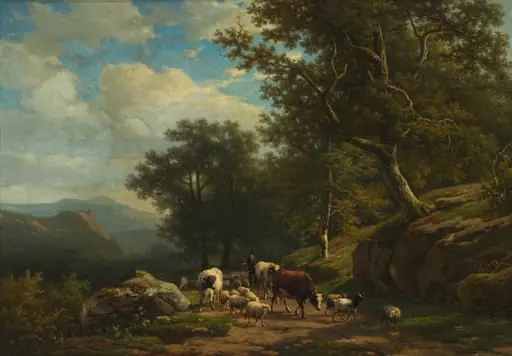
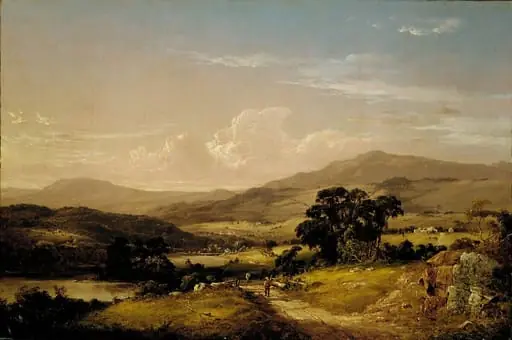
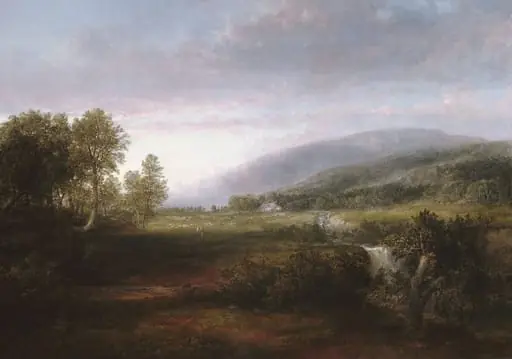
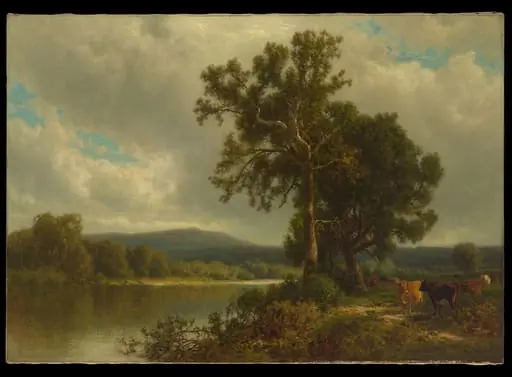
Cattle amble down a rutted road toward an unseen barn as late-summer sunshine gilds the pasture and casts long shadows across the grass.
Cattle amble down a rutted road toward an unseen barn as late-summer sunshine gilds the pasture and casts long shadows across the grass. In the middle distance, low hills rise gently above a hazy blue river, while two splendid trees divide the canvas diagonally. Painted by Asher Brown Durand in 1854 and now at the Metropolitan Museum of Art, this quiet landscape departs from the theatrical cataracts and peaks typical of the Hudson River School in favor of an English-influenced pastoral calm.
Overview
Asher Brown Durand's 1854 oil on canvas, River Scene, depicts a tranquil late-summer afternoon. This work distinguishes itself from the dramatic wilderness landscapes prevalent in American art of the period. Instead, it offers a serene, pastoral view, emphasizing a quiet moment with cattle in a sun-drenched field, reflecting a different approach to nature than the grand, sublime vistas often associated with the Hudson River School.
Subject & Meaning
The painting captures a peaceful scene as late-summer light illuminates a pasture, casting long shadows from cattle ambling along a worn path toward an unseen barn. Gentle hills recede into a soft blue haze across a river, while two prominent trees frame the composition. This depiction of an everyday, intimate landscape evokes a sense of calm and a connection to the immediate, observable world.
Technique & Style
River Scene exemplifies Durand's adoption of English pastoral traditions, notably influenced by John Constable's naturalism, which he encountered during an 1840s trip to London. The artist translated outdoor oil sketches into refined studio compositions, favoring unassuming, local subjects over the dramatic, "sublime" themes often found in American landscape painting of the era. Its compositional structure and mood align closely with English landscape models.
Context
Created in 1854, River Scene reflects Durand's artistic maturity. At this time, he was a decade into his leadership as president of the National Academy of Design. The painting also predates by one year his influential "Letters on Landscape Painting," a series of essays that advocated for artists to engage directly with nature rather than relying on established artistic conventions or the works of previous masters.
History & Provenance
Signed and dated by the artist in the lower left, River Scene measures approximately 24 by 34 inches (61 by 86.7 cm). The painting entered the collection of the Metropolitan Museum of Art in 1970. It was a bequest from Mary Starr Van Winkle, who had inherited the work from her father, Edgar Beach Van Winkle, ensuring its preservation and public display.
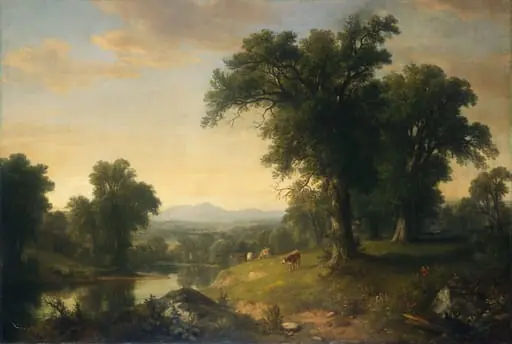
Artist & collection
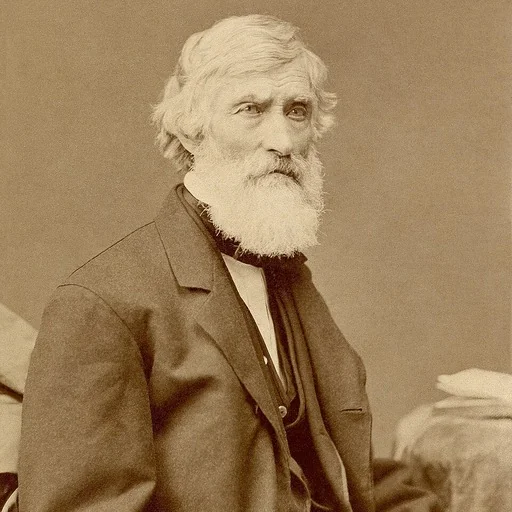
Artist
Asher Brown Durand spent his life in the rolling hills of New Jersey, where the forests and farmland shaped his quiet, deliberate way of seeing.