Harem Scene by Henry Siddons Mowbray
Henry Siddons Mowbray's "Harem Scene" (1892) at the Metropolitan Museum of Art is a complete fabrication. The American painter never visited a harem. He constructed this opulent, silent room from studio props, travel sketches, and pattern books in a New York studio. The scandal is not what Mowbray painted, but that his patrons accepted it as a documentary view of Eastern life.
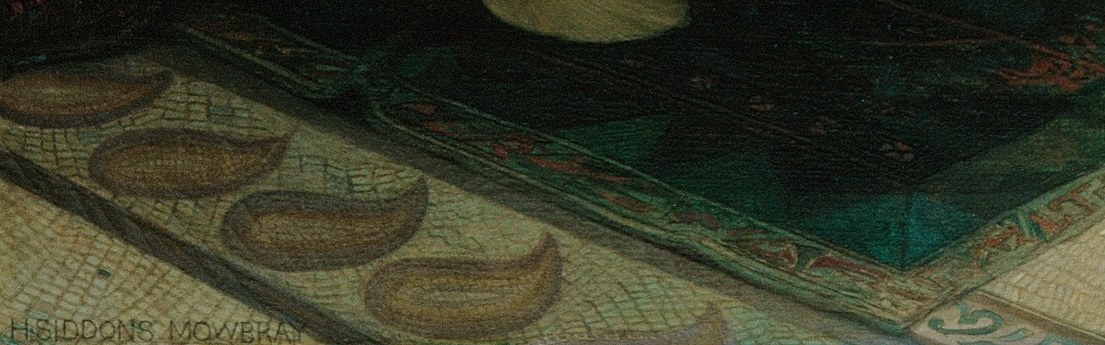
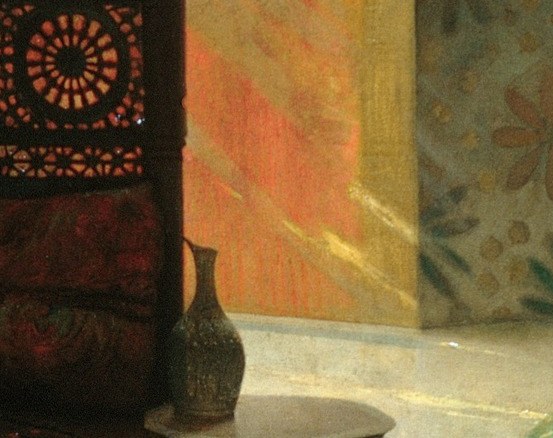
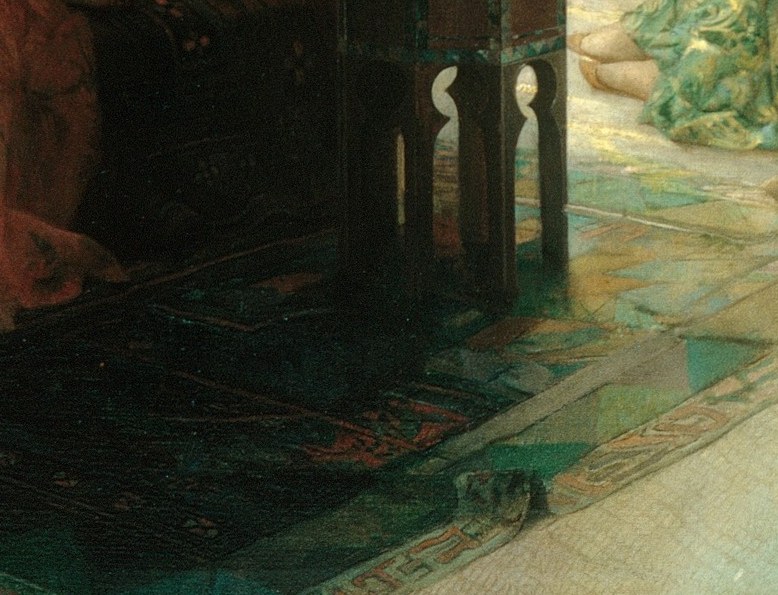
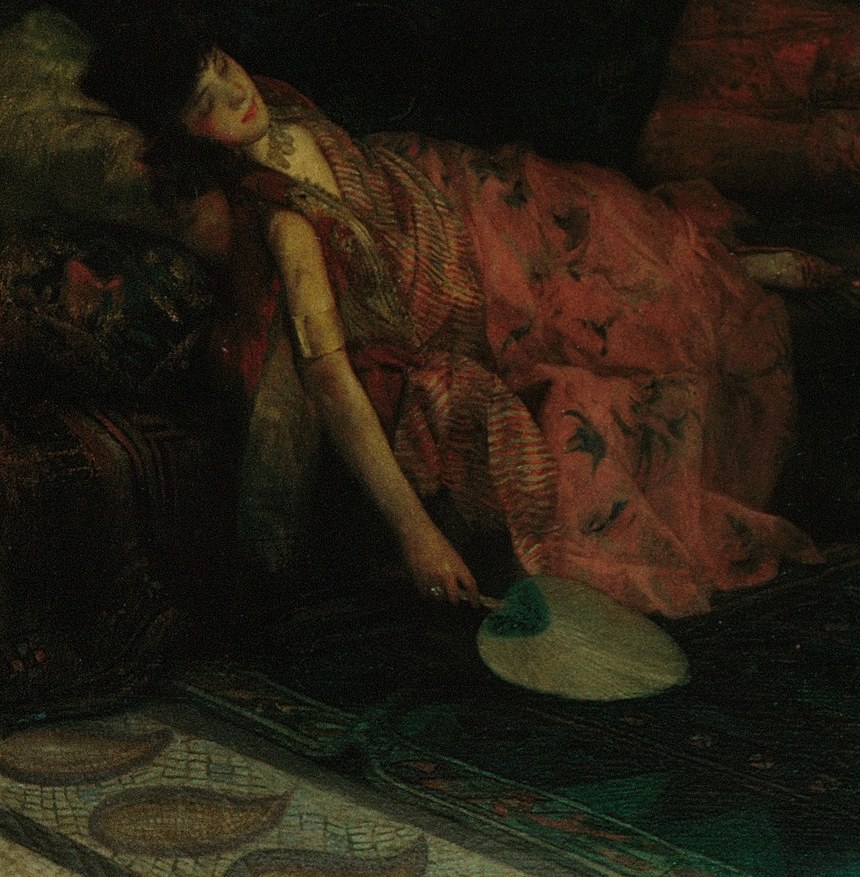
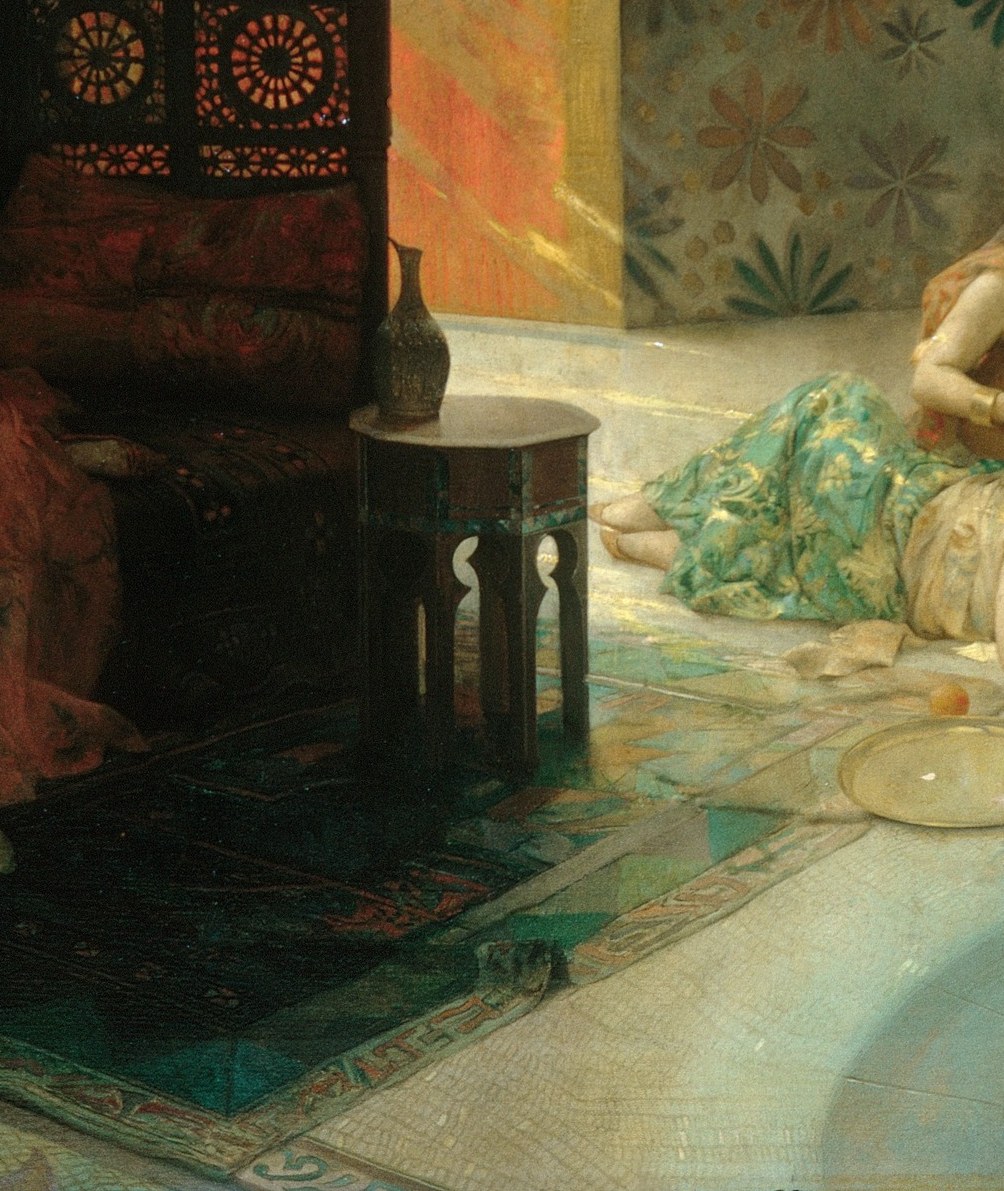
Look at the floor tiles, they are the most specific detail, likely copied from a book of Islamic geometry. The central woman meets your gaze with a detached calm; she holds an oud but does not play it. Mowbray uses a suspended brass lamp as an excuse to bathe the scene in warm light, a technique borrowed from the French Orientalists he admired.
Mowbray had an establishment career: he directed the American Academy in Rome from 1902 to 1904 and painted murals for the likes of J.P. Morgan and F.W. Vanderbilt. His harem scenes were not underground provocations; they were luxury goods for men who wanted an exotic interior without the risk of actually encountering anyone in it.
A century later, the painting is a document, not of the East, but of the American Gilded Age and its appetite for luxurious, reassuring fictions.
Details
Transcript
They called these rooms 'harems' but had never seen one. An American man painted this in 1892, from a studio in New York. He copied the tiles from a book, the lamp from a travel sketch. The central woman meets your eyes with a cool, direct stare. She holds an instrument but does not play. The song is yours to imagine. Mowbray taught at the Art Students League and ran the American Academy in Rome. He sold this Orientalist dream to J.P. Morgan and the Vanderbilts.