Hudson River Scene by John Frederick Kensett
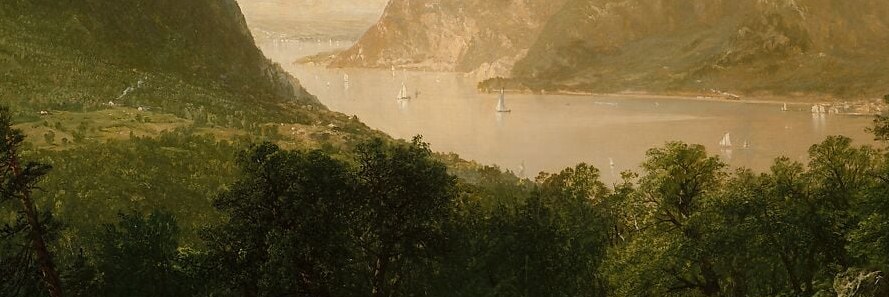
John Frederick Kensett painted Hudson River Scene in 1857, capturing the Hudson Highlands in a state of pre-industrial quiet. The landscape belonged to the second generation of the Hudson River School, but Kensett pushed past the dramatic storms of his teacher Thomas Cole. This is Luminism: a painting built from light itself, where stillness becomes the subject.
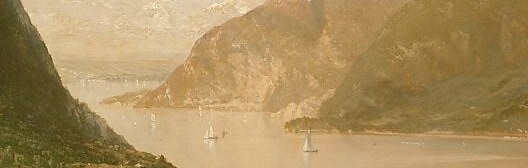
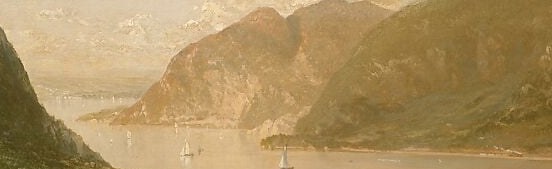
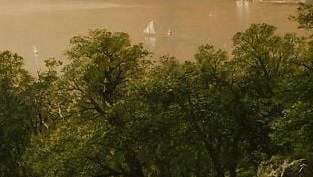
The single sailboat is the giveaway. Kensett often included one tiny human element in an otherwise empty panorama to establish scale. The boat is meant to be missed at first glance, revealing slowly that this valley is not empty, just overwhelmingly vast. Look for the dark, mirrored reflection where the right cliff touches the water. It is easy to miss, but it confirms the absolute stillness Kensett wanted to record.
The Erie Railroad reached the Hudson Valley in 1866, nine years after this painting. Before that, only a few painters, surveyors, and residents knew this stretch of river intimately. Kensett returned to this exact location repeatedly, refining his memory of the light. His documentation mattered: when he helped found the Metropolitan Museum of Art in 1870, he was providing a record of this quiet America before the tracks arrived.
A photograph of this view today would show bridges and development on the far shore. This painting holds a valley as it sounded before all that.
Details
Transcript
The Hudson River, 1857. A single boat, nearly swallowed by the water. Kensett painted this place repeatedly, chasing its stillness. The light flattens everything. It feels like an early photograph. Nine years from now, the railroad will reach this valley. But here, the only sound might be water against rock.