The Virgin and Child Appearing to Saint Francis of Assisi by Luca Giordano
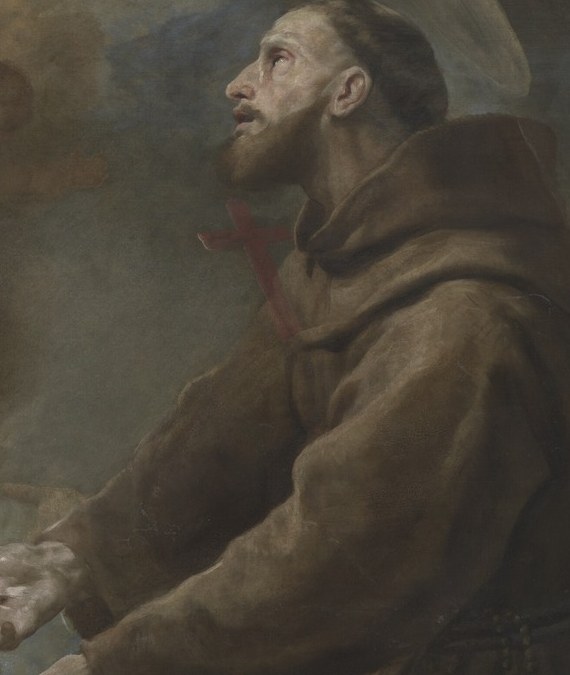
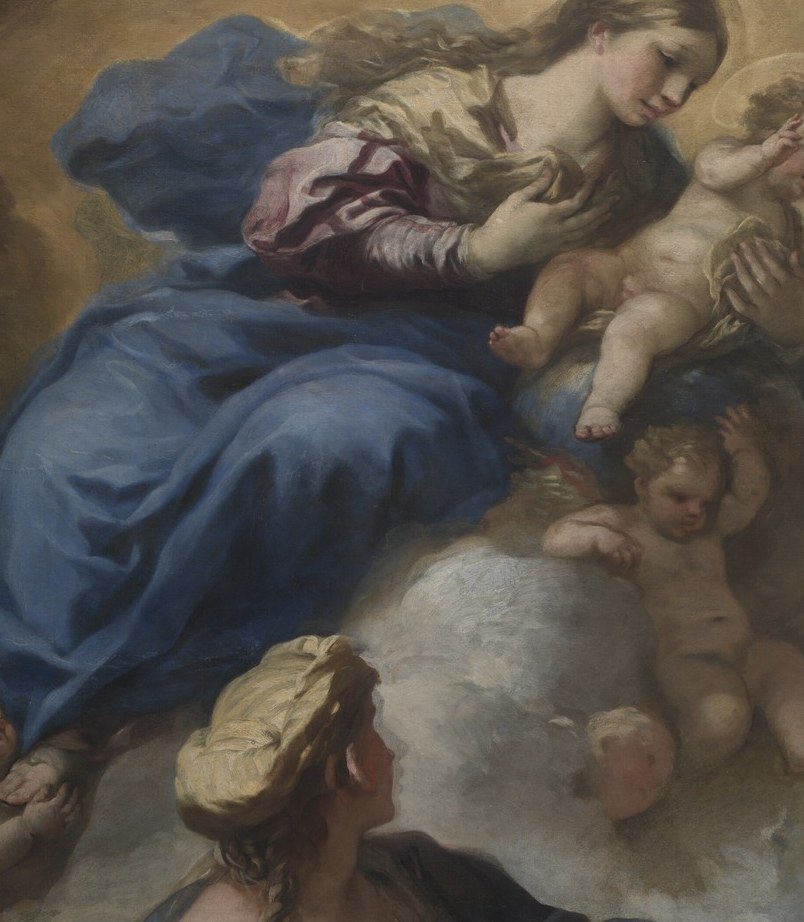
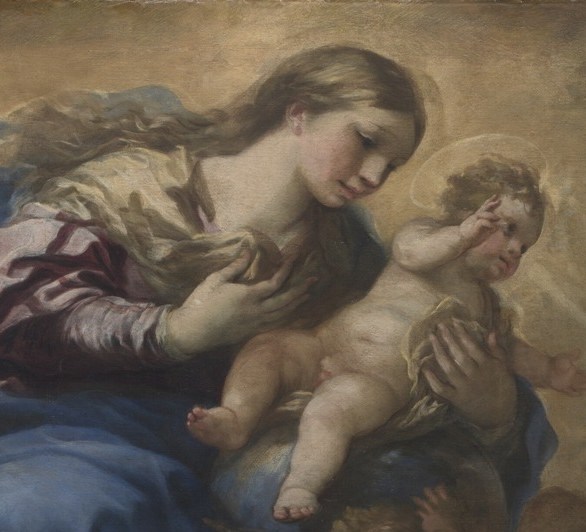
Luca Giordano’s “The Virgin and Child Appearing to Saint Francis of Assisi” (1684) stages a Baroque miracle with a secret tucked into its own shadows. The painting hangs in a museum collection and captures the moment Saint Francis receives a vision of the Madonna and Christ Child, surrounded by putti.
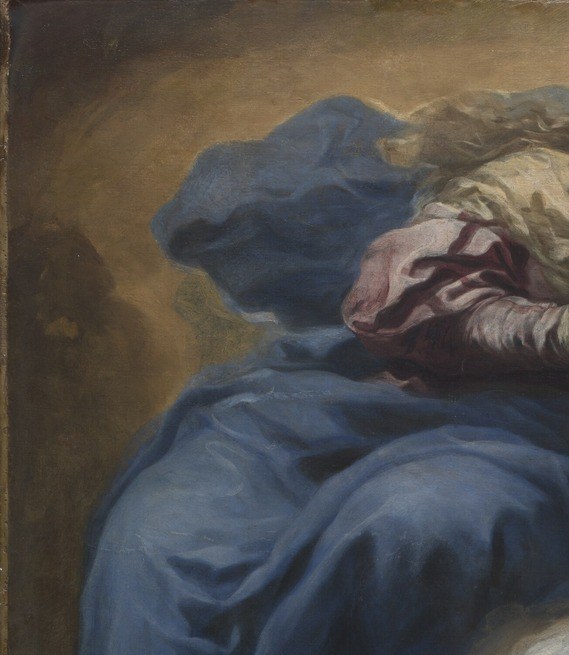
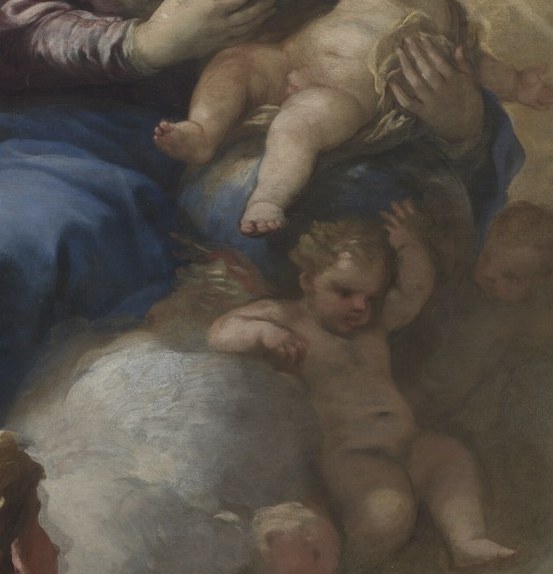
The composition pulls your eye along a diagonal of light: Francis points upward, his face full of awe, toward the self-illuminating Virgin in her impossibly expensive ultramarine mantle. But the most rewarding passage is the one most people scroll past. In the upper left corner, what first reads as dark cloud slowly resolves into a cluster of angelic faces. Giordano painted them emerging from the shadow itself, visible only to a viewer who stops and looks closely.
Giordano was the great decorator of the Neapolitan Baroque, famous for frescoes that dissolved ceilings into open skies. Here he uses the same theatrical chiaroscuro on a smaller scale. The light source seems to come from inside the apparition, not from outside it, making the vision feel self-generated rather than illuminated by the room. The shadowy putto faces are not an accident of dark varnish; they are a deliberate invitation to look longer.
What else might be hiding in that darkness? The barely resolved figure behind Francis hints that more witnesses wait at the edge of the miracle.
Details
Transcript
First, the obvious: a saint witnesses a heavenly vision. His upturned face shows a man undone by what he sees. Luca Giordano painted this in 1684, at the height of his fame. Mary and the child glow with an expensive blue, made from lapis lazuli. But the real surprise is hidden up here, in the dark. Painterly shadows resolve into a cluster of tiny angel faces. Giordano made the divine almost invisible, a secret for the patient.