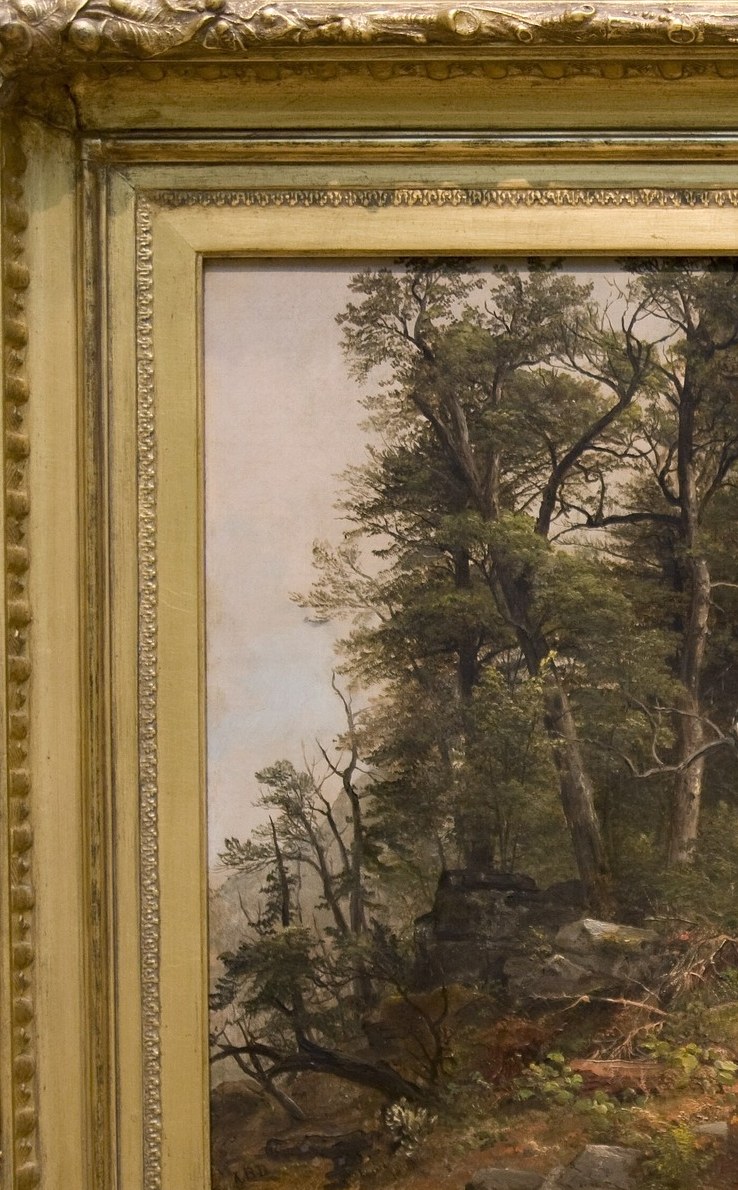
Trees on a Rocky Hillside by Asher Brown Durand
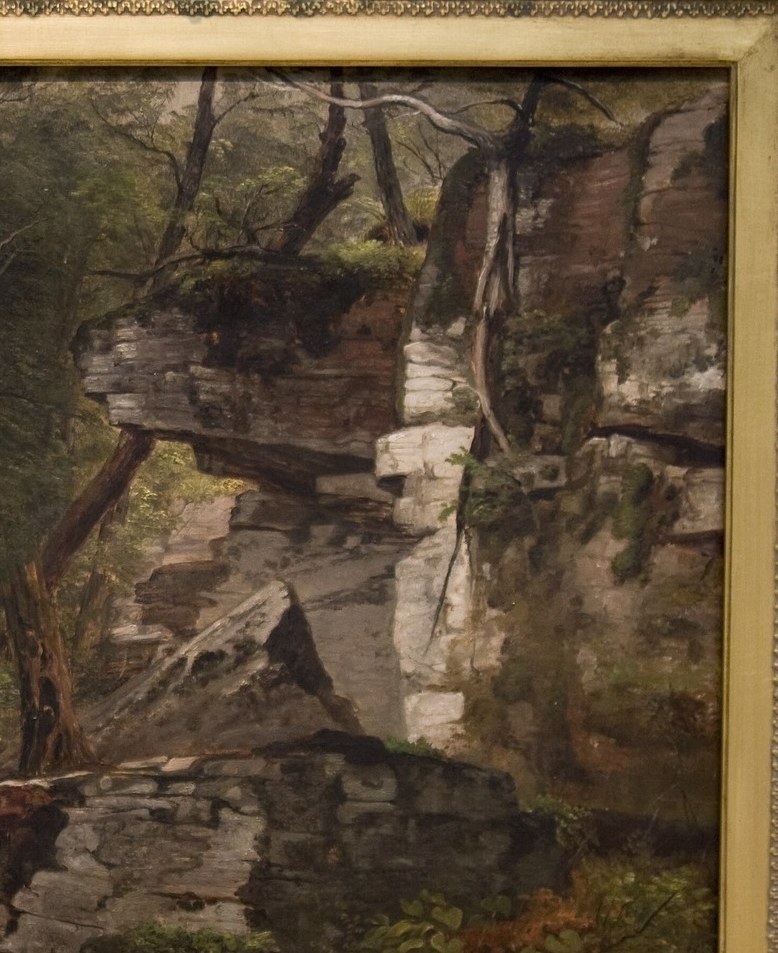
Asher Brown Durand painted "Trees on a Rocky Hillside" around 1849, and it now lives at the Smithsonian American Art Museum. Durand was the acknowledged dean of the Hudson River School, but he did not pick up a brush until he was nearly forty. Before that, he was one of the most skilled engravers in America, carving impossibly fine lines into metal plates for banknotes and book illustrations.
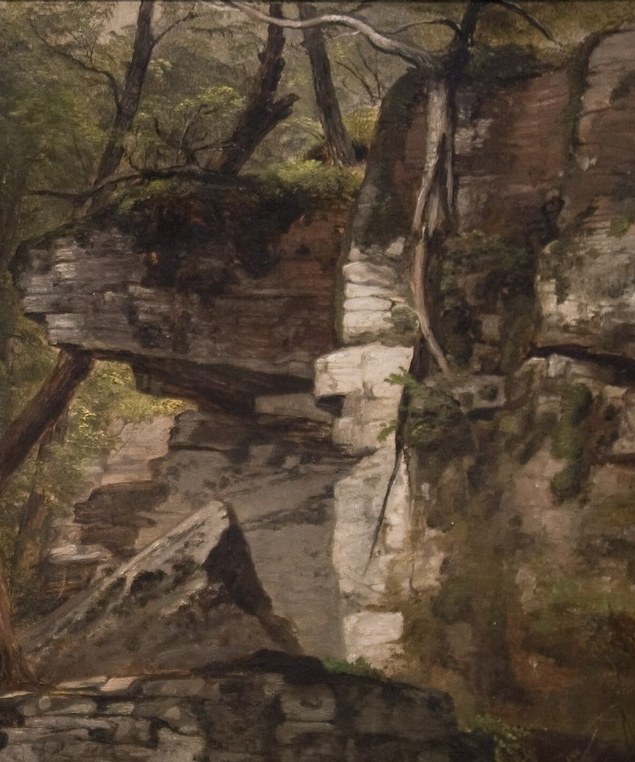
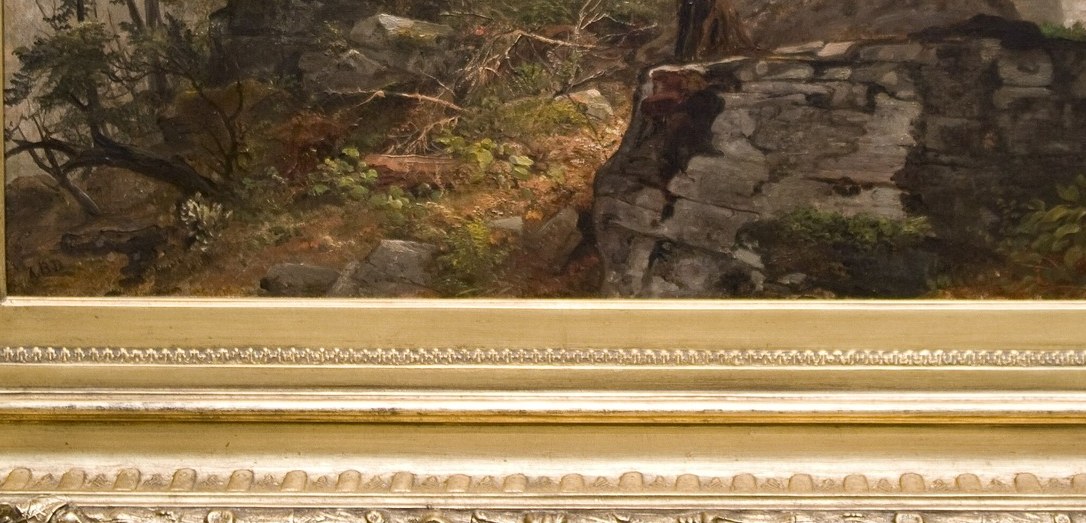
The engraver's hand never left him. Look at the cliff face that dominates this canvas. Those vertical fissures are not drawn as outlines and then filled in. Each crack is a single, deliberate stroke of the brush laid right beside the one before it, exactly the way an engraver cuts parallel lines into a copper plate. The mossy rocks in the foreground are even more revealing: Durand builds lichen texture not with blended washes but with thousands of tiny discrete marks, a technique called hatching that he simply translated from burin to brush.
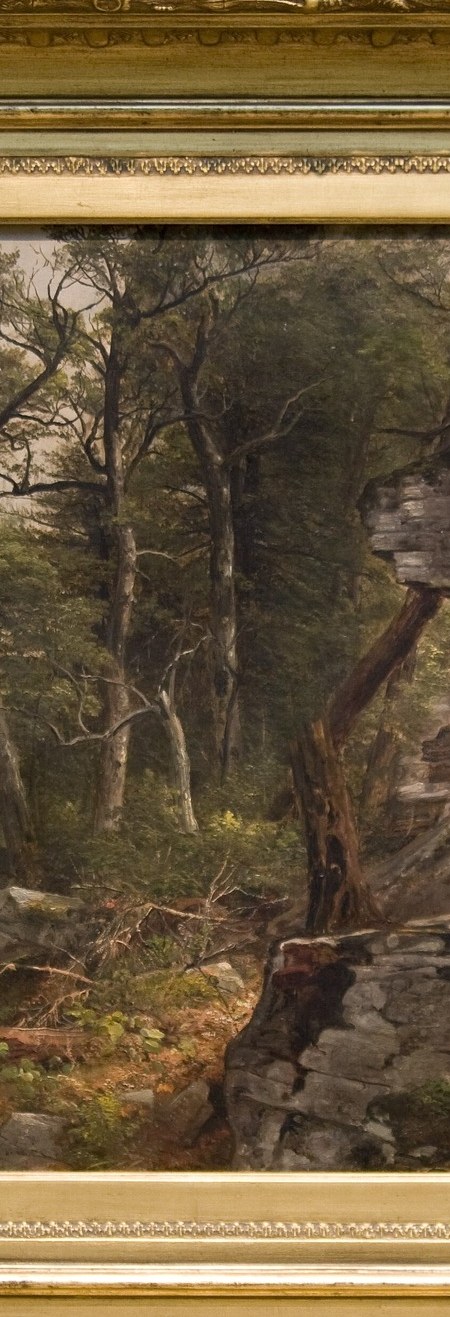
Durand walked these Catskill forests obsessively, filling sketchbooks with pencil studies of specific rocks and tree roots. Friends said he talked to the trees. Back in his studio, he turned those sketches into oil paintings that feel physically present, the geology particularized rather than invented. That passion arrived late but burned fiercely; he led the American landscape movement for thirty years.
Next time you stand in front of a Durand, step as close as the guards will allow. The whole illusion lives in the smallest marks.
Details
Transcript
A forest hillside, silent and still. The painter was an engraver first. He carved metal plates for banknotes. Look at the rock face now. Every fissure is a single brushstroke, laid beside the next. He moved from engraving to oil paint at forty. And he brought his burin with him, in the form of a brush.