The Grand Canal, Venice, Looking Southeast, with the Campo della Carità to the Right by Canaletto
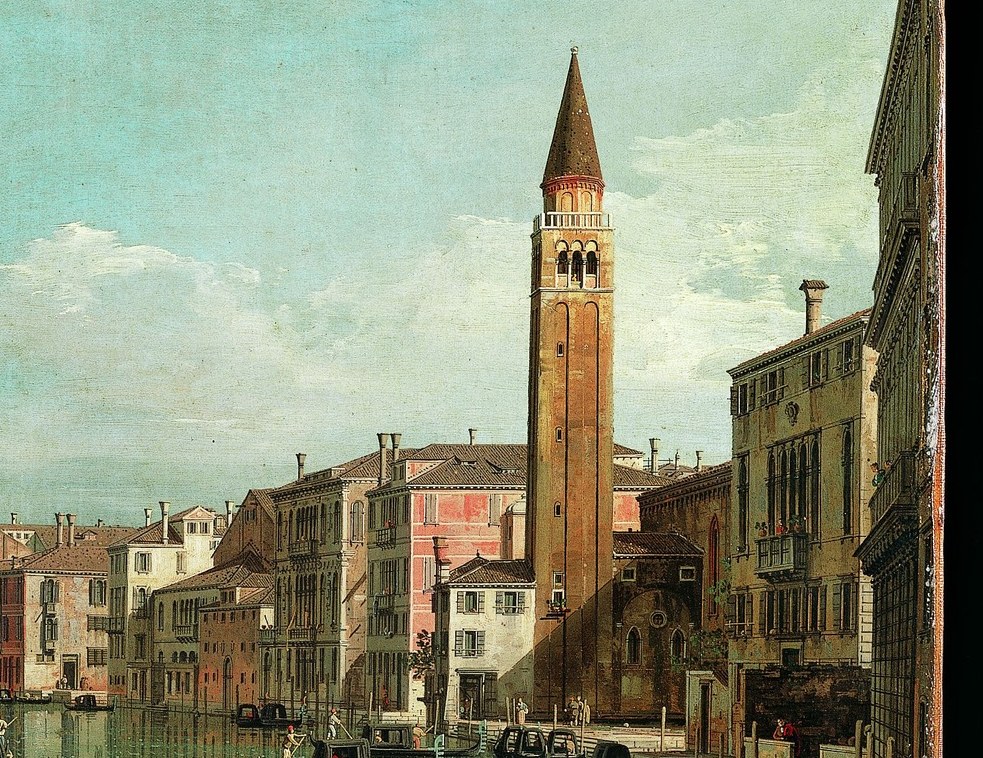
This is "The Grand Canal, Venice, Looking Southeast, with the Campo della Carità to the Right," painted by Canaletto in 1734. It now hangs in the Metropolitan Museum of Art. The single most interesting thing about it is that the large church complex on the right bank would later become the Gallerie dell'Accademia, meaning a painting that was originally a travel souvenir for British Grand Tourists now depicts the very institution that houses many of Canaletto's greatest works.
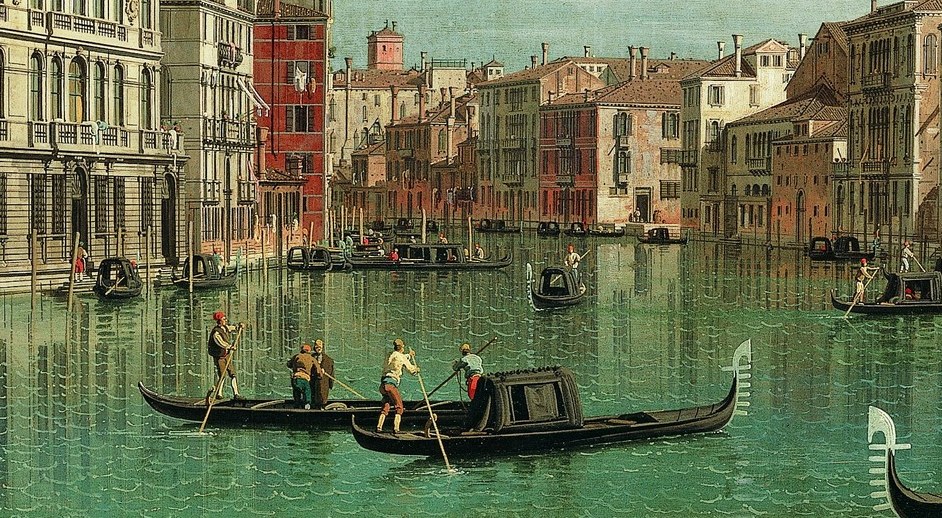
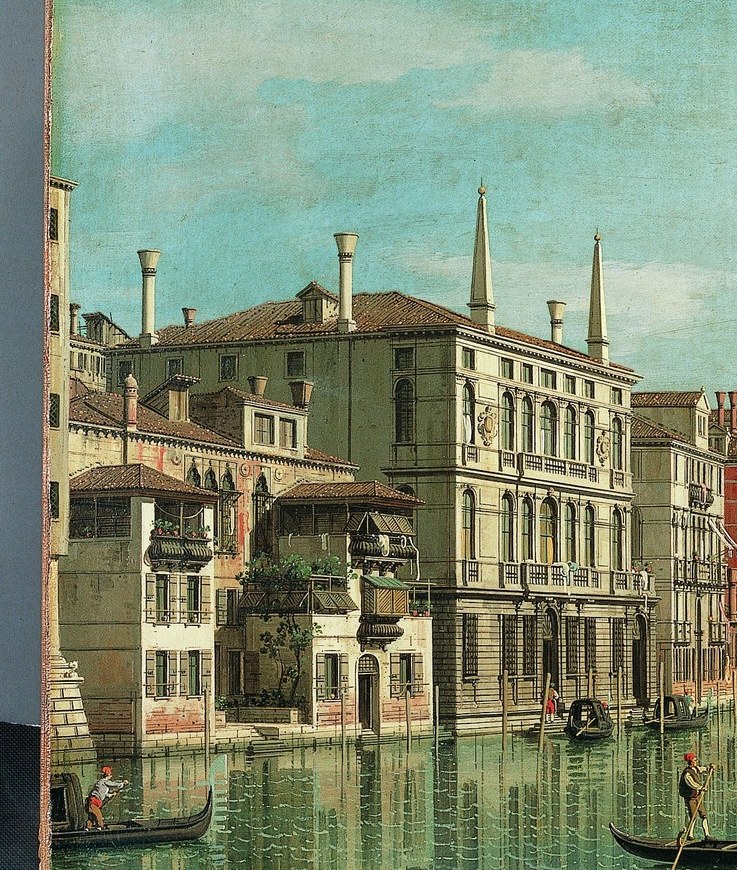
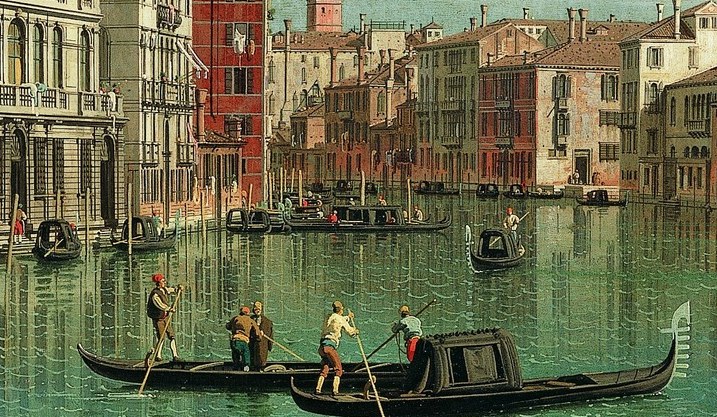
Look first at the right bank, where the Campo della Carità sits in precise, luminous detail. Then find the gondoliers in the mid-canal cluster, tiny figures Canaletto deliberately dressed in English fashions to please his foreign buyers. Finally, trace the line of palazzi on the left bank. Every Gothic window and mooring post locks into a flawless perspective, thanks to the camera obscura he used to project the scene onto his canvas.
Canaletto was born Giovanni Antonio Canal in 1697 and became the most famous view-painter of his century. British aristocrats on the Grand Tour practically lined up to commission his vedute, and the British consul Joseph Smith built such a vast collection that it was sold to King George III in 1762. This particular painting was likely made for export: a glowing, idealized Venice for a London drawing room.
It is a painting that outlived its original purpose. What began as a status symbol for a traveling Englishman now stands as a historical document of a city that has changed far less than the people who once paid to remember it.
Details

Transcript
In the 1730s, English gentlemen on the Grand Tour wanted one souvenir above all. A view of Venice by Canaletto. He used a camera obscura to trace the buildings. That's why every window, every cornice, lands exactly where it should. He painted his figures last, dressing them in the fashions of his customers, not Venice. This building on the right became the Accademia, now home to a roomful of his works. A painting, bought for a London parlor, that mapped the future of a Venetian museum.