Bullfight in a Divided Ring by Francisco Goya
This is Francisco Goya's "Bullfight in a Divided Ring," painted in 1816. It depicts an unusual 18th-century variant of the Spanish corrida where the arena was split by a wooden barrier, allowing two separate fights to unfold simultaneously before one enormous crowd. The painting is a document of a living ritual, captured by an artist who had been deaf for over two decades and had become an intense observer of human behavior.
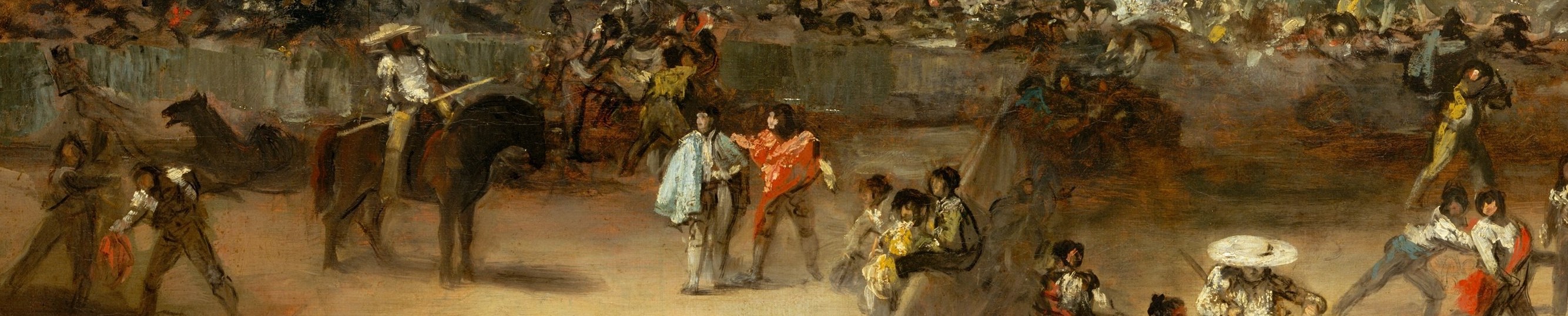
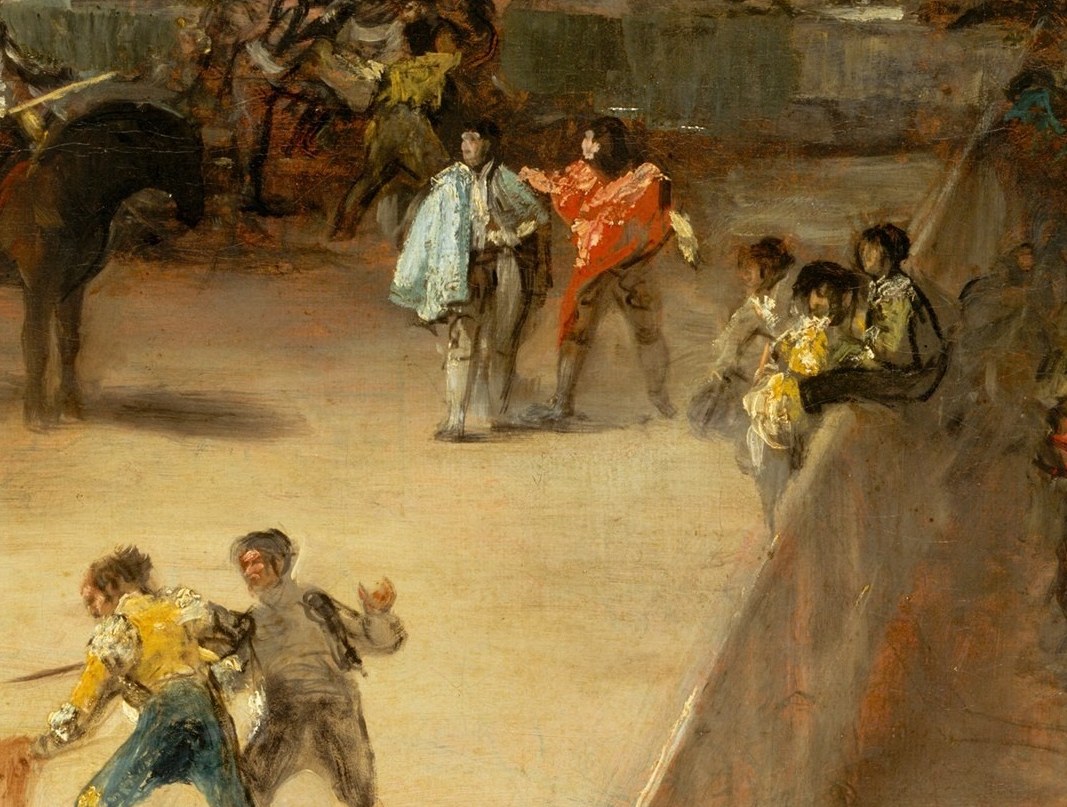
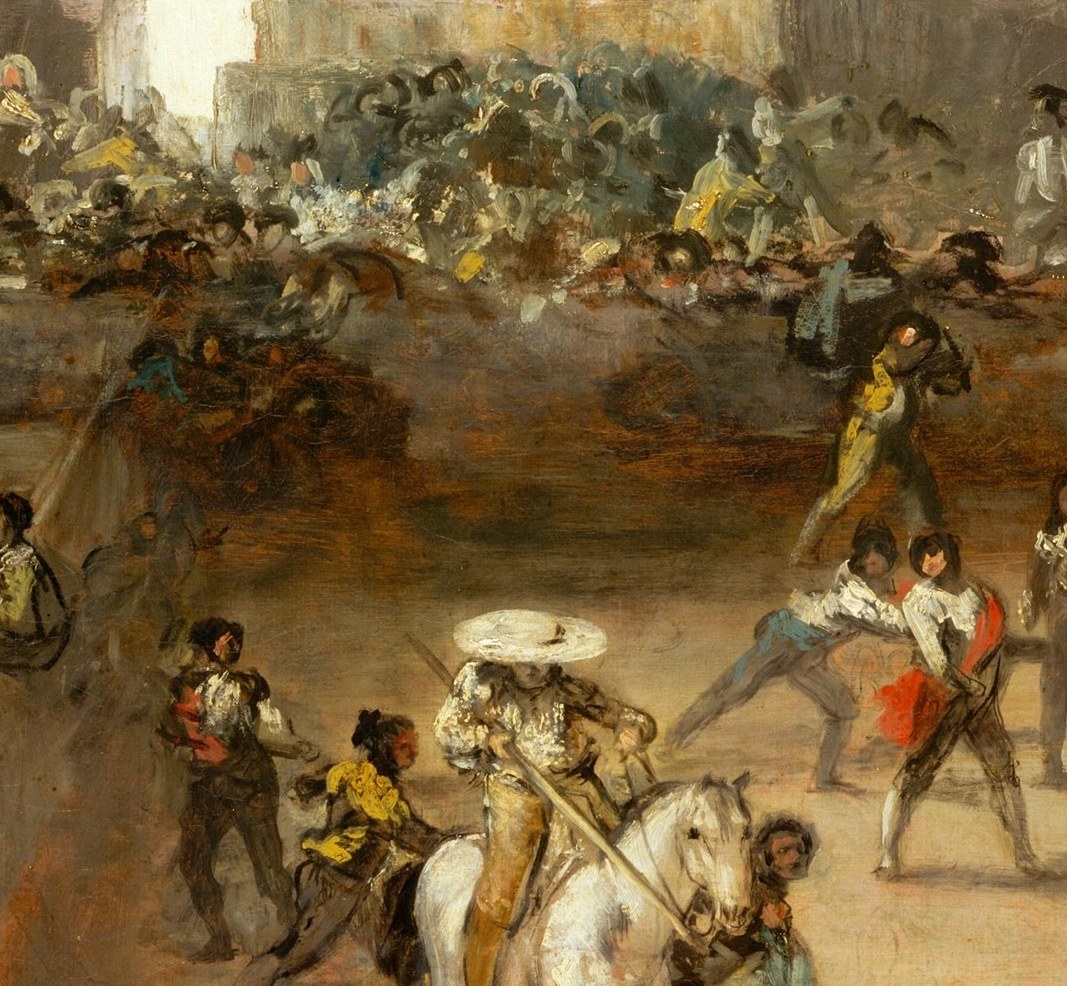
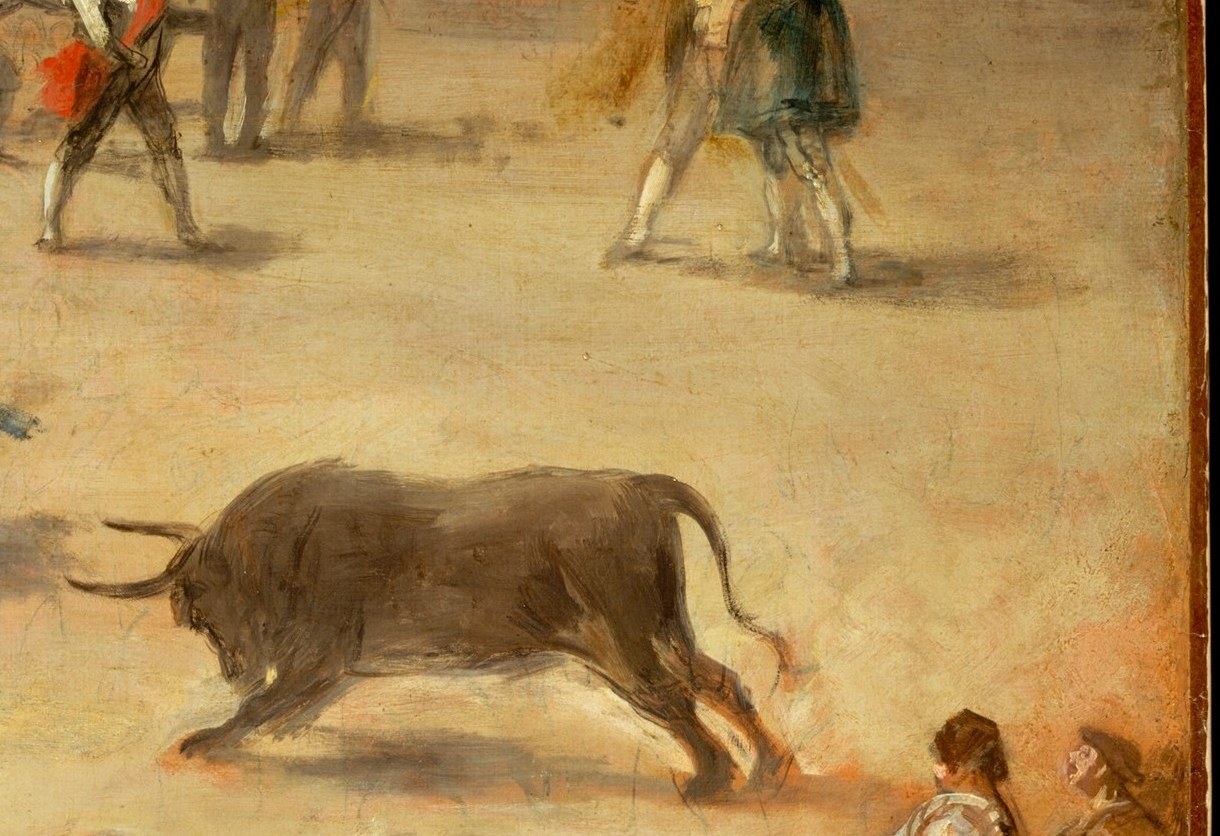
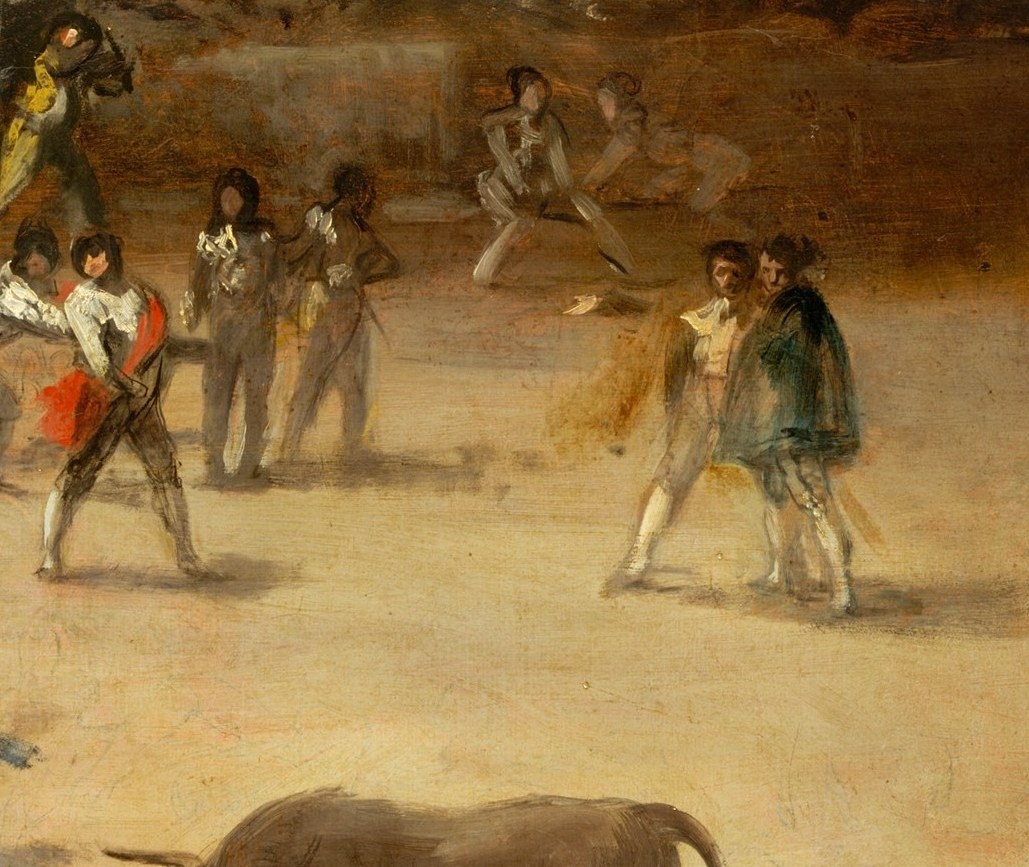
Look first at the wooden barrera cutting across the ring. It divides the composition and explains the painting's title. Then find the two bulls, one on each side. On the right, the charge has already caused chaos. A heap of fallen figures and a horse lie crumpled in the sand. The mounted picador in the center braces for impact, his lance aimed at the second bull. Every point of danger is visible because Goya floods the sandy floor with harsh, overhead light. The pale ground functions as a stage.
The crowd fills the upper stands, but Goya paints them with rapid, gestural flicks rather than individual faces. They are an anonymous mass, complicit in the spectacle. This was a recurring theme for him: the crowd as witness and participant in violence. By 1816, Goya had lived through war, illness, and profound political change in Spain. His gaze had sharpened.
Step closer if you can. The bull on the right is rendered with strokes so fast they seem to move. Smears of ochre and crimson suggest capes in motion. Goya understood that suggestion can be more powerful than description. The whole scene vibrates with energy, but it is also a precise record of a specific place and time. A Madrid rooftop is visible above the right stands. This is not myth. This is Tuesday at the ring.
Details
Transcript
Madrid, 1816. The bullring is packed. But look at the ring itself. It is divided. A rare format: two fights at once. The picador braces. The lance seconds from impact. The sand is a stage, lit without mercy. Now find the fallen. A heap of bodies and debris. To the right, the charging bull. Pure kinetic threat. Goya was deaf by then. He watched everything.