A View near Volterra by Corot, Jean-Baptiste-Camille
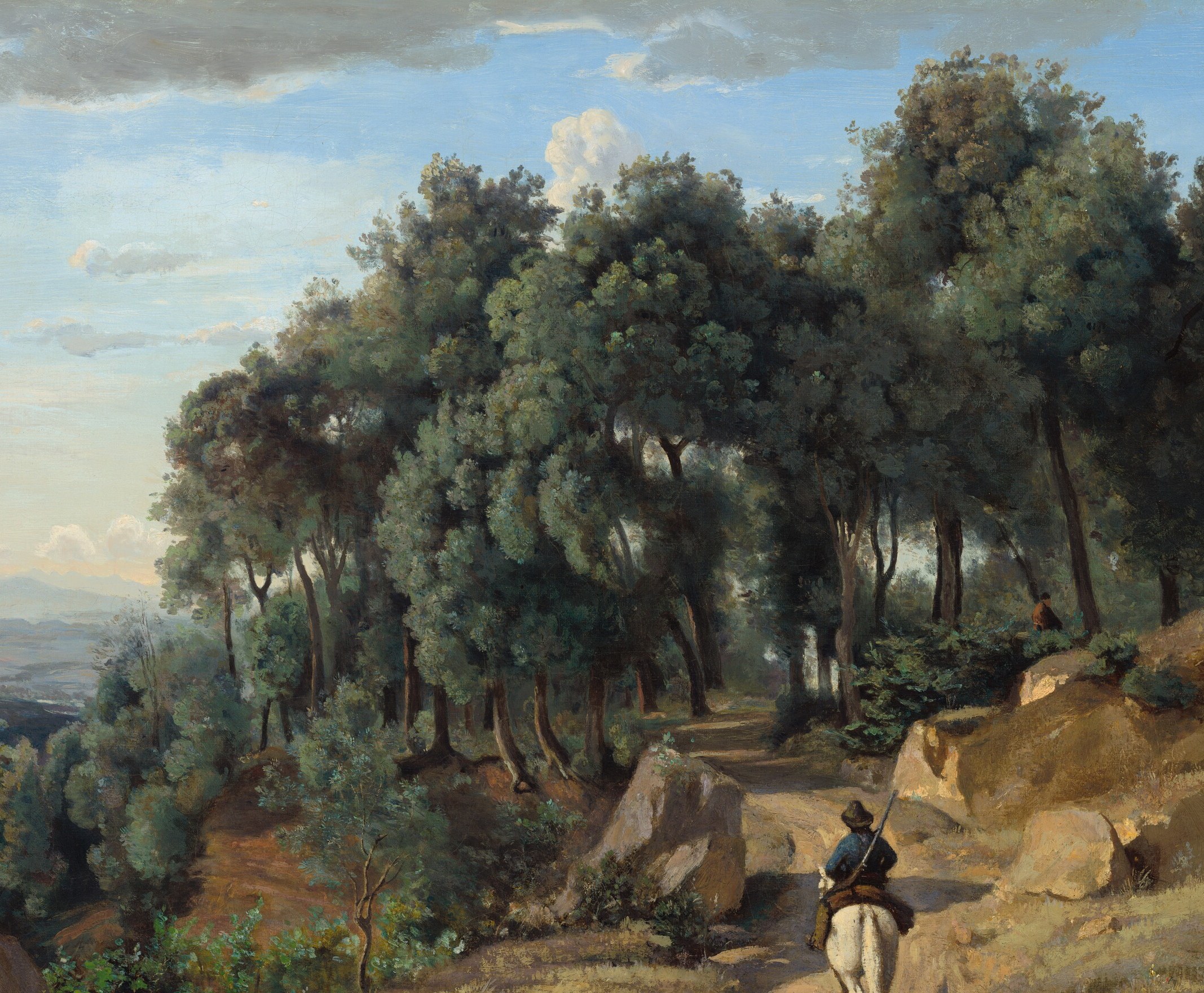
This is Jean-Baptiste-Camille Corot's "A View near Volterra," painted in 1838 and now in the National Gallery of Art in Washington, D.C. It is a landscape that does not invent or idealize. It records a specific place on a specific morning: the hills outside Volterra, seen by a forty-two-year-old French painter on his second journey through Italy.
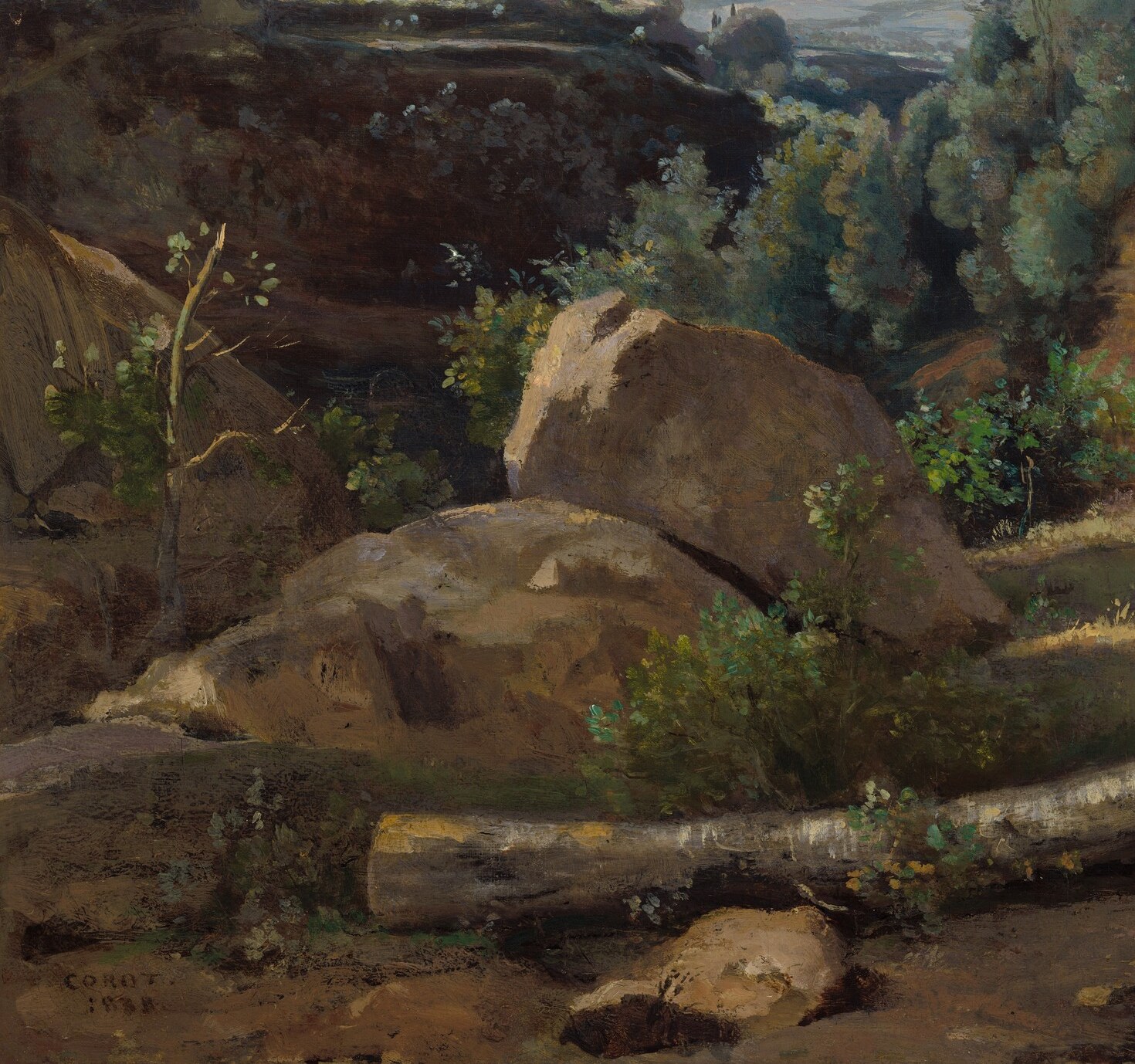
First, look at the far horizon, just above the luminous valley. A faint, pale mass sits on the ridgeline. That is the hilltop city of Volterra itself: the painting's named subject, barely resolved in the haze. Now drop your eye to the left foreground. The rough, warm-ochre rocks are exposed volcanic tufa, the same stone the Etruscans quarried here. Even the small scrub plants are botanically specific to the Tuscan maquis.
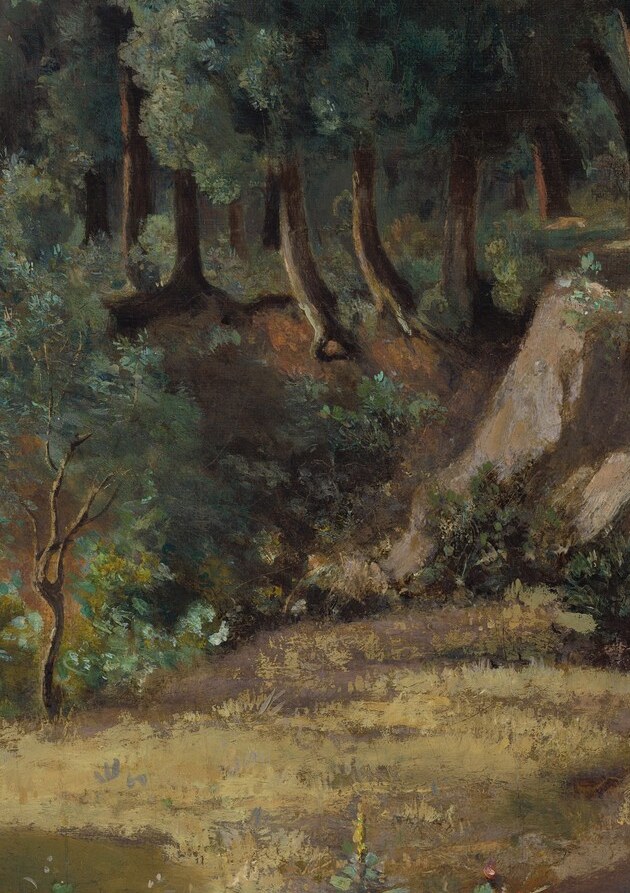
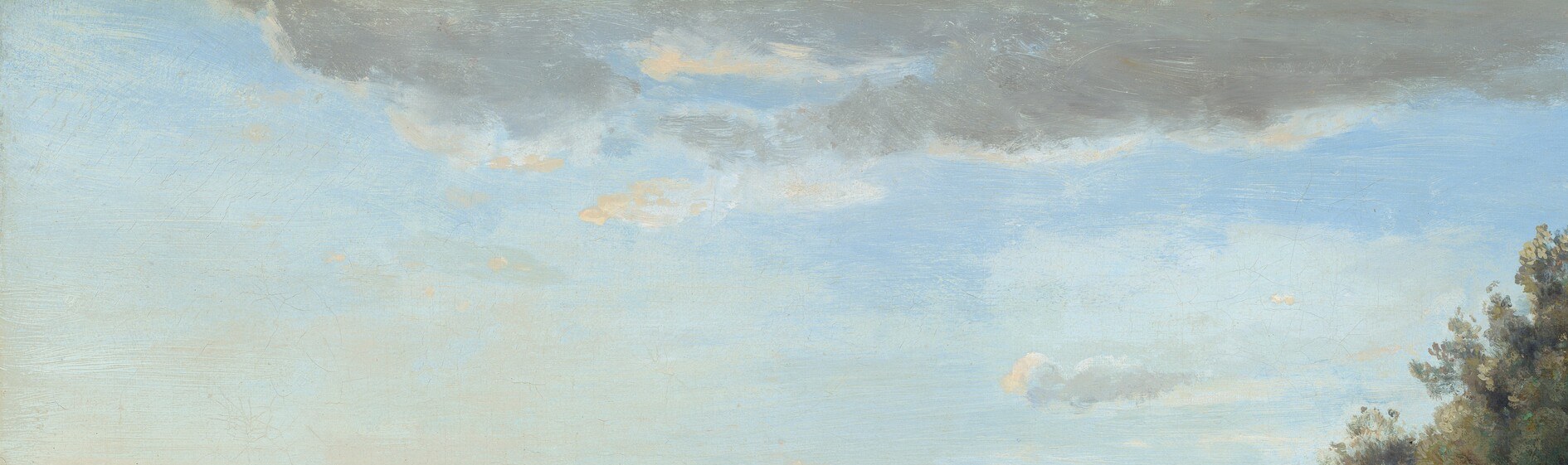
Corot was at a crossroads when he painted this. Trained in the French Neo-Classical tradition, he was also among the first to take oil paints outdoors for finished work rather than mere sketches. This canvas was painted plein air, in a single session, on the road between Florence and Volterra. His broken brushwork in the tree canopy, the direct handling of the rocks, and the silvery edge-light on the foliage all anticipate the Impressionist movement by three decades.
What Corot left us is an eyewitness. The view has changed in the century and a half since. The town has grown, the roads are paved, the air is different. But standing in front of this canvas, you are standing exactly where he stood.
Details
Transcript
In 1838, a French painter walked into the Tuscan hills. He was forty-two, and this was his second trip to Italy. That solitary traveler gives the landscape its scale. Look up at the top of the far ridge. That pale shape on the horizon is the hilltop city of Volterra itself. The rocks in front are the same volcanic tufa the Etruscans built with. Corot painted this outdoors, in one sitting, watching the light move.