Women Gladiators by Jusepe de Ribera
Jusepe de Ribera's "Women Gladiators" (1636) is an allegory preserved in the Museo del Prado. It's not a historical event, but a symbolic representation of a deeper idea. The painting challenges us to look beyond the literal struggle to understand its allegorical meaning.
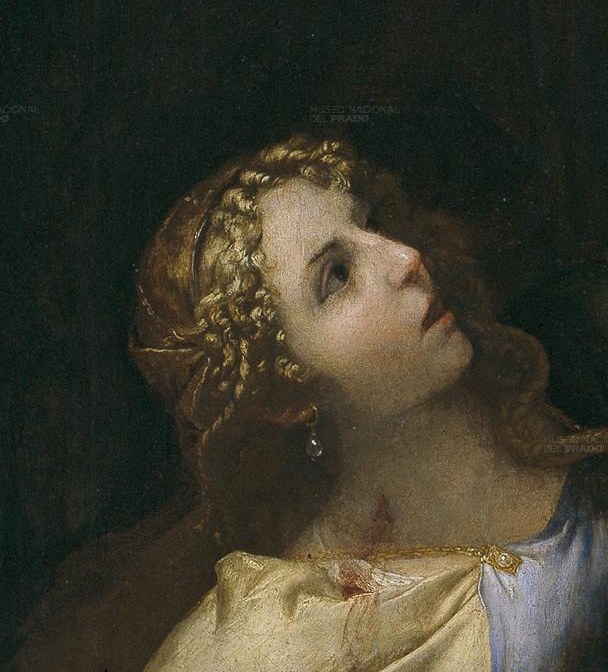
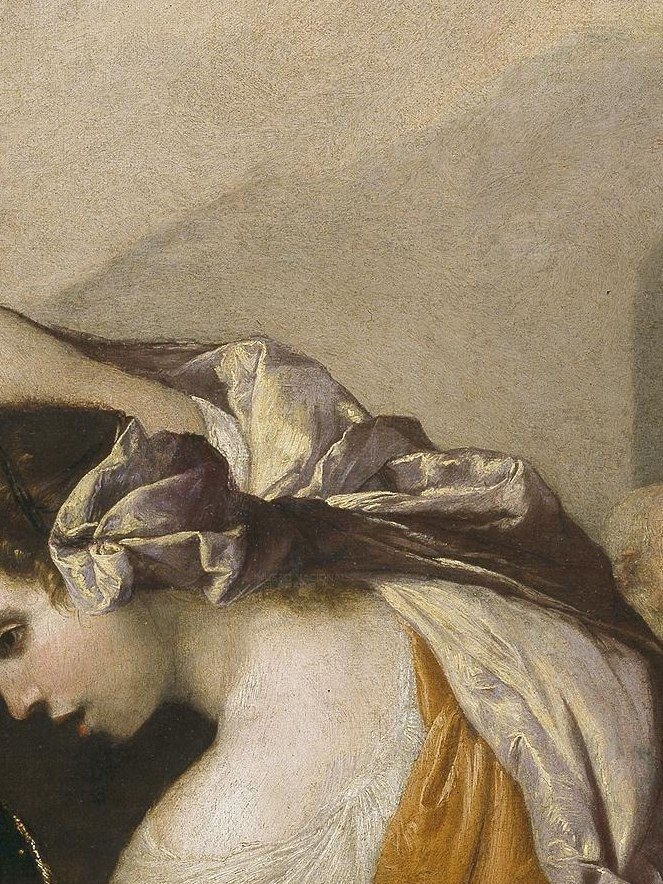
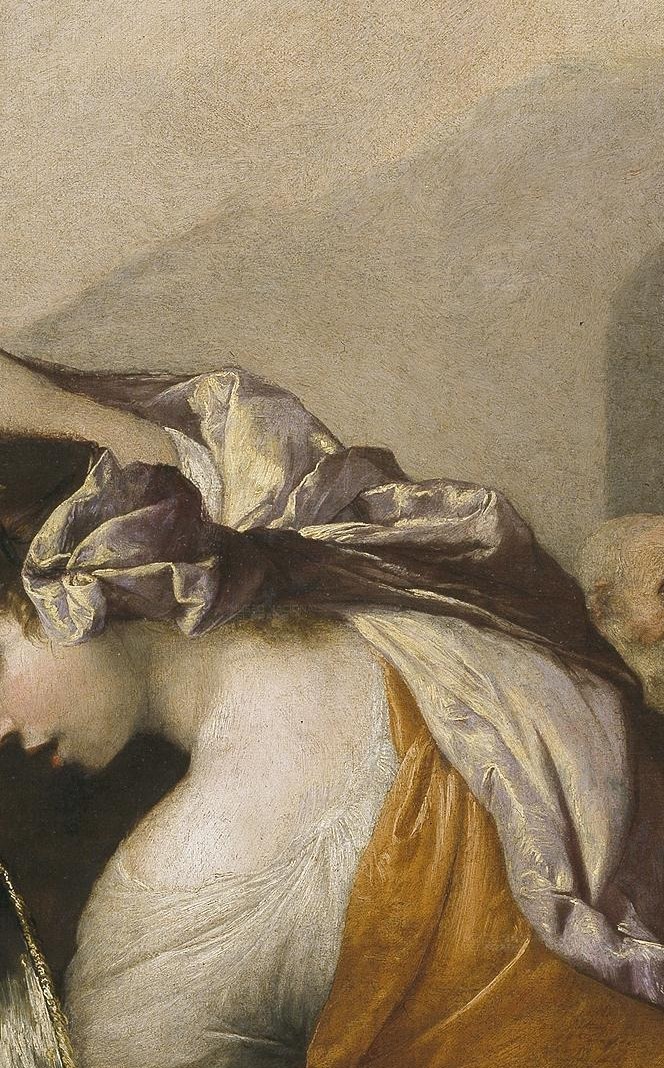
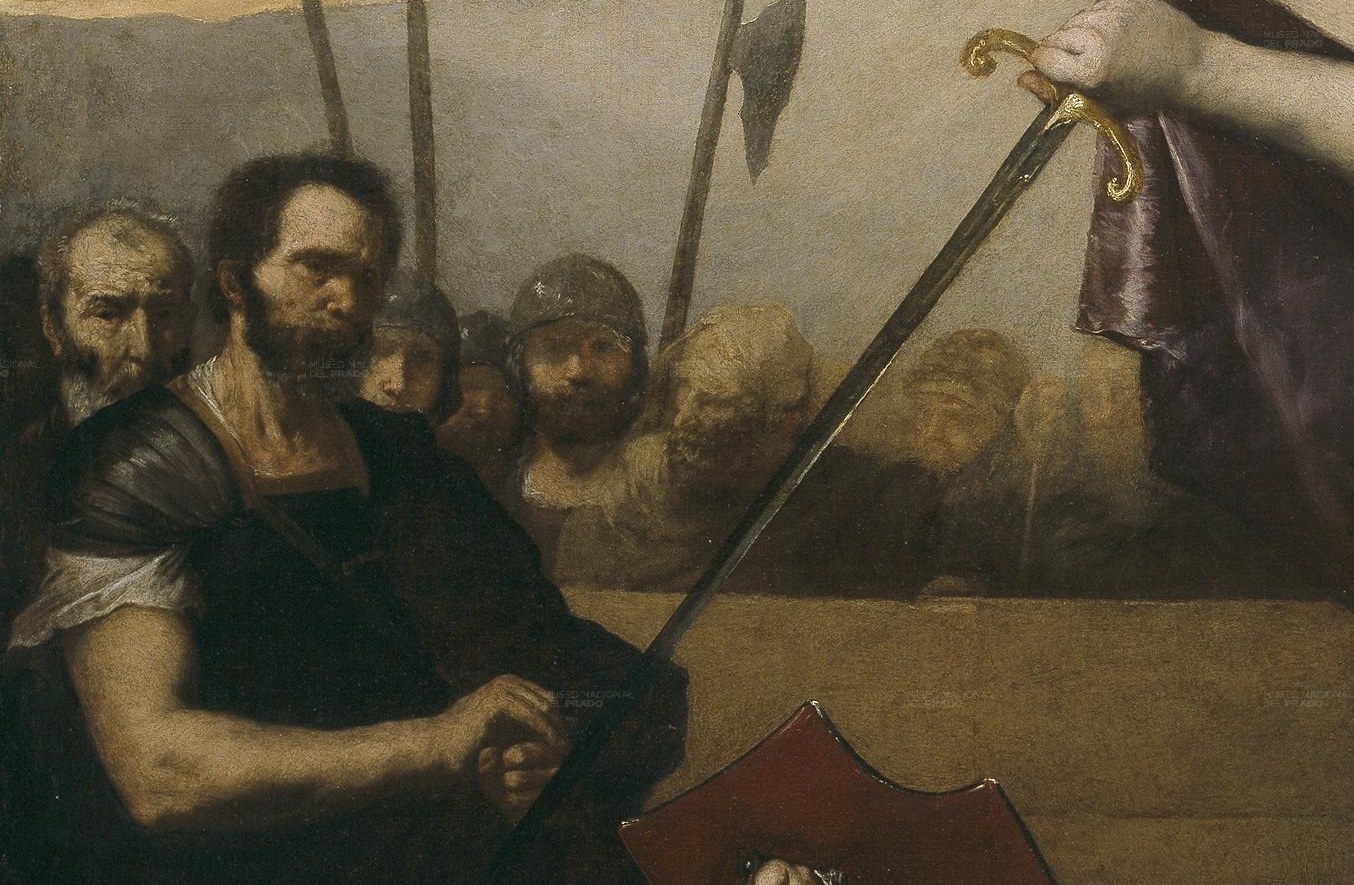
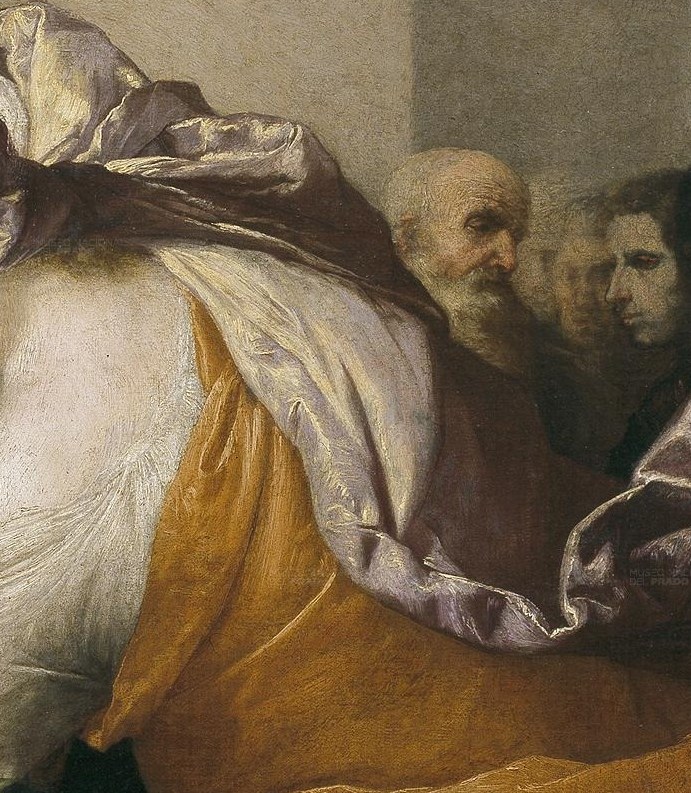
Observe the fallen gladiator's pleading face, her upturned eyes and open mouth conveying vulnerability. Contrast this with the standing gladiator's tense arm and raised sword, poised for a decisive blow. Even the grim faces of the male spectators on the left emphasize the brutal nature of the spectacle.
Ribera, a master of the Spanish Baroque, often depicted scenes of martyrdom and struggle. Here, he uses the arena as a stage for an allegorical debate, inviting viewers to interpret the confrontation in terms of broader conceptual themes rather than specific individuals or events.
What abstract concept do you believe Ribera intended to convey through this powerful scene?
Details
Transcript
This is not just a fight. It is an allegory. Look at the fallen gladiator's eyes. She begs for mercy in this duel. The standing gladiator's arm is tense. Her raised sword means the fight is almost over. The crowd watches, their faces grim. Ribera painted this allegory in 1636.