Peter A. B. Widener by Sargent, John Singer
John Singer Sargent painted *Peter A. B. Widener* in 1902, and he did not set out to charm. The portrait lives at the National Gallery of Art in Washington, D.C., and it offers something rarer than flattery: the truth of a face that has no need to please you.
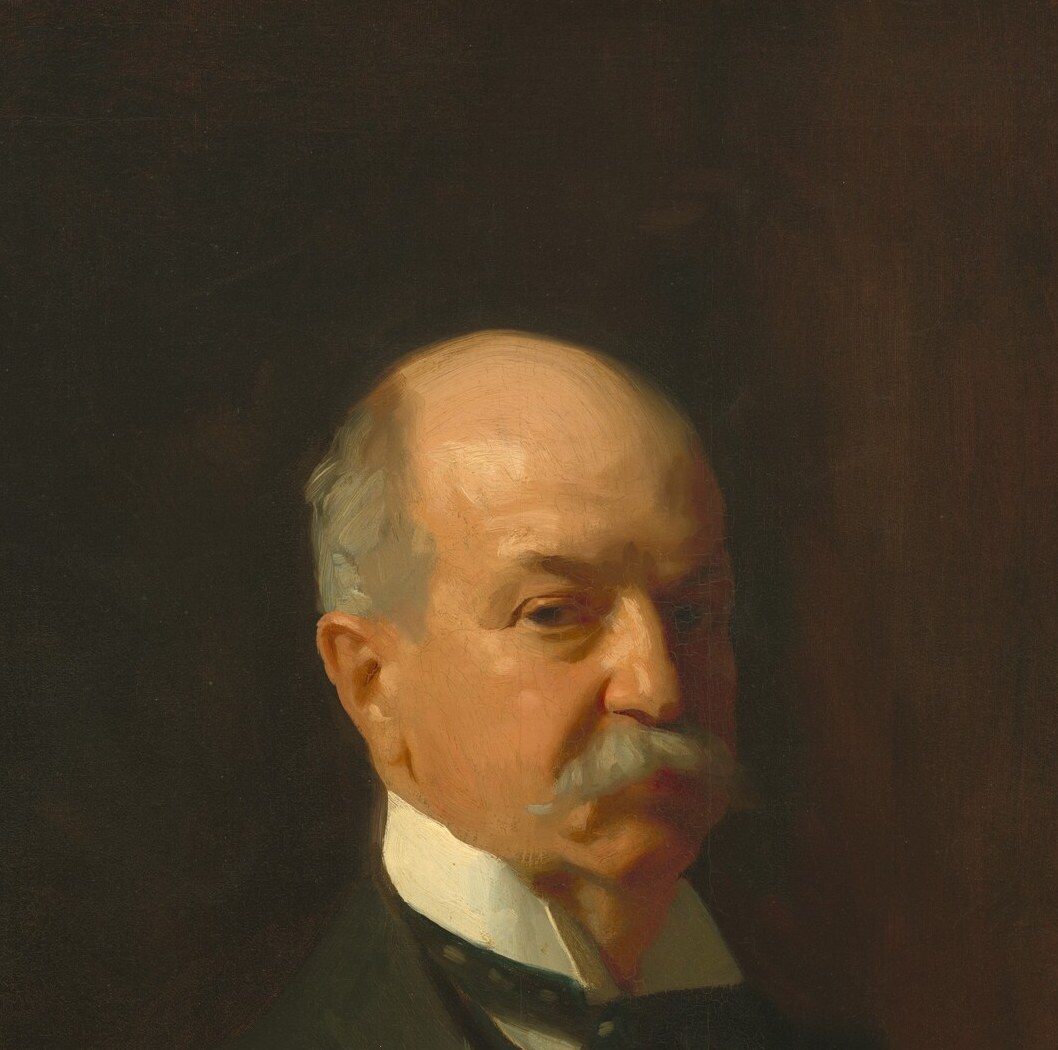
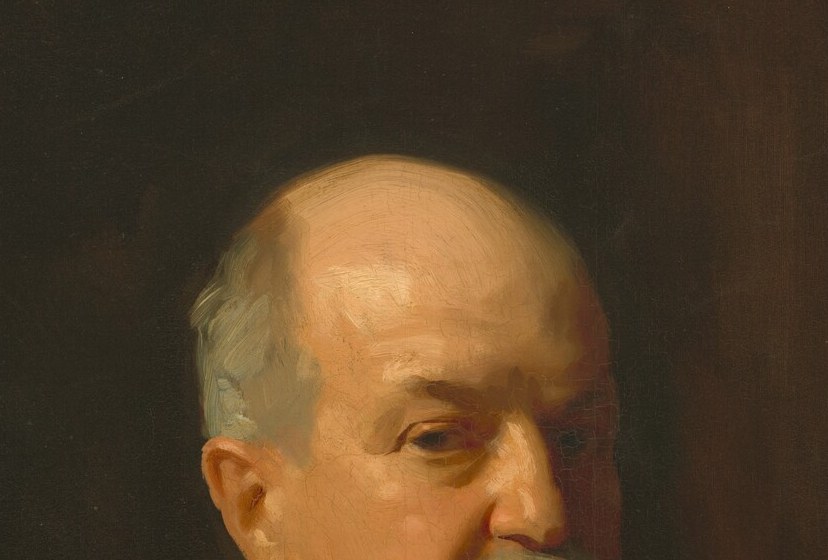
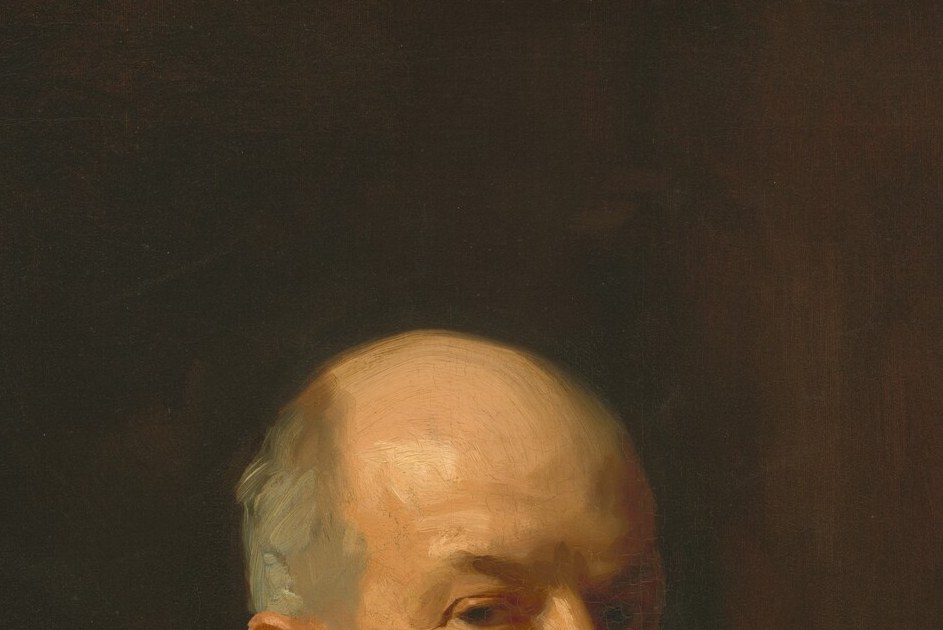
Look at the eyes first. They are steady and appraising under a heavy brow, the eyes of a man who spent his life buying things few people could afford. Sargent lets the white of the cravat pull your gaze upward to that face, then refuses to soften the jaw or smooth the silver hair. The right hand hangs in relaxed ease; the left is tucked near the coat, a pose that reads as casual confidence inside rigid formality.
Peter A. B. Widener was a Philadelphia businessman who made his fortune in meat, streetcars, and finance, then poured it into one of the great private art collections of the Gilded Age. When he sat for Sargent, he was near seventy and at the height of his power. The dark drapery behind him is a deliberate signal: the new American rich understood that Old Master conventions were a language worth speaking.
Sargent was hardly impressed by wealth. He had already survived the scandal of *Madame X* in Paris nearly two decades earlier. By 1902 he was the most sought-after portraitist on both sides of the Atlantic, a man who painted what he saw. Widener's portrait has a weight that flattery never could.
Details

Transcript
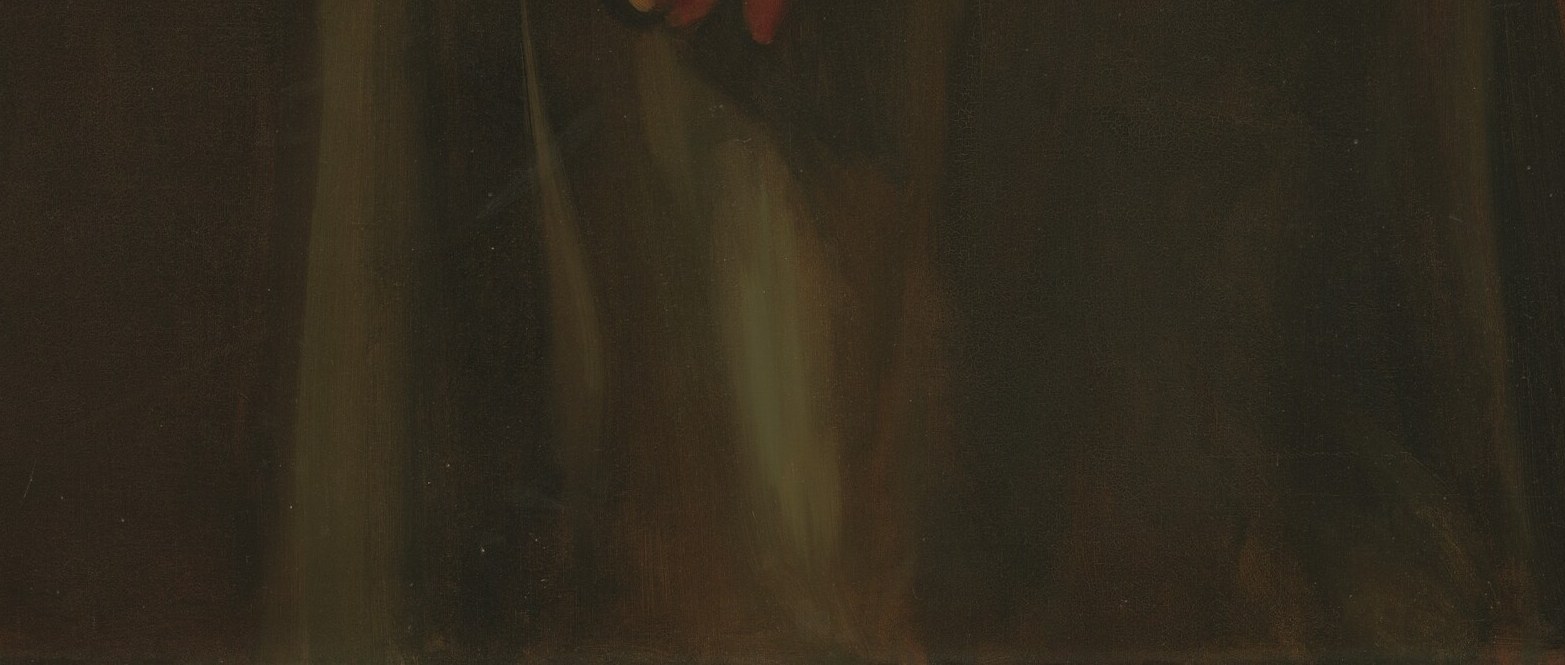
In 1902, John Singer Sargent painted a man who collected kings. This is Peter A. B. Widener, a Philadelphia tycoon turned art collector. Sargent gives us a man accustomed to appraising, not being appraised. The silver hair reads as a crown of age and status against the dark. His hand relaxes at his side. Patrician ease, not tension. The heavy curtain signals Old Master ambition for America's new aristocracy. The feet dissolve into shadow. Sargent refused a literal floor. He was the leading portraitist of his generation. He did not need to flatter.