明 佚名 傳文伯仁 山水圖 卷|Landscape by Wen Boren
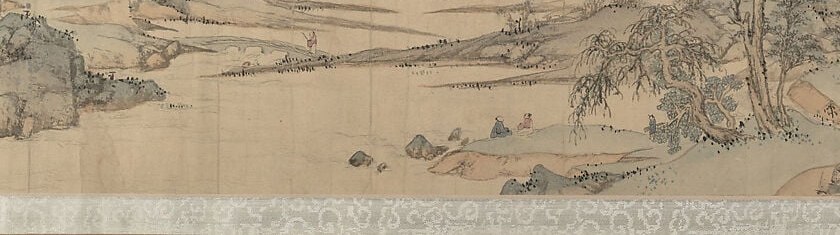
This is "Landscape," a handscroll by the Ming dynasty painter Wen Boren, dated 1558. It now belongs to the collection of the Art Institute of Chicago, but for most of the twentieth century it was held in Japan. Its travel route is not fully documented, and the painting is a quiet mystery in the museum's holdings.
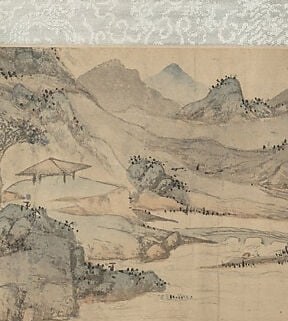
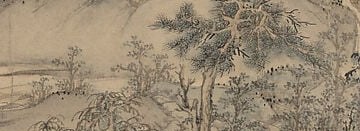
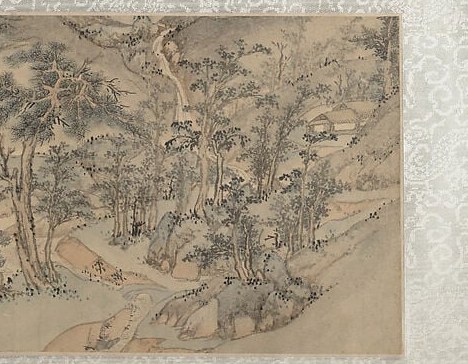
Look at the water. Wen Boren left the paper blank to represent the lake surface, a technique of restraint that defines the literati tradition. The mountain peaks fade into near-invisibility through diluted ink washes alone, no perspective geometry required. Tiny scholar's dwellings nestle into the rock folds, so small you can miss them entirely. These encode the Confucian ideal of the gentleman who withdraws from public life into nature.
Wen Boren was born in 1502 in Suzhou, a nephew of the famous Wen Zhengming. Handscrolls like this one were never displayed on walls. They were kept in wooden boxes, brought out after dinner, and unrolled arm's length at a time among a few friends. The format was intimate and social, the opposite of a framed public canvas.
How it reached Japan remains an open question. The turmoil of the late Qing and early Republican period saw many Chinese paintings enter Japanese collections through dealers, scholars, and sometimes soldiers. This one carries no inscription recording the transaction. Its story is still being pieced together.
Details

Transcript
A landscape wrapped around a wooden roller. Ming dynasty, 1558. Painted for friends to unroll slowly. The water is empty paper. The painter's restraint. But this scroll spent the last century in Japan. How did a Ming handscroll cross the sea?