Basket of Fruits by Ast, Balthasar van der
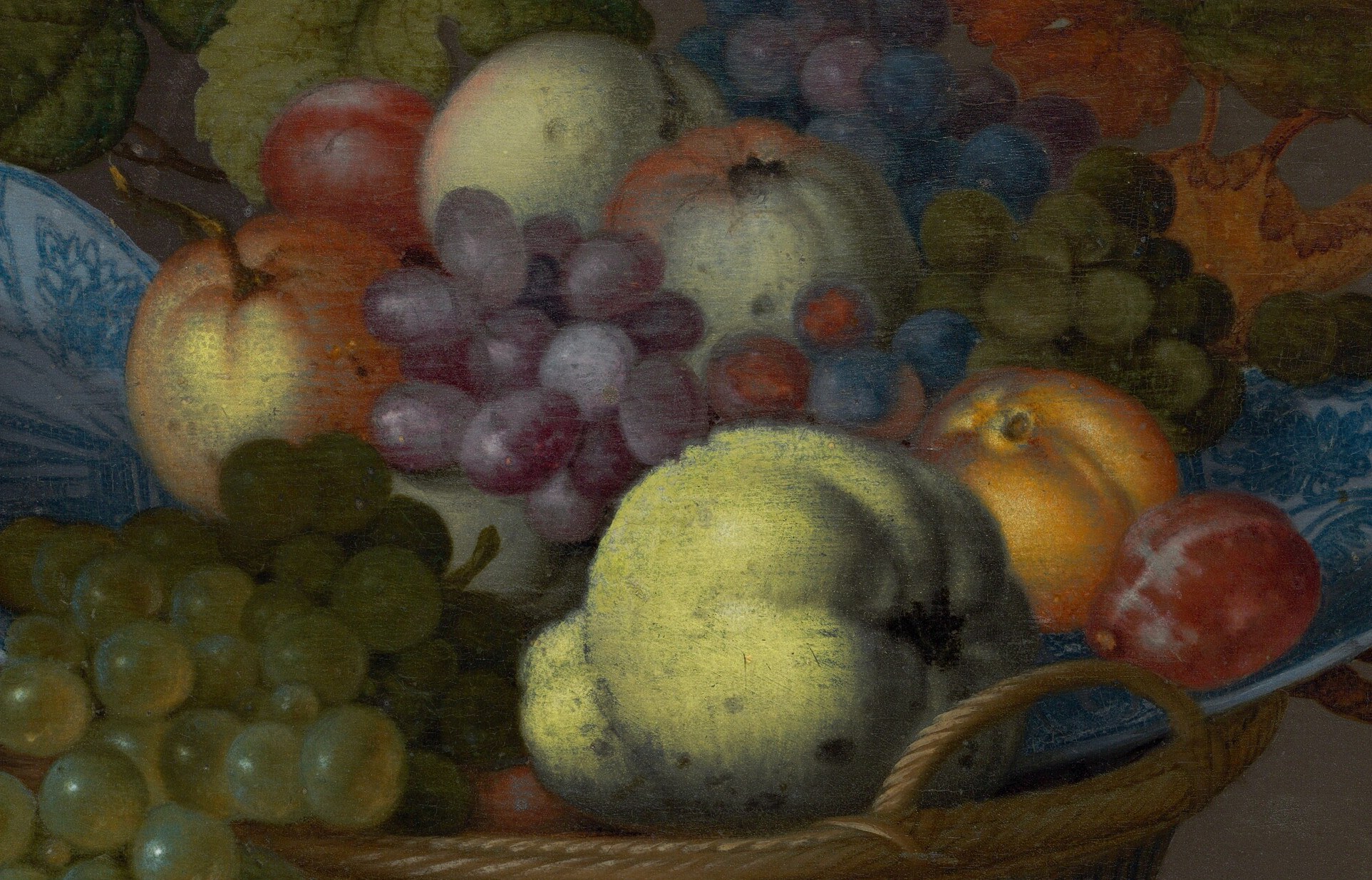
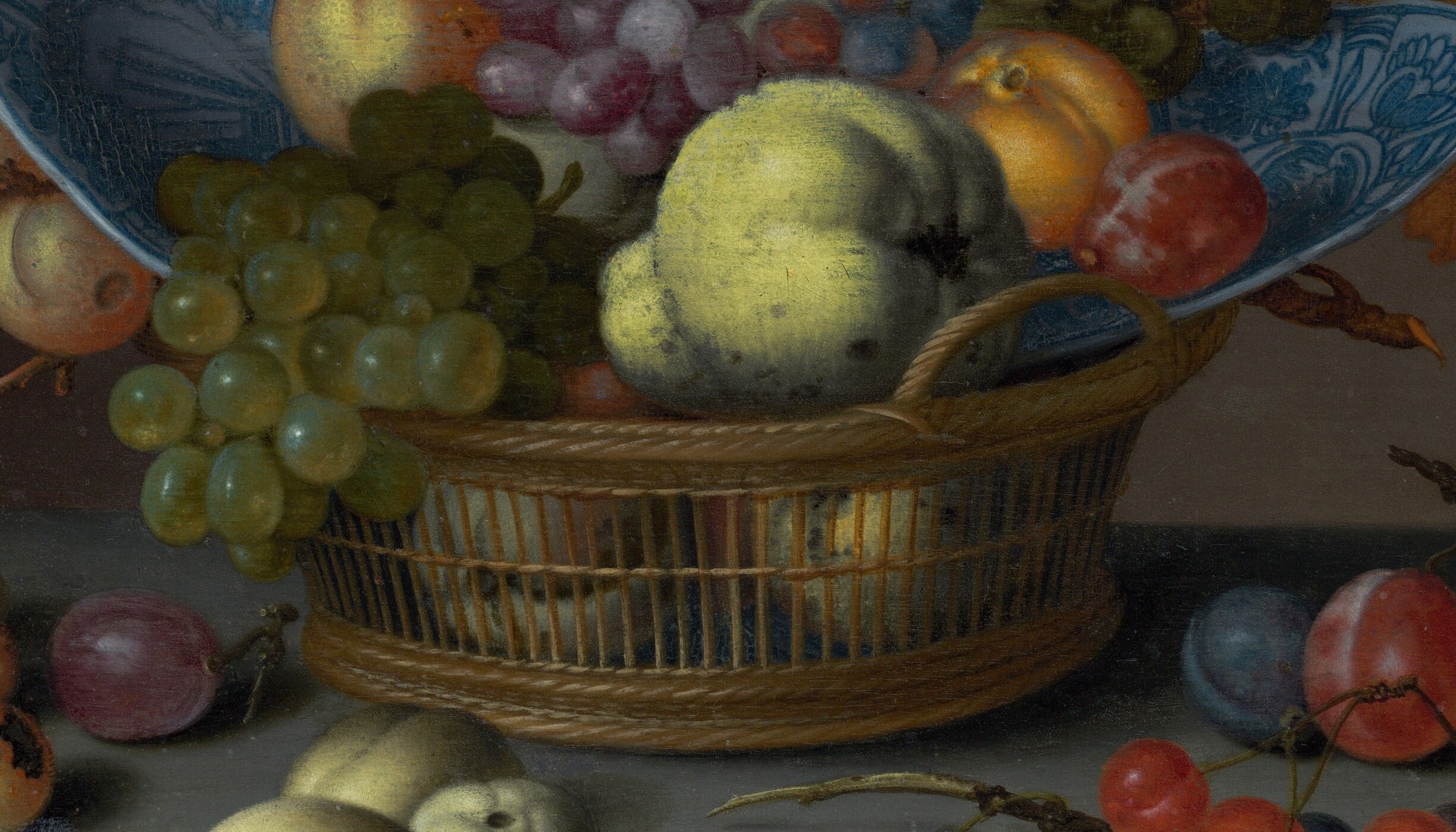
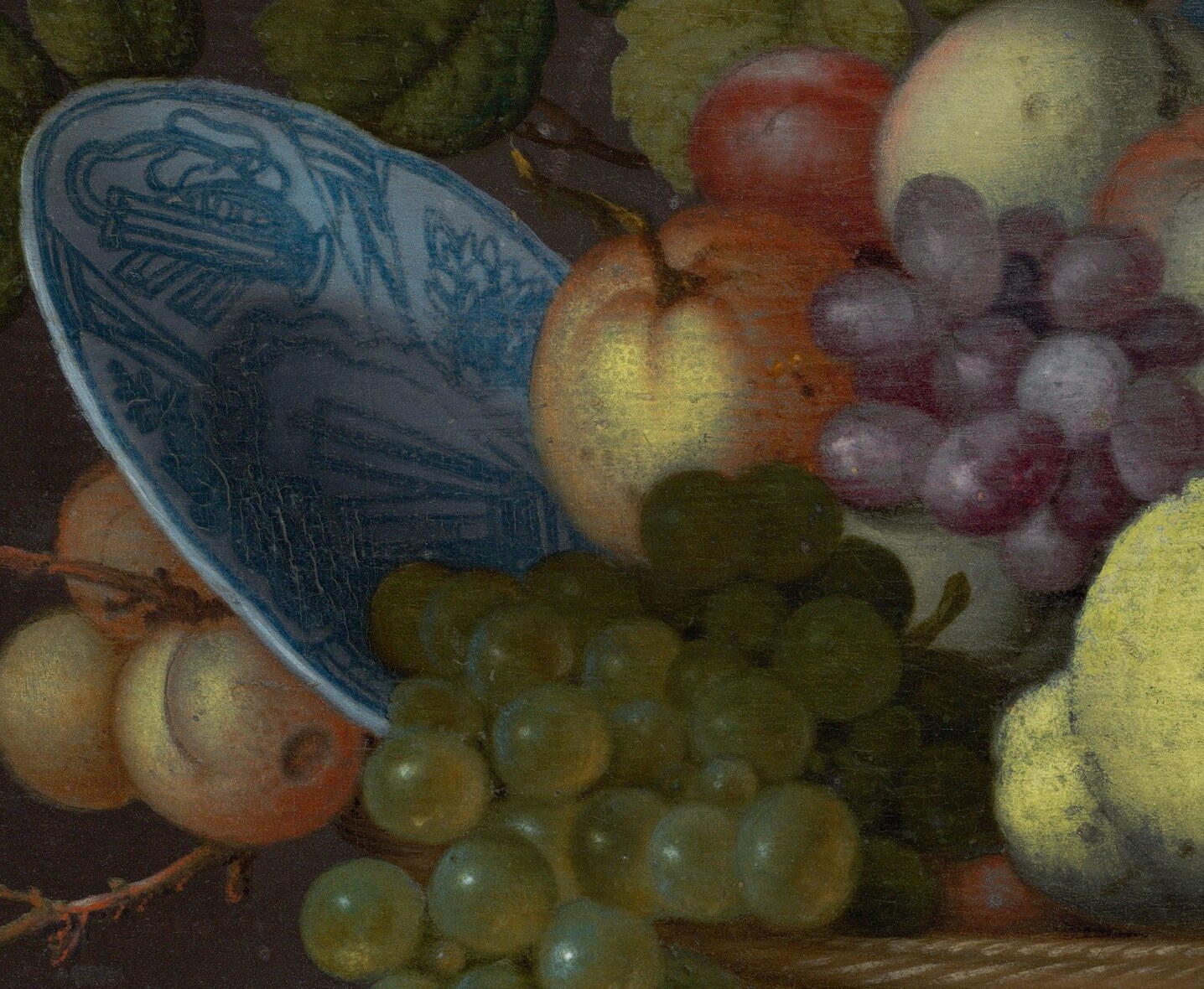
A basket of fruit, painted around 1622, is a quiet document of the Dutch Golden Age. "Basket of Fruits" by Balthasar van der Ast is an oil on panel still life, now in a private collection. Look past the grapes and peaches at the blue-and-white bowl beneath them: it is Chinese export porcelain, a luxury good that had just begun arriving in Dutch ports in serious numbers.
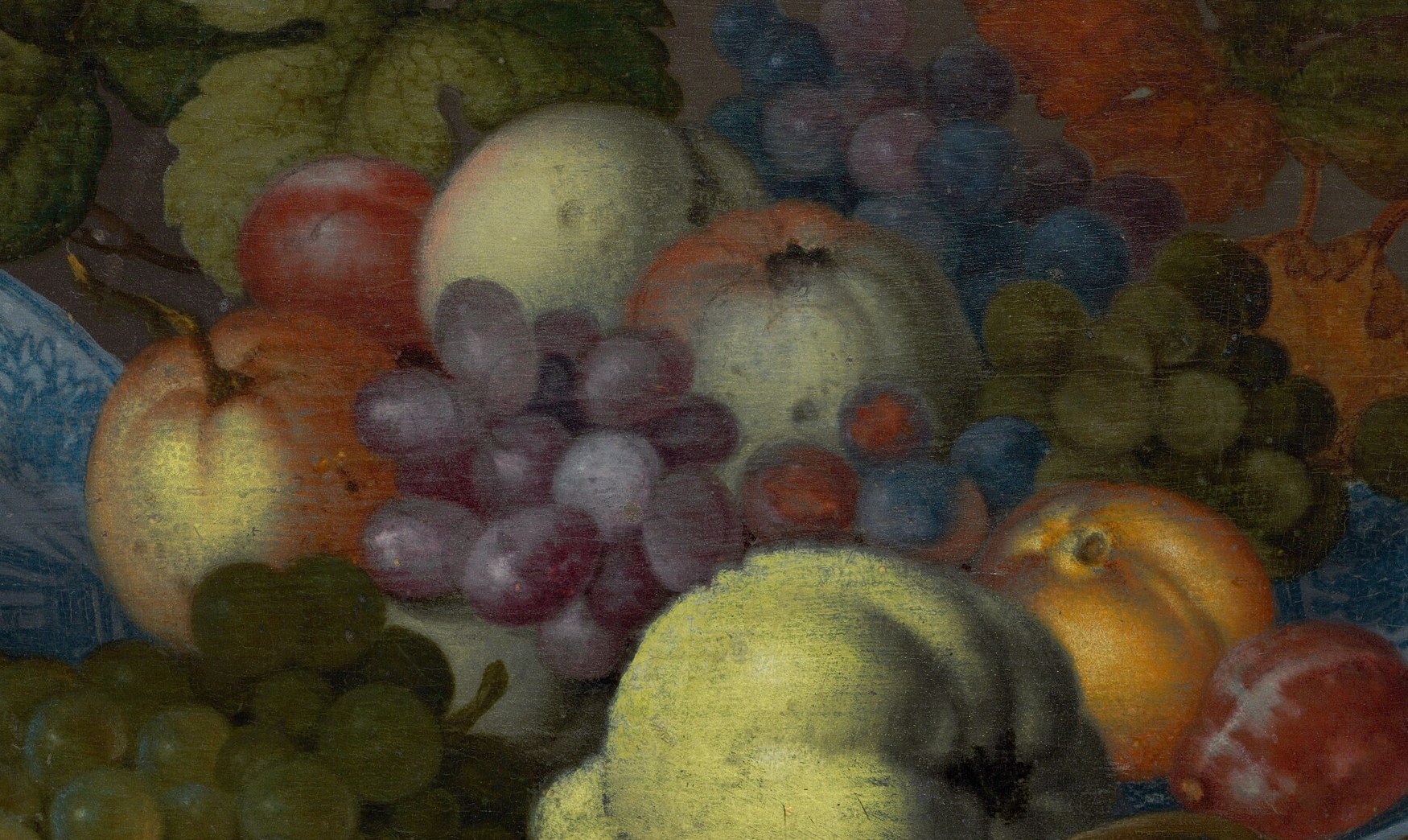
The painting rewards a closer look. Van der Ast was meticulous about surface texture, the fuzz on a peach, the translucent skin of a grape catching light from the left, the rough shells of hazelnuts on the ledge. A tiny insect sits on the fruit near the right side, a signature move the artist used throughout his career. For a 17th-century viewer, the bug was a reminder that even this abundance would not last.
Balthasar van der Ast was born in Middelburg around 1593 and worked in Utrecht and Delft until his death in 1657. He specialized in flowers, fruit, and shells, and was one of the first painters to build entire compositions around exotic shells. An Amsterdam doctor once summarized his life's work as "In flowers, shells and lizards, beautiful." That precision, applied to a bowl of fruit in a dark room, made a domestic tabletop into a record of its time.
What would a single imported porcelain bowl have signaled to its first owner? And which detail in this painting would you have noticed first in 1622?
Details
Transcript
A basket of fruit, in an ordinary Dutch room. But look at the bowl it rests in. That is Chinese export porcelain. A luxury import. 1622. Dutch ships have reached Asia and returned. These downy peaches grow closer to home. The painter was known for hiding insects. Look closely. A small, living creature. On fruit that will soon decay. A whole global moment, held quietly in paint.