A Benedictine Monk by http://www.wikidata.org/.well-known/genid/9ac06b2f697d983eb8b012e3bc352875
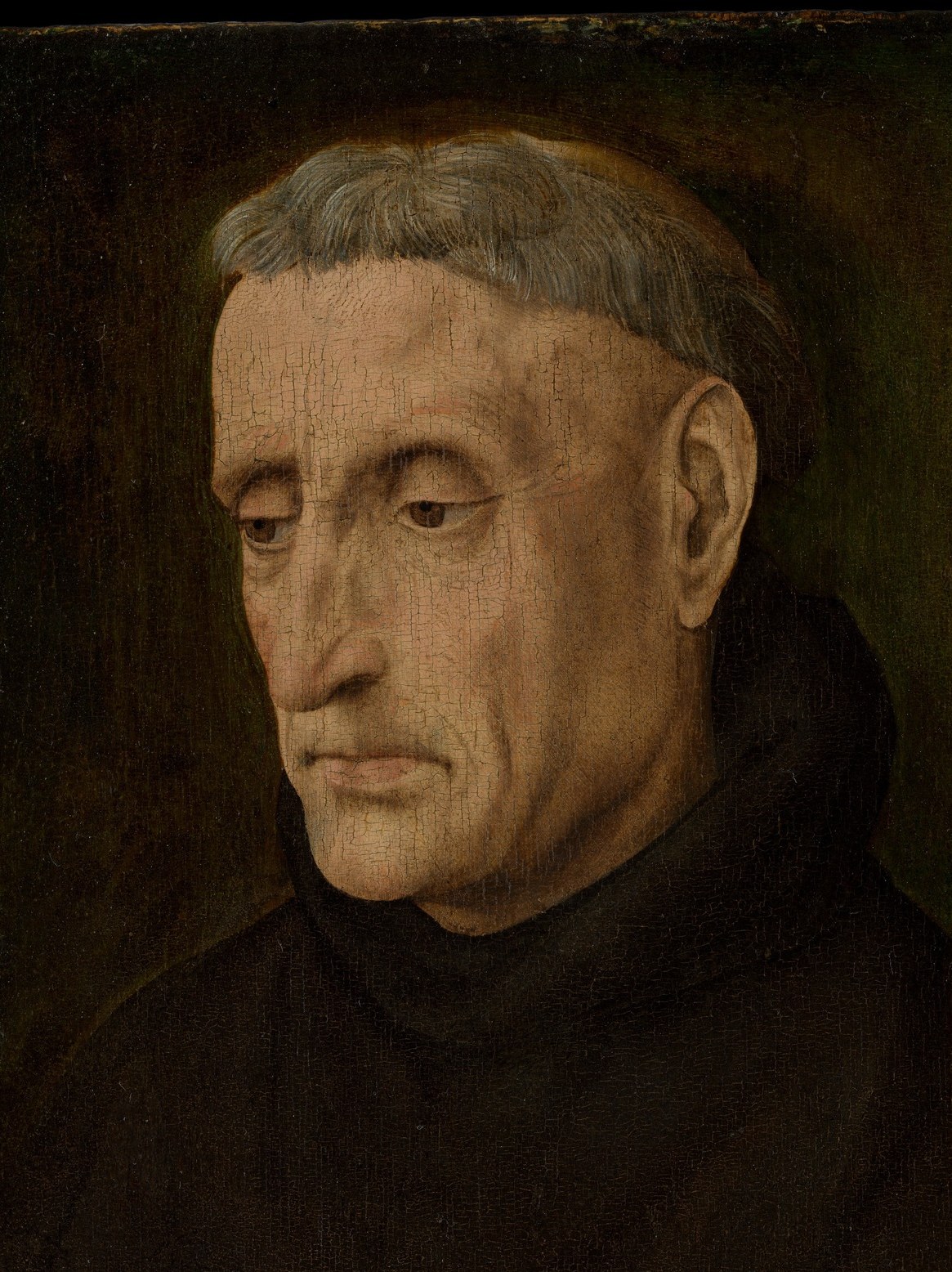
This is 'A Benedictine Monk,' attributed to Hugo van der Goes and painted around 1478. It hangs today in the Metropolitan Museum of Art, but the identity of the man in the black habit has been lost for centuries. The painting is an argument for anonymity: there is no coat of arms, no name inscribed, no view through a window. The artist stripped away every marker of status until only one thing could speak for this man, his face.
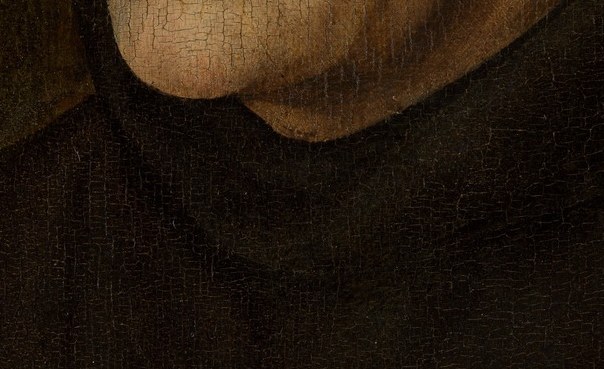
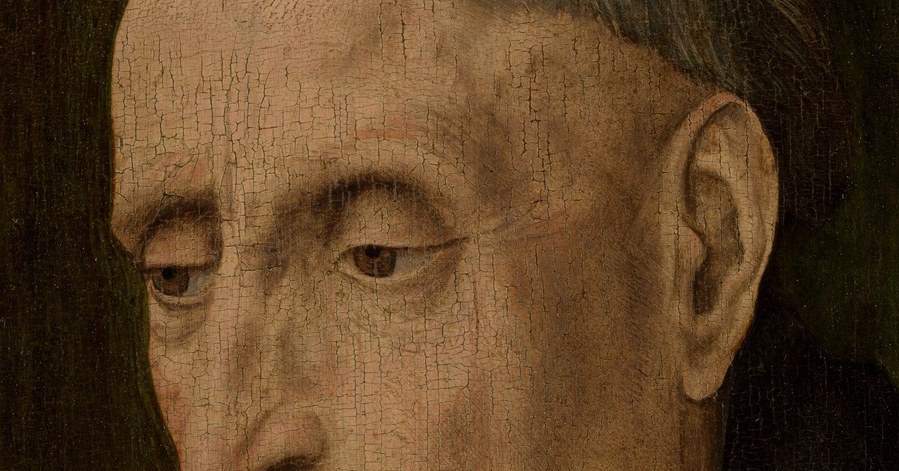
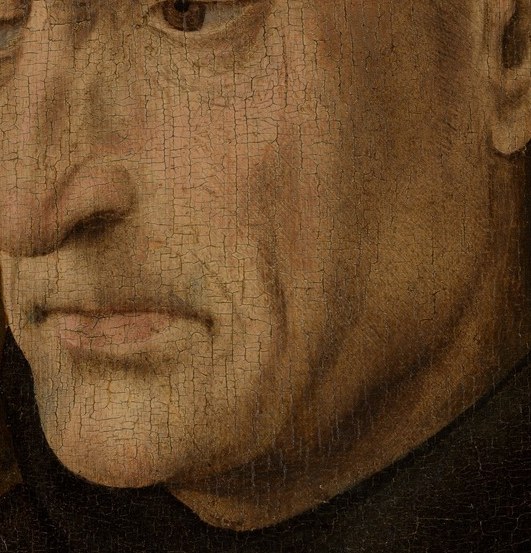
Watch what the painter does with silence. The monk's lips are pressed into a firm, deliberate line, a physical posture that makes the Benedictine vow of restraint visible on the body. His eyes are the hinge of the whole portrait: they are open but downcast, neither closed in prayer nor lifted to engage the viewer. He is suspended in private thought, and the shadow that swallows half his face dissolves the boundary between the man and the dark background, as though his interior life has begun to absorb the physical world around him.
Hugo van der Goes was one of the most technically audacious painters in fifteenth-century Flanders, and this small panel is a masterclass in oil-glazing technique. The lit cheek and temple are built up in translucent layers of ochre, rose, and cool highlight so thin that the skin reads as genuinely porous, genuinely alive. Every wrinkle on the forehead and heaviness in the jaw was kept rather than smoothed out, a radical commitment to individual likeness at a time when most patrons still wanted to be idealized. The nose alone proves this is a specific human being, not a type.
He was probably a monk at the Roode Klooster near Brussels, where van der Goes himself retreated late in life, struggling with a profound melancholy that the brothers nursed him through. The painting feels less like a commission than a shared understanding: a man who knew interior darkness, painting another man who had chosen the interior life. We are not looking at a portrait of a monk. We are looking at what a life of contemplation looks like from the outside, and seeing, just for a moment, where it goes when no one is watching.
Details
Transcript
He wears no title, no insignia, no name. Only a black habit, merging with the dark. The painter gave him nothing but his face. Look at the mouth. Pressed shut. The Benedictine rule of silence made physical. And the eyes. They do not meet yours. They are somewhere inside. A life turned inward, painted in oil in 1478.