Falls of the Snake River by Catlin, George
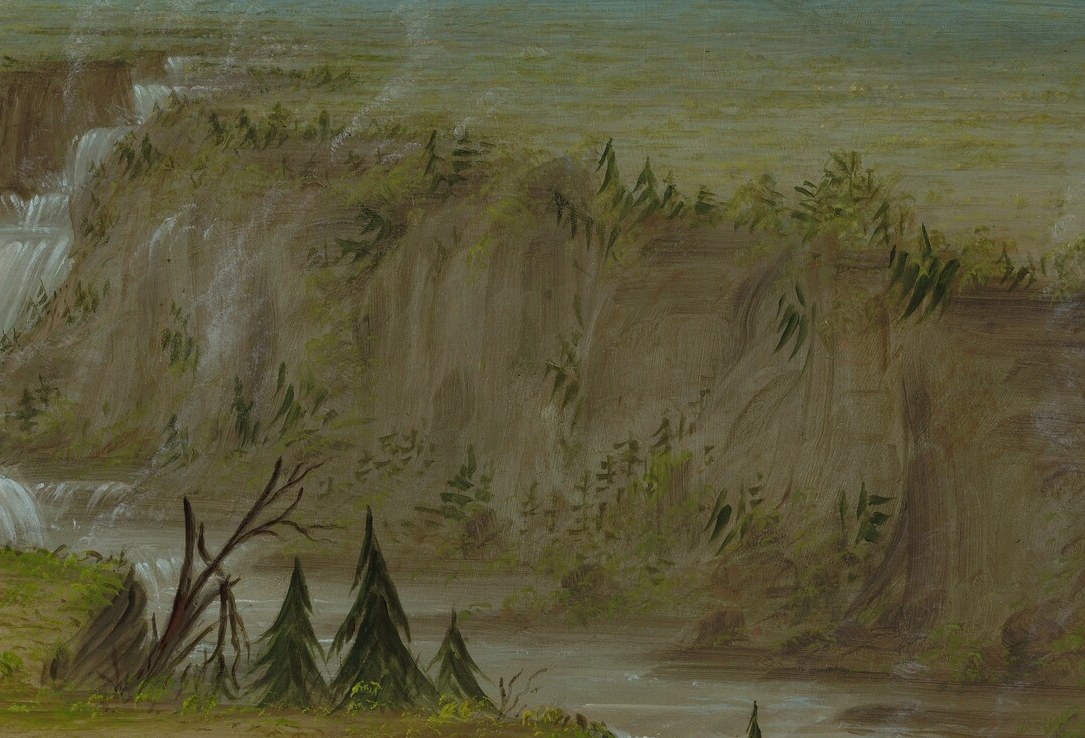
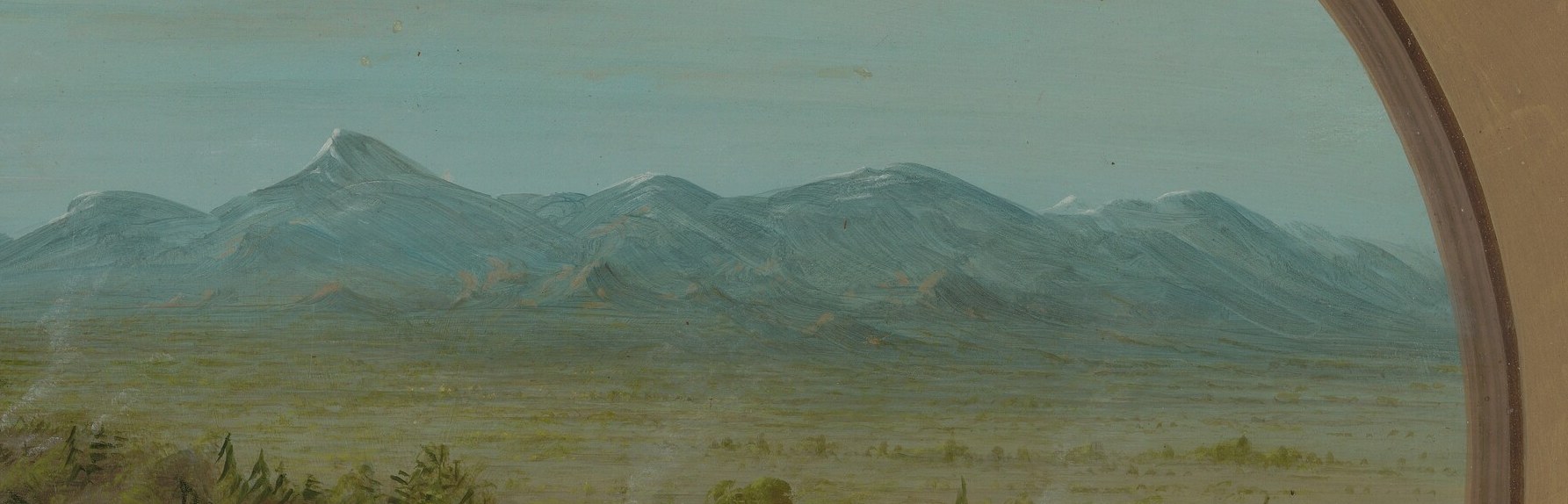
George Catlin painted "Falls of the Snake River" in 1862, the same year the Battle of Antietam became the bloodiest single day in American history. While the nation tore itself apart in the East, Catlin was nearly two thousand miles away, documenting a landscape and a way of life he was convinced would not survive the century. The painting is an oil on card, a modest, quiet record of the Snake River as it tumbles through a rugged gorge.
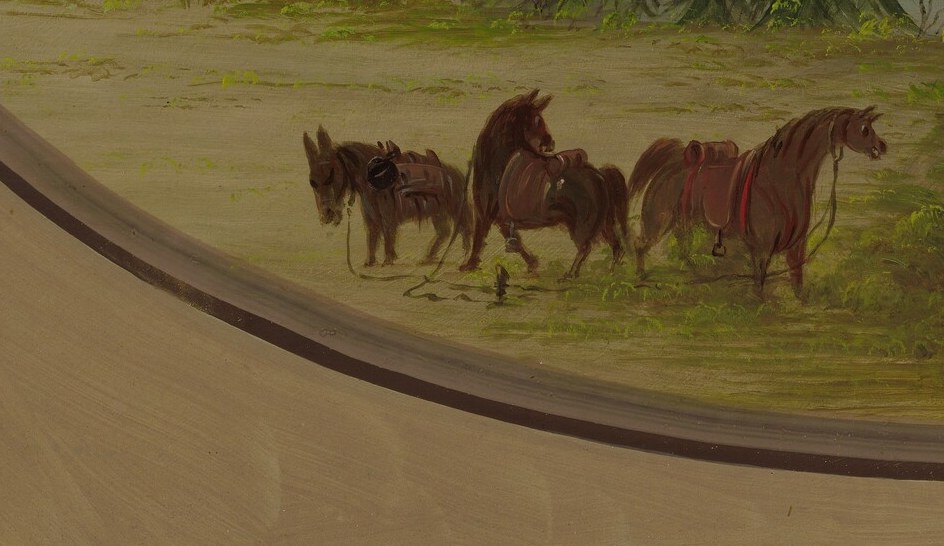
Look first at the waterfall itself, rendered with a soft, luminous handling of light. Then find the cluster of figures resting at the lower left. They are tiny, completely absorbed by the scale of the basalt cliffs and the dark evergreen forest pressing in from the middle ground. Catlin gives them no faces, no identities. They are there only to measure the landscape.
Catlin was already famous by then for his portraits of Plains Indians, made during five journeys to the West in the 1830s. This landscape came later, after his massive Indian Gallery failed to find a permanent home in Congress. He painted the West less as a frontier to be conquered and more as a testament. The lone bare tree in the foreground was not a picturesque touch. It was a fact he had learned to see.
The painting now sits in a public collection, a remnant of a quieter catastrophe. We know what happened next.
Details
Transcript
1862. The Civil War rages in the East. Two thousand miles away, this river falls in silence. A few travelers rest at the water's edge. They are tiny against the basalt cliffs. The painter had spent his life recording a world he believed was vanishing. He was right.