Portrait of a Man by Tyrolean 15th Century
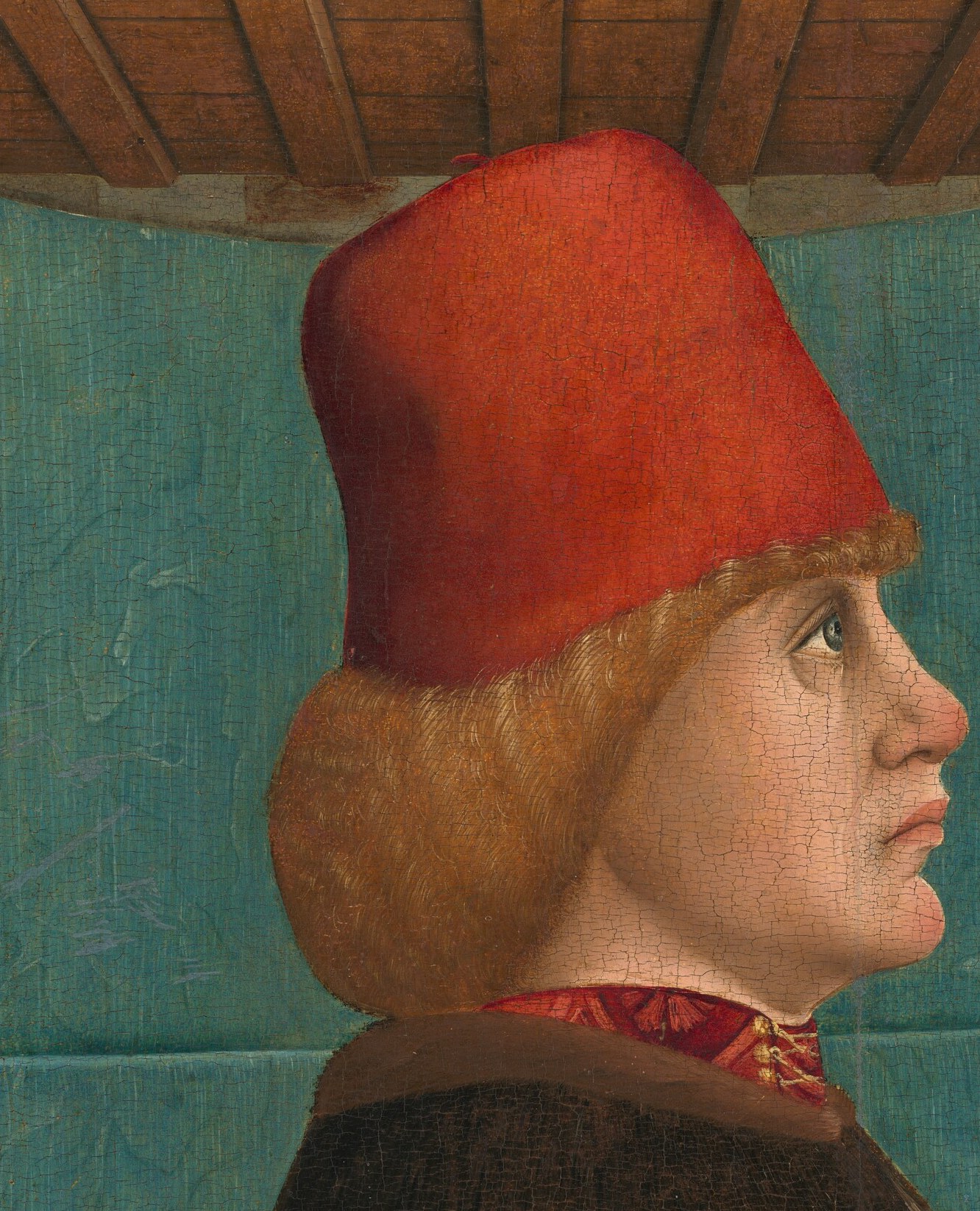
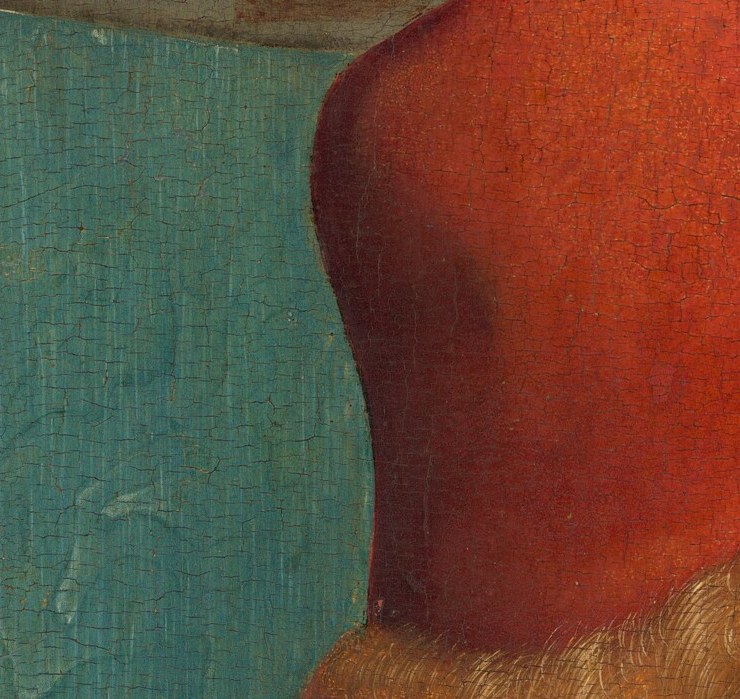
This is “Portrait of a Man,” painted around 1490/1500 by an unknown Tyrolean artist. Its true scandal is formal: for a northern European painter in the late fifteenth century, depicting a private citizen in strict, ruler-like profile was a genuinely audacious act.
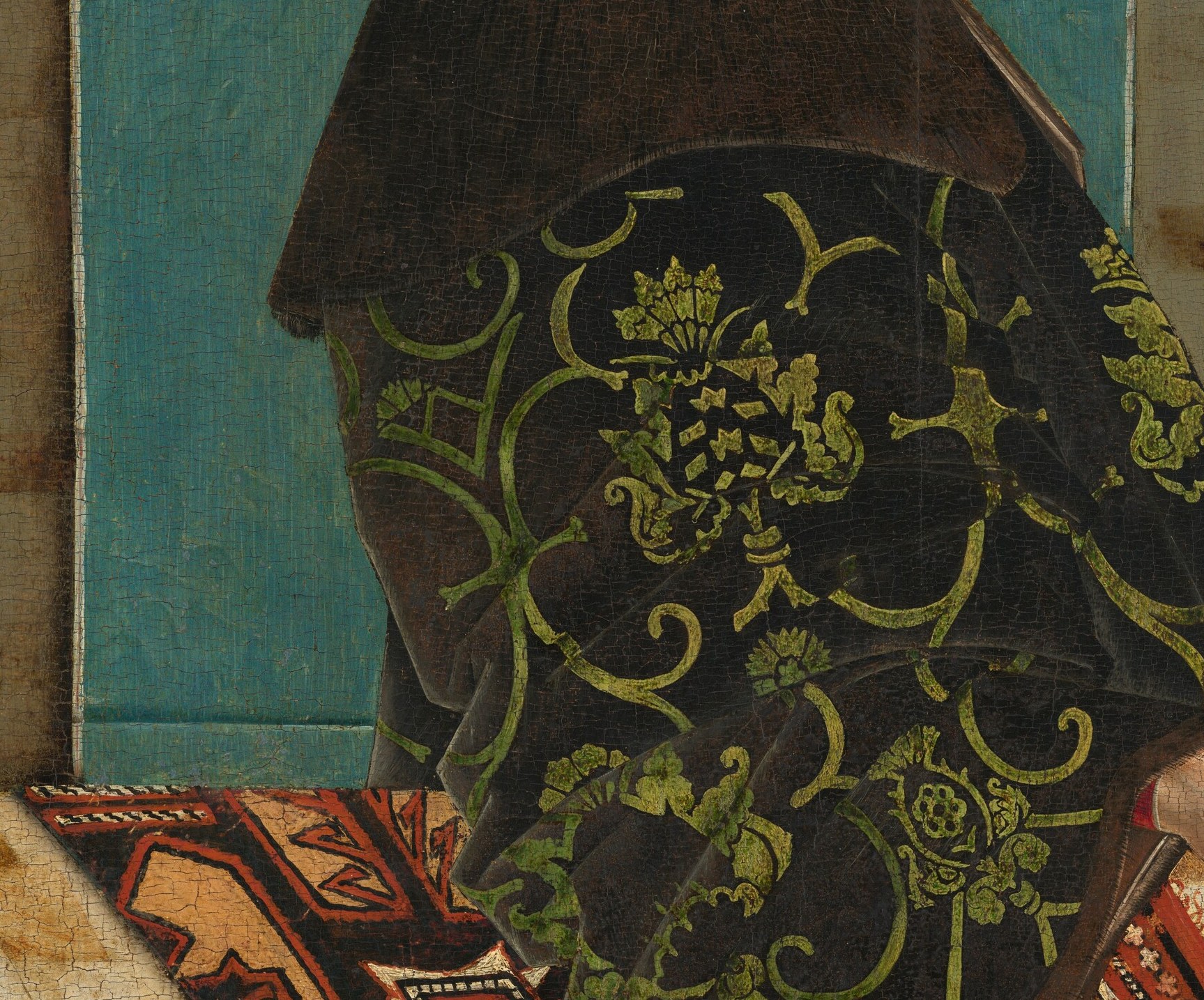
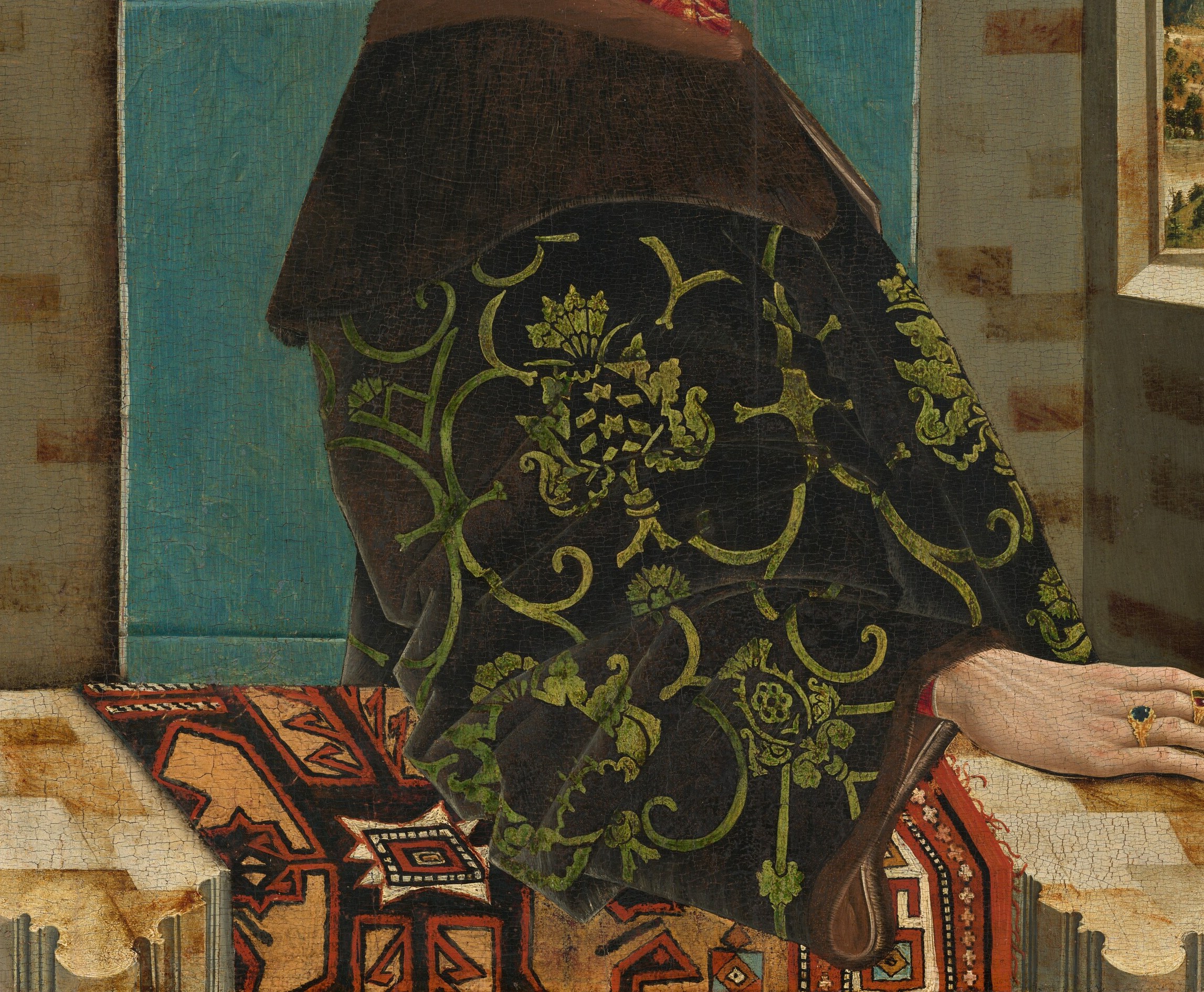
Look first at the uncompromising right profile. The format denies us eye contact and forces scrutiny of the sitter’s aquiline nose, firm jaw, and that single visible eye staring fixedly beyond the frame. Then look at the dark green-black brocade of his garment, where gilt grape-and-vine motifs are painted with almost tactile precision. A Eucharistic symbol, woven into the fabric of a merchant’s coat.
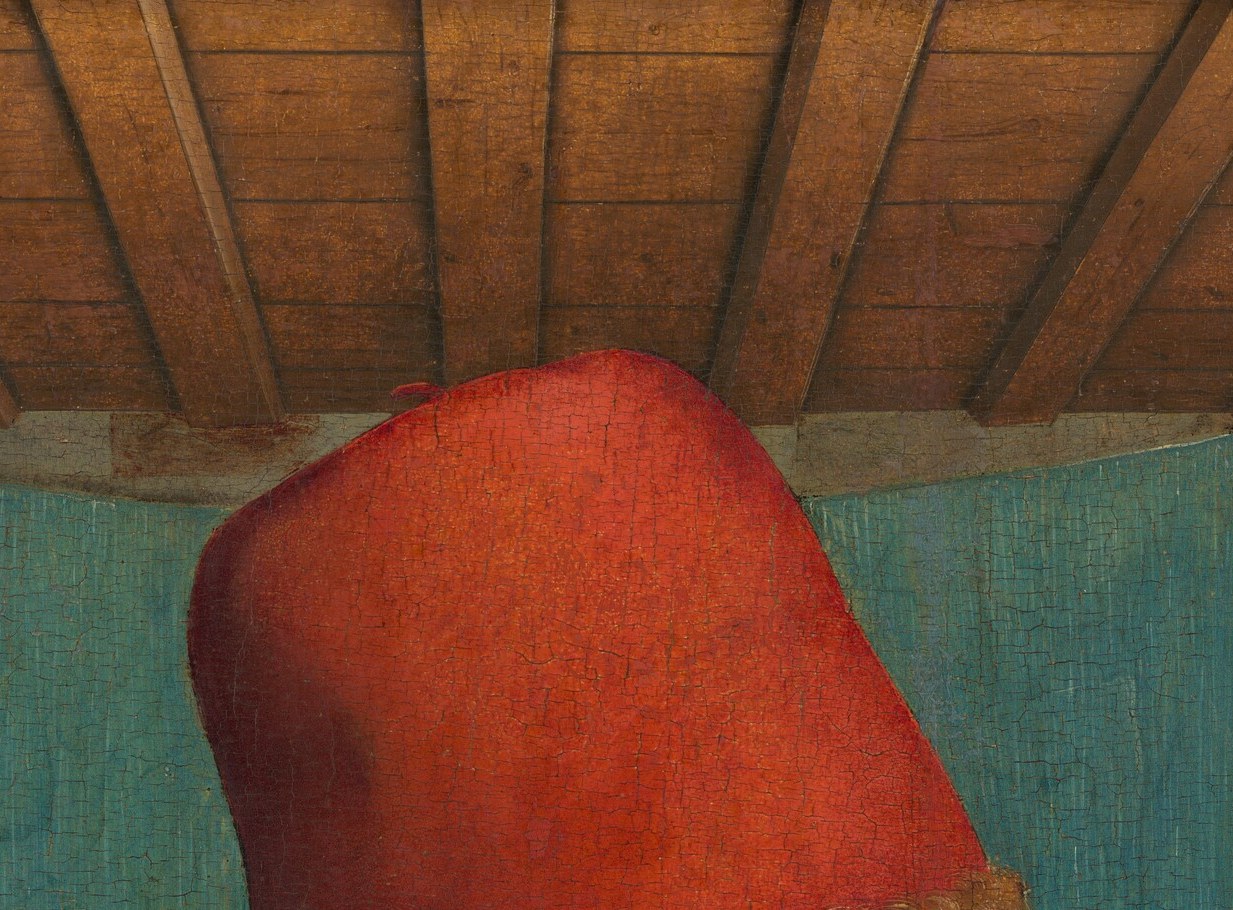
The painting is oil on panel, and its Flemish-influenced detail remains remarkable: the thin hairline at the temple, the sheen of silk thread, the bright mountain landscape visible through the window cut into the teal wall. That landscape likely encodes a specific place tied to the sitter’s identity or ambition, a destination his eye seems already fixed on.
He wanted to be seen as a figure of consequence. Five hundred years later, we still don’t know his name, but the ambition survives.
Details
Transcript
Most portraits from 1490 let you look in. This one locks you out completely. A strict profile was reserved for rulers, saints, and coins. For a merchant to demand it was an act of sheer self-regard. He wears crushed velvet brocade with gilt grapevines. A Eucharistic symbol woven into a businessman's daily coat. That single eye stares past you, at something he wants. No northern painter had put an unknown man's profile on panel before.