Eendjes by Willem Maris
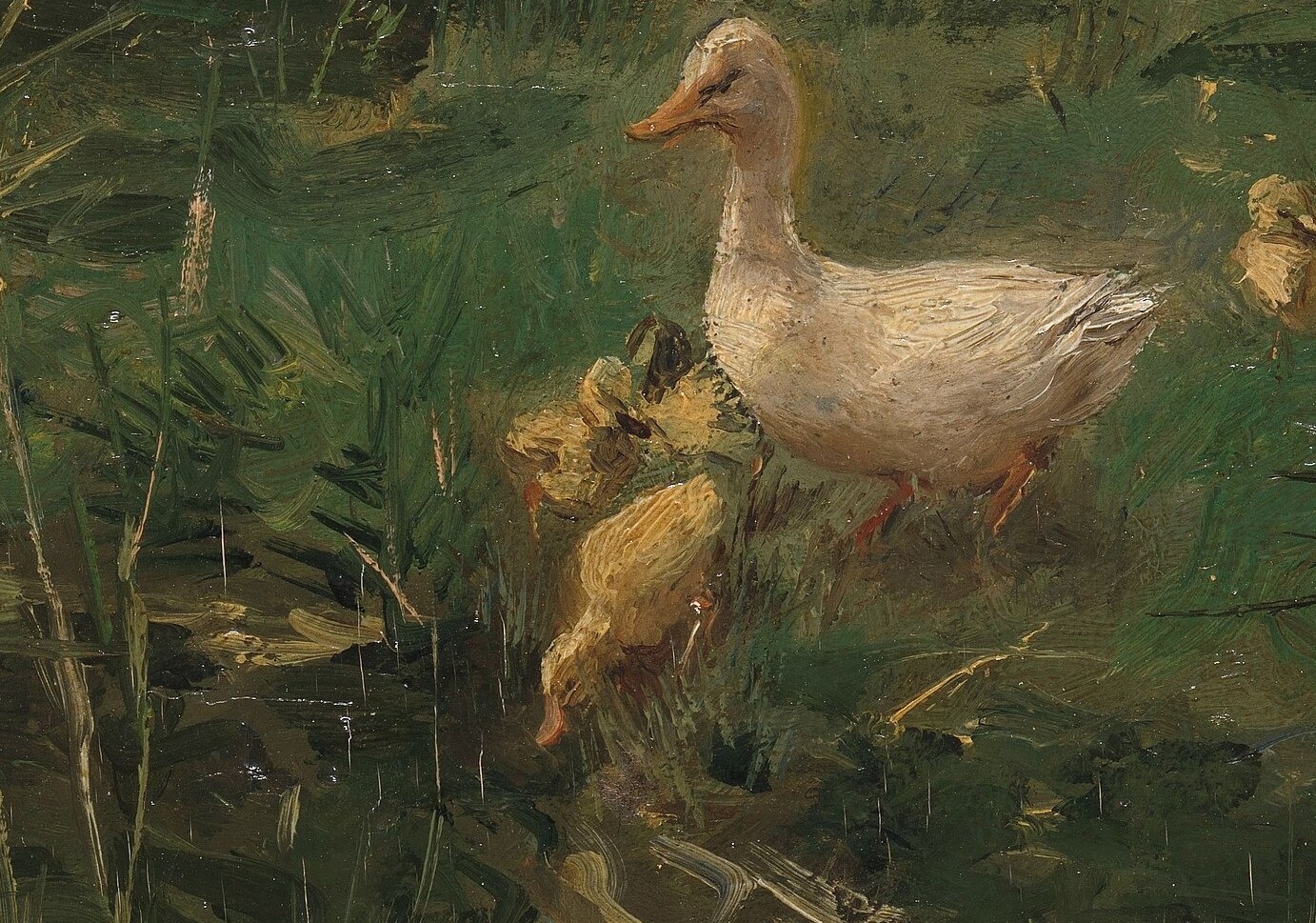
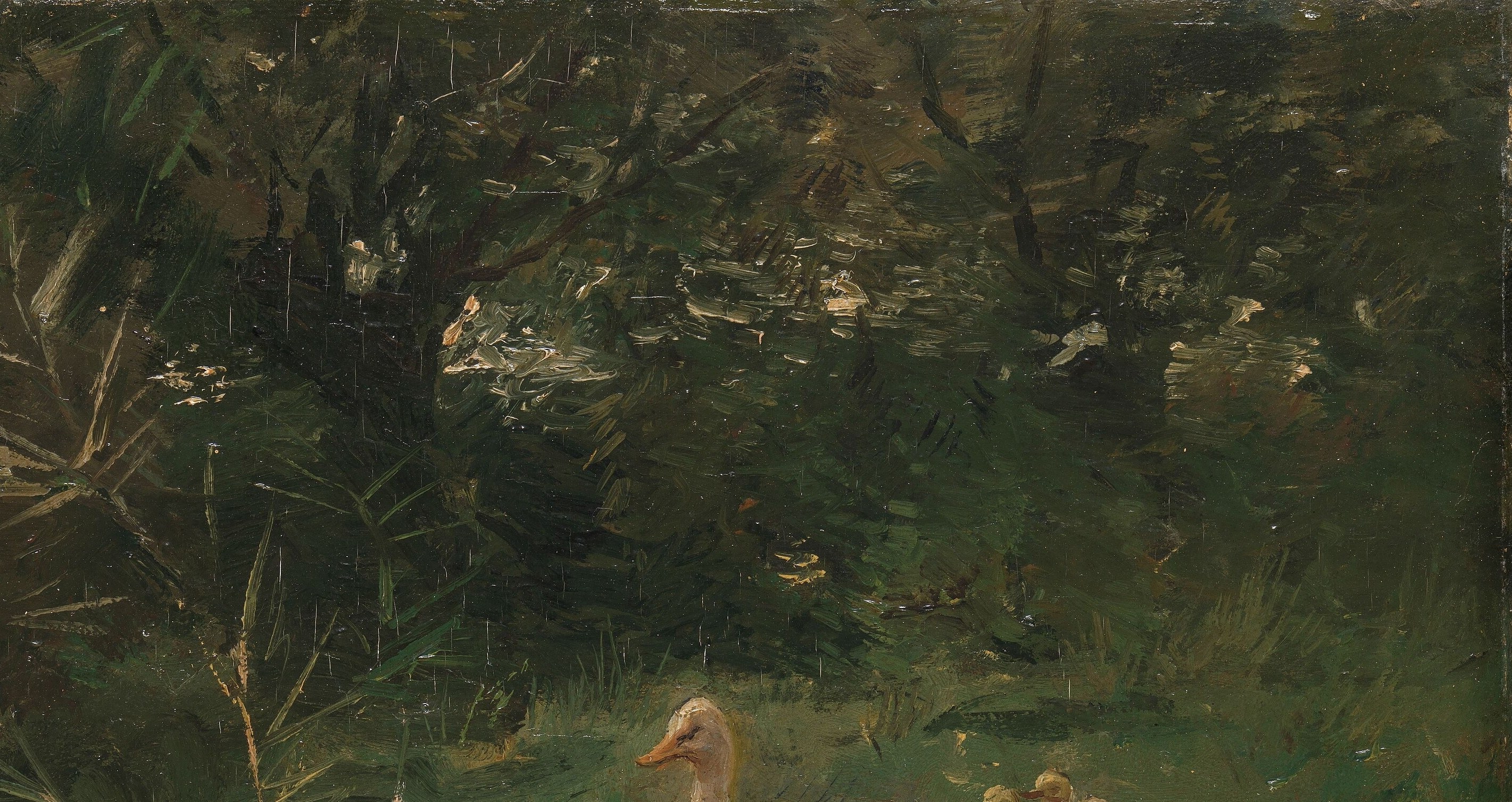
This is Eendjes (Ducks), painted by Willem Maris in 1897 and held at the Rijksmuseum in Amsterdam. Most people see three ducklings. There are four.
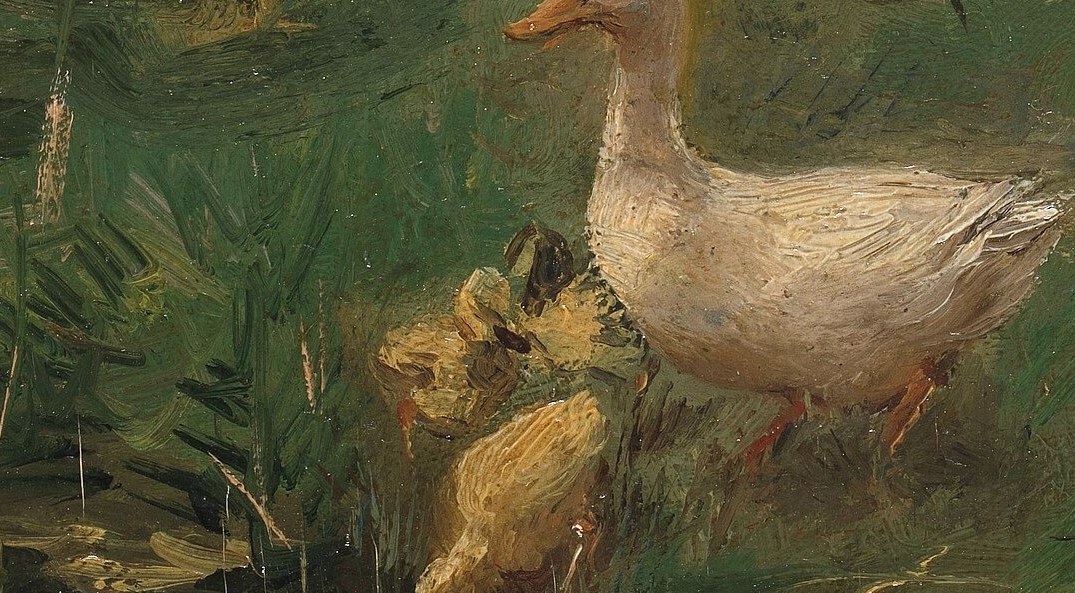
The painting is built on a single luminous anchor: the mother duck's white body. Maris laid his thickest paint there, visible impasto strokes that catch real light even in a photograph. That bright center pulls your eye so completely that the shadow on the left becomes a void you simply scroll past.
Willem Maris was the youngest of the three Maris brothers, all painters of the Hague School, a Dutch movement that turned away from studio artifice toward the raw, damp atmosphere of the real Netherlands. He was nicknamed 'the bird Maris' because he painted ducks and hens so obsessively. This canvas is small and intimate, the kind of work he could finish quickly outdoors.
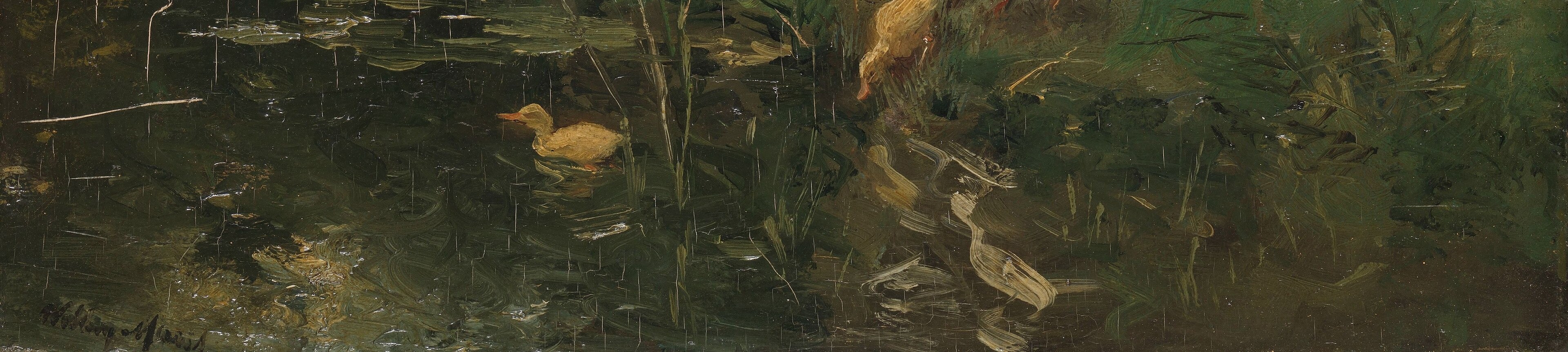
Slow the video and look again. The fourth duckling sits just inside the reeds at the far left, barely a brushstroke of ochre against near-black water. Maris hid it not to trick you, but because that is how a pond actually works: some things stay in the shadow, and the mother keeps watching.
Details
Transcript
A mother duck and her brood. Simple enough. The Hague School painters loved these quiet Dutch wetlands. Willem Maris built this whole glow around her white plumage. Now look left. Past the reeds. There is a fourth duckling hidden in the dark. Maris tucked it into the shadow so the light could hold the family together.