Asters and Fruit on a Table by Henri Fantin-Latour (French, 1836–1904)
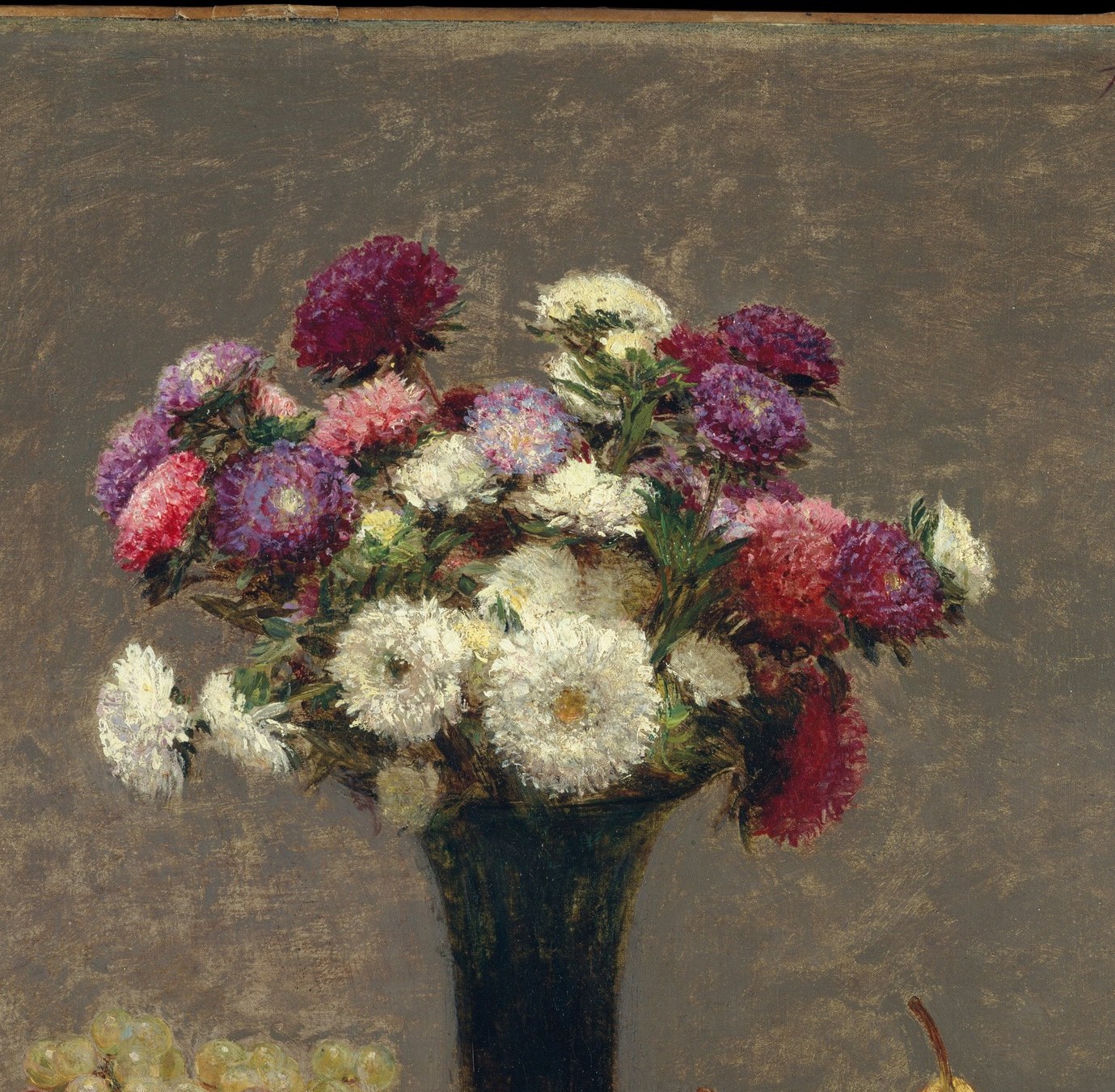
Henri Fantin-Latour painted "Asters and Fruit on a Table" in 1868, and every object in it was a separate technical problem he solved in oil paint. The painting is in the collection of The Metropolitan Museum of Art.
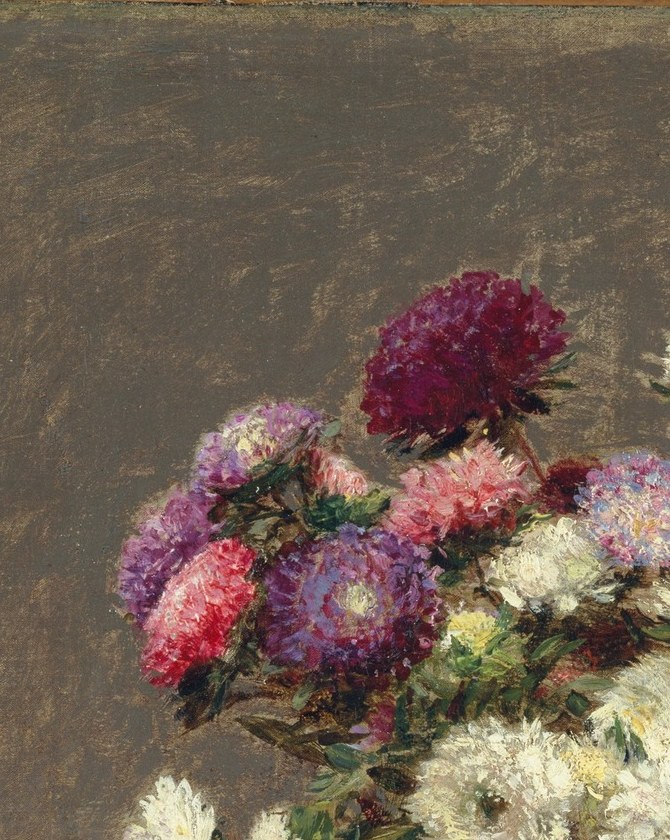
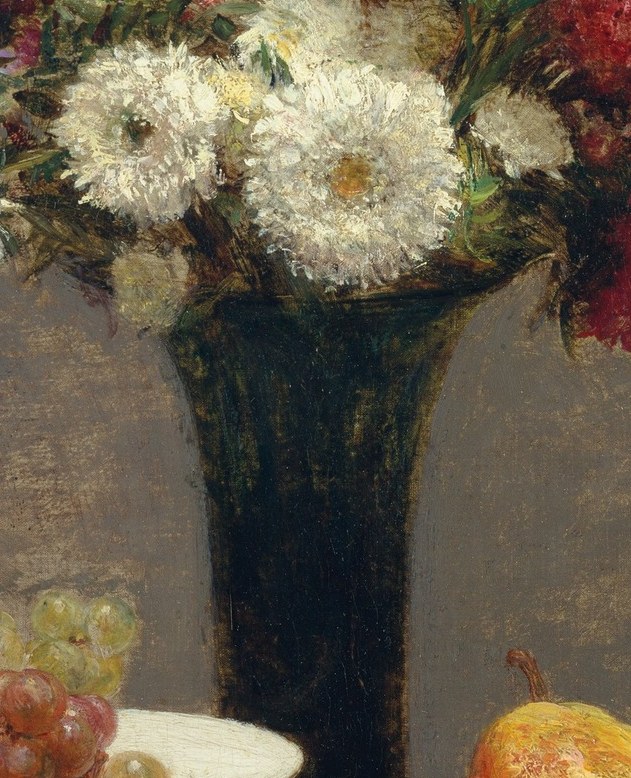
Watch the white asters against the grey wall. Fantin-Latour didn't paint their petals with a white line. He painted the grey background right up to the edge and let the dark, negative space do the work. The petals glow without a single hard outline.
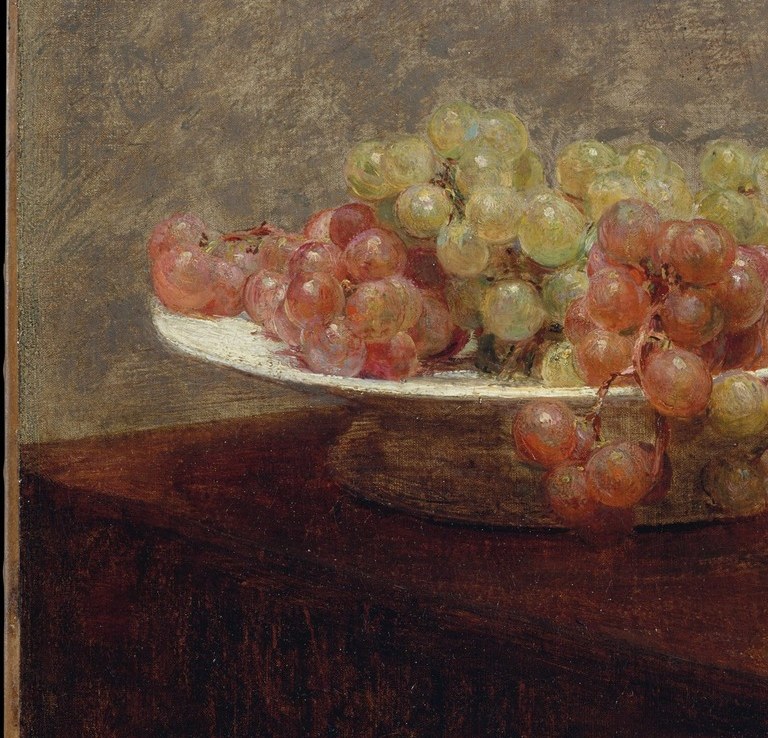
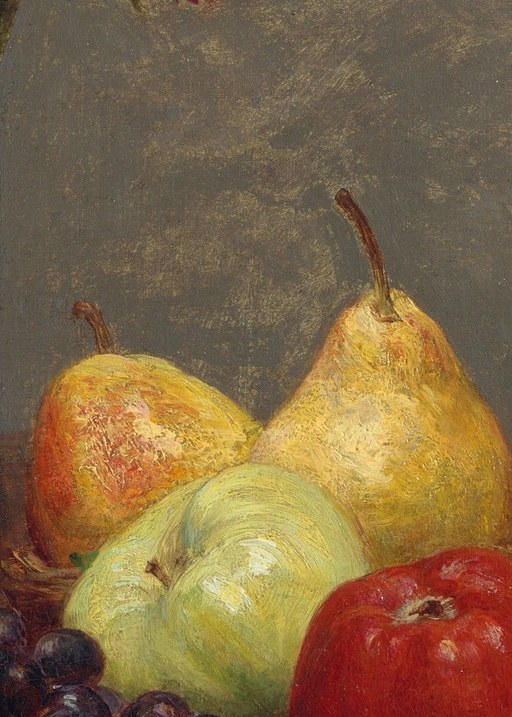
Then look down at the grapes. Each translucent globe carries its own tiny highlight and its own shadow, built one sphere at a time. Now look at the pears beside them. No gloss, no reflected window. Just matte skin absorbing the light. He understood that different surfaces catch light differently, and he gave each its own recipe.
A quiet still life, yes. But walk close to it and it reads like a technical manual on light.
Details
Transcript
One bouquet. Six different textures. White asters on grey. Look at the edges. No white line drawn. Just the grey wall left untouched. This painter made each grape a separate glass globe. Individual highlights. Individual shadows. One by one. And this pear: no gloss, no shine. Just matte skin. He knew a glaze reflects. A pear absorbs.